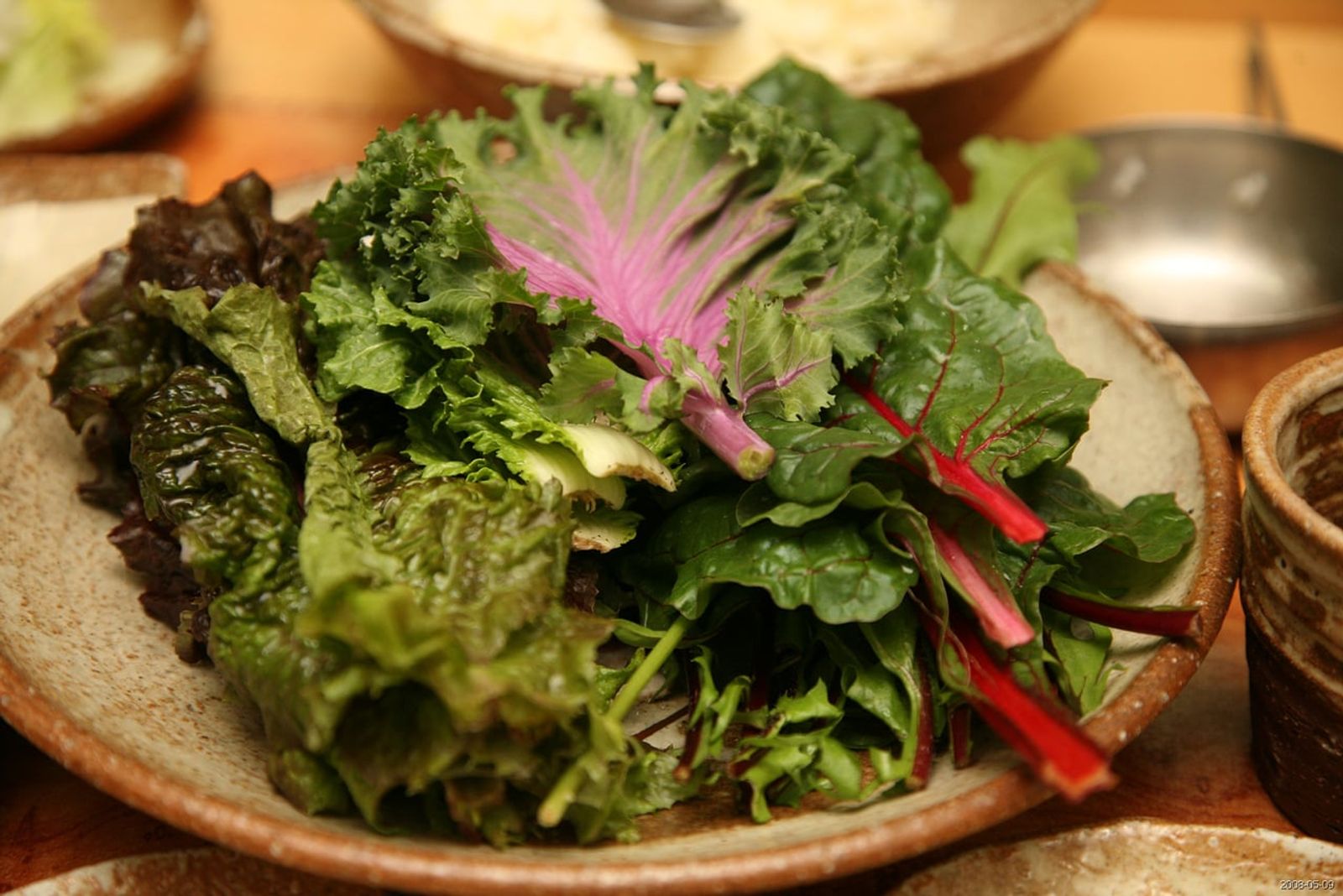
Leafy greens served with ssambap · Photo: Junho Jung (Flickr) / CC BY-SA 3.0 (Wikimedia Commons)
 KoreaNorth Gyeongsang · Gyeongju
Gyeongju's Ssambap Street by Daereungwon: Leaf-Wrapped Meals Beside Silla Tombs
Around Daereungwon, the cluster of Silla royal tombs in Gyeongju, there is a street lined with ssambap restaurants. Here are the old records of Korea's leaf-wrap culture, what a typical ssambap spread looks like, how to wrap a neat bite, and how to fit the meal into a walk around the tombs.
A Ssambap Street Beside the Tombs
Daereungwon in Hwangnam-dong, Gyeongju, is a group of 23 tombs of Silla kings, queens and nobles. Grass-covered mounds rise like camel humps, and one of them, Cheonmachong, is open inside so you can see the tomb where a gold crown and the famous Flying Horse painting were found. Cheomseongdae Observatory and Gyerim Forest are within walking distance, which makes this the usual starting point for a Gyeongju trip. Around Daereungwon, restaurants serving ssambap (rice wrapped in leaves) cluster together, and the area is known as Gyeongju Ssambap Street. Tourist guides and travel articles also note that ssambap restaurants are concentrated in the lanes on the east side of Daereungwon. For many visitors, touring the tombs and then sitting down to a ssambap lunch has become a standard routine.
Old Records of Wrapping Rice in Lettuce
Ssam, wrapping rice and side dishes in leafy greens, is a way of eating Koreans have loved for a very long time. The Yuan-dynasty poet Yang Yunfu is said to have written a poem praising the fragrance of Goryeo lettuce, and the late-Joseon text Haedong Yeoksa records that lettuce was once so precious it was nicknamed cheongeumchae, "the thousand-gold vegetable." In the 18th century, the scholar Yi Ik wrote in Seongho Saseol that people wrapped food in large leaves and that lettuce wraps were considered the best. The 19th-century cookbook Siui Jeonseo noted that besides lettuce, any large leaf, such as gomchwi, perilla, pumpkin or napa cabbage leaves, could be used. Serving ssam as a restaurant set called ssambap, however, is said to have spread widely with the wellness boom of the 2000s.
What a Ssambap Spread Looks Like
Ssambap restaurants around Daereungwon serve fairly similar spreads. According to tourist guides and travel articles, a typical meal comes with an assortment of leafy greens, dipping sauces such as ssamjang (a thick soybean-chili paste), fish and meat, doenjang jjigae (soybean paste stew), and plenty of side dishes. Each restaurant makes its own doenjang or ssamjang, so comparing them is part of the fun. The greens may include lettuce, napa cabbage and pumpkin leaves, each with its own shape and flavor. Because it is a set meal with many side dishes, it is a good idea to ask first whether a single portion is possible if you are dining alone, and if you run out of greens, ask whether you can have more.
How to Wrap a Good Bite
To make a wrap, lay one or two leaves on your palm, add a spoonful of rice, top it with a little meat or fish and ssamjang, and fold it up. If you use two leaves, try layering strong-flavored perilla over soft lettuce. Adding a slice of garlic or chili gives it extra kick. There is even old etiquette for ssam. The Joseon-era manners book Sasojeol advises scooping and shaping the rice before wrapping from the top, and says that wrapping a bite so big your cheeks bulge is impolite. Making a wrap that fits in one bite is still the tidy way to eat it. Ssamjang is fairly salty, so use just a little.
Pairing Lunch With a Walk
Ssambap Street sits right next to Daereungwon, so it pairs naturally with a walk through the tombs. A comfortable plan is to follow the forest path to Cheonmachong in the morning, have ssambap for lunch, then stroll toward Cheomseongdae and Gyerim, or cross over to Hwangnidan-gil, where cafes and shops fill hanok alleys. After dark, many travelers head to Donggung Palace and Wolji Pond for the night view. At weekend and peak-season lunchtimes, many restaurants have queues, so going a little early or late is more relaxed. Because ssambap is vegetable-centered, it also suits days when you want something lighter than greasy food. Silla-era sites are scattered all over Gyeongju and you will walk a lot, so a hearty ssambap spread makes good fuel.