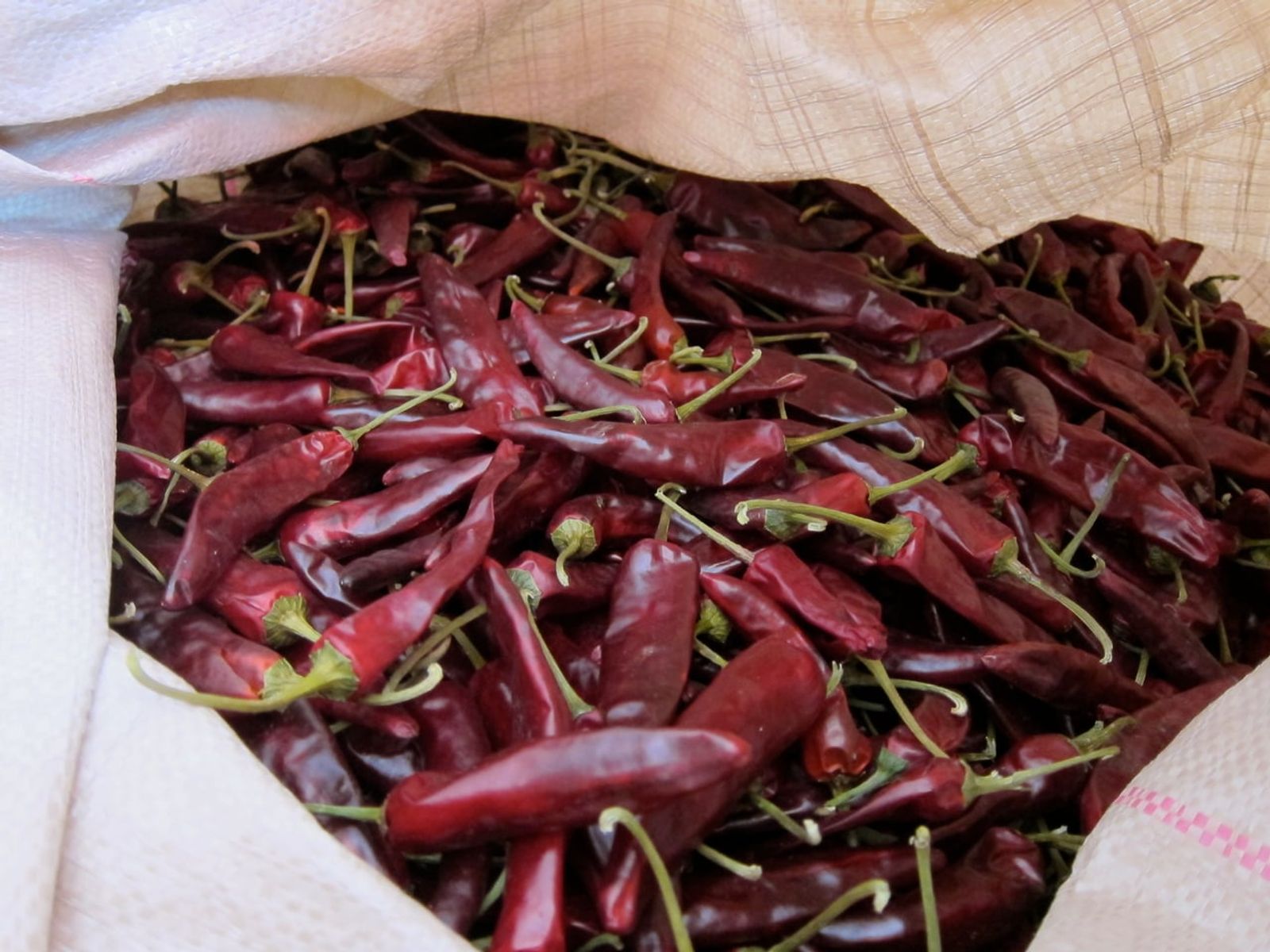
Dried Yeongyang chili peppers · Photo: Eugene Kim / CC BY 2.5 (Wikimedia Commons)
 KoreaNorth Gyeongsang · Yeongyang
Yeongyang Chili Peppers: A Mountain County's Red Pepper Powder and the Revived Subicho
Yeongyang in North Gyeongsang Province is one of the first places Koreans name when it comes to chili peppers. Here is how wide day-night temperature swings and mountain streams shape the crop, how the name is protected by geographical indication, how the native Subicho and Chilseongcho varieties were brought back, and how to pick good gochugaru.
Chili Means Yeongyang
Yeongyang, in the northeast of North Gyeongsang Province, is a mountain county surrounded by high peaks such as Irwolsan. Its population is small, but it is one of the first places Koreans think of for chili peppers, and local media describe it as the country's leading pepper-growing area. In late summer, red peppers can be seen drying all over its villages. Most of the red color in Korean food, from kimchi to gochujang, stews and seasoned vegetables, comes from gochugaru, or red pepper powder. Korean households think hard every year before kimchi-making season about where to buy their gochugaru, and Yeongyang has long been a trusted name. The county has made peppers its calling card for decades: in 1984 it held the first Miss Yeongyang Pepper pageant, an event that later grew into its pepper festival.
Temperature Swings and Mountain Water
Climate is the first reason given for Yeongyang's reputation. As a high-altitude mountain area, it is hot by day and cool by night in summer, with temperature swings of more than 10°C and plenty of sunshine. Peppers grown here are said to have thick skins, a beautiful color and a good balance of heat and sweetness. Water and soil help too. The streams around Irwolsan rarely run dry even in midsummer, keeping quality consistent, and the fertile loam suits peppers well. When a nationwide heat wave cut pepper harvests sharply in 2018, reports said Yeongyang suffered less thanks to drip irrigation. Locals describe its peppers as "hot in a way that seems less hot," thanks to their high sugar content.
Reviving Native Peppers: Subicho and Chilseongcho
Until the 1970s, Yeongyang grew many native pepper varieties with names like Kalcho, Byeolcho, Umeongcho and Paengicho, but most vanished as improved cultivars spread. Starting in 1996, the county and the Yeongyang Pepper Research Institute collected and revived local landraces, and in 2004 Subicho was registered as a variety under the name Yeonggo No. 4. Subicho is described as mildly hot but high in sugar, with a pleasing skin texture. Chilseongcho (Yeonggo No. 5), revived alongside it and named after Chilseong-ri in Yeongyang, has a thick skin and a good color once dried; its plump middle also earns it the nickname "crucian carp pepper." Land planted with native peppers reportedly grew from just 2 hectares in 2007 to about 200 hectares, or 10% of the county's pepper fields, by around 2018.
Protecting the Name
The better known a specialty becomes, the more important it is to stop peppers from elsewhere being passed off as Yeongyang's. According to local press, Yeongyang gochugaru was registered as an agricultural geographical indication in 2005, and a geographical-indication collective mark followed in 2010. On that basis the county runs quality control, pest-management training and native-variety distribution programs. The distribution system is distinctive too. Through channels such as contract farming with the Yeongyang Pepper Distribution Corporation, founded in 2006, the county buys up more than half of its pepper harvest to stabilize farm incomes, and the corporation processes and sells it. Yeongyang peppers have won many awards at national produce competitions, and in 2017 the county exported gochugaru to the United States for the first time.
Choosing and Using Good Gochugaru
When choosing gochugaru, look at color and smell first. Powder made from well-dried peppers, whether sun-dried or machine-dried, is a vivid, glossy red and gives off a sweet, spicy pepper aroma when you open the bag. Coarse flakes suit kimchi and seasoned vegetables, while fine powder is better for gochujang or dishes where you want a smooth color, so choose by use. To meet Yeongyang peppers in a festive setting, watch for the Yeongyang Pepper H.O.T Festival in autumn. Along with the Yeongyang Wild Greens Festival, it is the county's signature produce festival and has been held in places such as Seoul Plaza in front of City Hall, with kimchi-making, tastings and direct sales. Venue and dates change yearly, so check the county's announcements. Yeongyang is also known for its International Dark Sky Park, which makes it easy to combine with a stargazing trip.