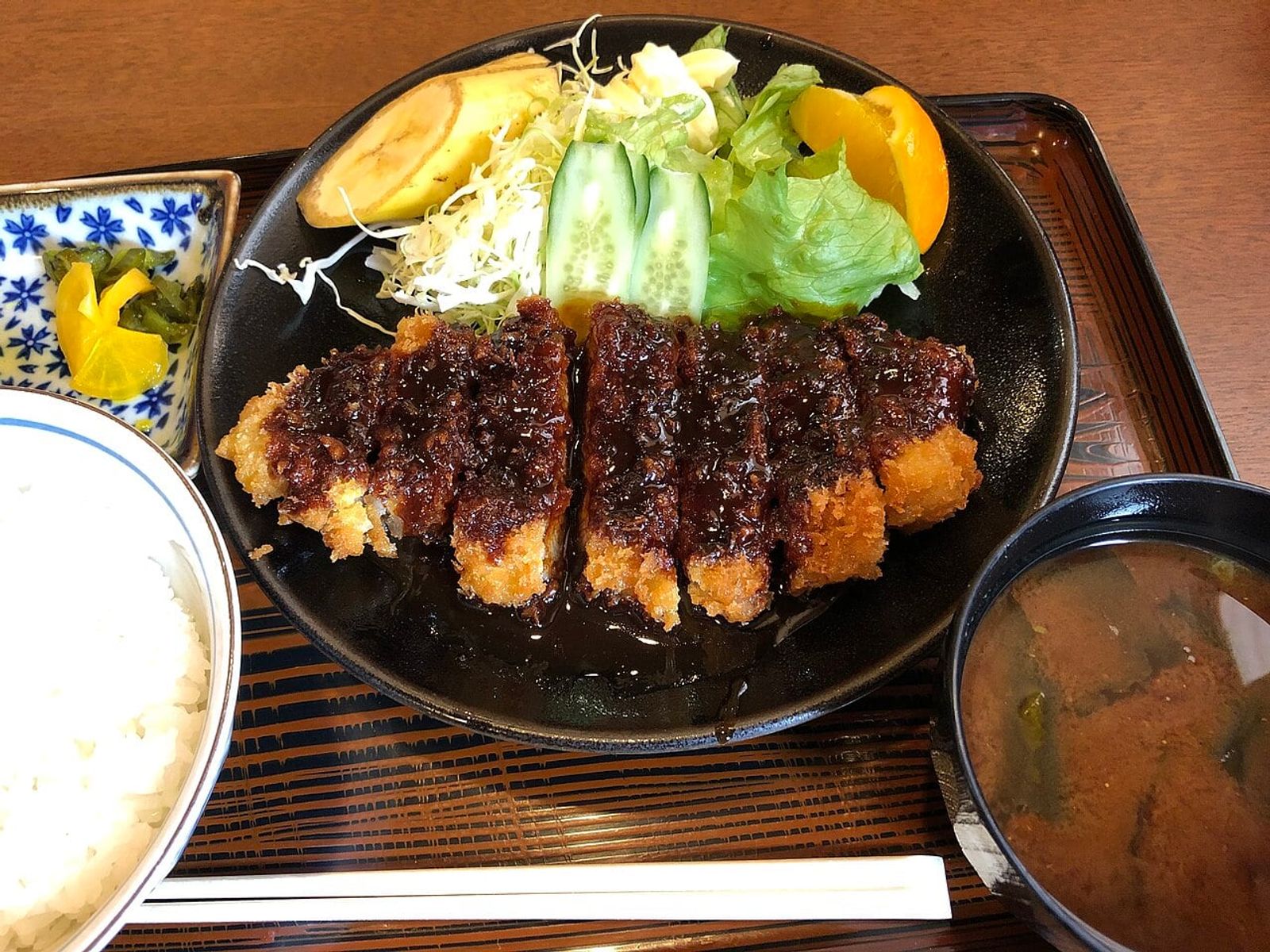
Tonkatsu (miso katsu)
Tempura and Tonkatsu: How Fried Dishes from Portugal and France Became Japanese Food
Tempura began with 16th-century Portuguese missionaries, tonkatsu with the 19th-century French cutlet. Explore Japan's 'yoshoku' culture of absorbing foreign dishes and transforming them, along with the birth of curry rice, omurice and Napolitan.
Tempura: A Fried Dish from 16th-Century Portugal
Tempura is shrimp, fish or vegetables coated in a thin batter of flour, egg and cold water and deep-fried. The name is thought to come from the Portuguese 'tempora' (periods of abstinence from meat, such as Lent) or 'tempero' (seasoning); after the Portuguese landed on Tanegashima in 1543, frying techniques entered Japan via Nagasaki. Cooking oil was scarce then, so fried food was a luxury. In the Edo period mass-produced sesame and rapeseed oil made tempura one of Edo's three great street foods alongside sushi and soba. What began as skewered fritters eaten standing at stalls evolved after the Meiji era into a refined counter cuisine where a master fries one piece at a time. Good tempura has a thin, crisp coating and an interior that keeps its moisture. It is dipped in salt or in tentsuyu broth with grated daikon; over rice it becomes tendon, and on soba or udon it becomes tempura soba.
Tonkatsu: The Japanese Transformation of the French Cutlet
Tonkatsu began in 1899 as the 'pork cutlet' at Rengatei, a Western-style restaurant in Ginza, Tokyo. Imitating the French côtelette — a thin piece of meat breaded and pan-fried — Rengatei instead deep-fried it in oil like tempura and served it with shredded cabbage. It was born from the drive to Japanize Western cooking after the Meiji government lifted the ban on meat in 1872. The thick tonkatsu we know dates to 1929, when Ponchiken in Ueno, Tokyo, fried pork 2.5 to 3 centimeters thick, pre-sliced it and served it with rice, miso soup and cabbage to be eaten with chopsticks. The moment it no longer required a knife and fork, tonkatsu ceased to be Western food and became Japanese. Old tonkatsu houses dot Ueno and the rest of Tokyo; you choose rosu (loin) or hire (fillet), and many places offer unlimited rice and cabbage refills. A set meal runs 1,500 to 3,000 yen.
Yoshoku: Curry Rice, Omurice and Napolitan
Dishes like tonkatsu — Western in origin but thoroughly Japanized — are called 'yoshoku'. The prime example is curry rice. Indian curry reached Japan via the British Navy as Meiji-era Japanese naval rations and became a roux-thickened sauce served over rice. Solid curry roux blocks were invented in the 1920s and companies such as House and S&B spread them to home kitchens; today Japanese eat curry more than once a week on average. 'Katsu curry', topped with tonkatsu, is yoshoku at its peak. Omurice, ketchup fried rice wrapped in a thin omelet, is credited to Rengatei in Tokyo or Hokkyokusei in Osaka in the early 1900s. Napolitan was created after the war by a chef at Yokohama's Hotel New Grand, inspired by the ketchup spaghetti U.S. troops ate — a dish that does not exist in Italy. Hamburg steak, cream croquettes and ebi furai (fried shrimp) are yoshoku too. This culture of adapting Western food to chopsticks and rice, together with ramen and tonkatsu, is at the heart of how Japan makes foreign things its own.
The World of Katsu: Miso Katsu, Katsu Sando, Katsudon, Kushikatsu
Tonkatsu comes in many regional and formal variations. Nagoya's miso katsu smothers the cutlet in a rich, sweet sauce made from red soybean miso (hatcho miso) and is a flagship of Nagoya's local cuisine. Katsudon simmers a cutlet with onion in soy broth, binds it with egg and serves it over rice; because 'katsu' sounds like the verb 'to win', people eat it before exams and matches. Katsu sando, a cutlet between slices of white bread, is said to have been created in the 1930s by Isen in Ueno, Tokyo, so geisha could eat without smudging their lipstick; luxury versions with wagyu are a recent trend. Kushikatsu from Osaka's Shinsekai district skewers meat, vegetables and seafood, coats them thinly and fries them, with one iron rule: no double-dipping in the communal sauce ('nido-zuke kinshi'). Chicken katsu, menchi katsu (breaded minced meat) and ham katsu are found everywhere in Japan as well.
How to Order and Eat at a Tonkatsu Restaurant
A tonkatsu specialist's menu divides mainly into 'rosu katsu teishoku' and 'hire katsu teishoku'. Rosu (loin) has a rim of fat, so it is juicy and rich; hire (fillet) has almost none, so it is tender and lean. Loin is recommended for a first visit. Some shops let you pick the weight (120, 180 or 250 grams), and the set includes rice, miso soup (often tonjiru with pork), shredded cabbage and pickles. On the table you will find thick tonkatsu sauce, mustard, salt and a small mortar of sesame seeds. Grind the sesame with the pestle to release its aroma, pour in the sauce, mix, and dip the cutlet. Trying the first piece or two with just salt lets you taste the pork itself. Dress the cabbage with sesame dressing or ponzu, and at many shops saying 'okawari onegaishimasu' gets you free refills of rice and cabbage. Eat the cutlet one piece at a time with chopsticks, and eat quickly while the crust is still crisp.