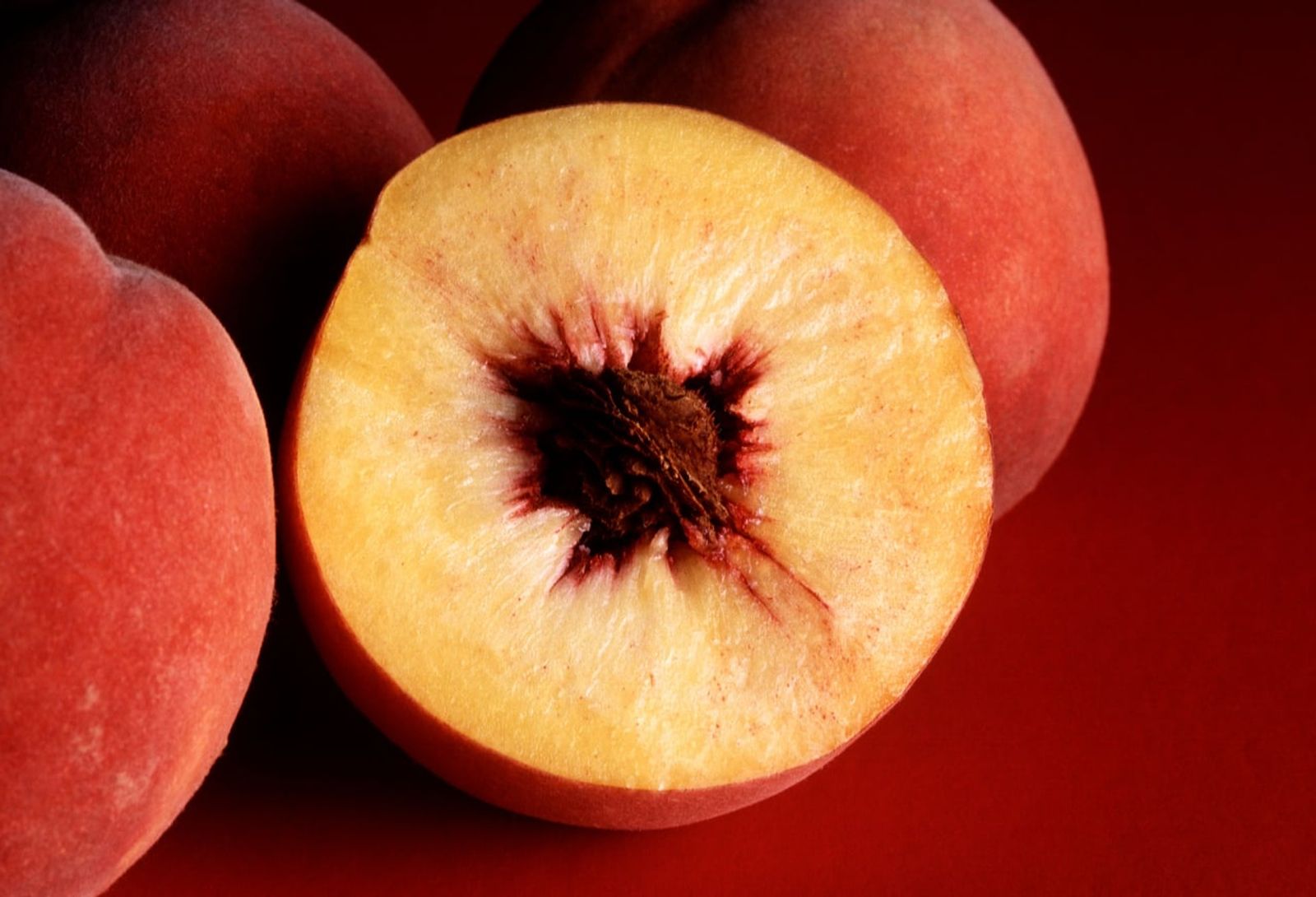
Bucheon's Sosa Peaches · Photo: Jack Dykinga, USDA / Public domain (Wikimedia Commons)
 KoreaGyeonggi · Bucheon
Bucheon's Sosa Peaches: The Lost Orchards Behind the Nickname 'Boksagol'
Today Bucheon is packed with apartment blocks and subway stations, but it was once a peach-growing center named in the same breath as Daegu apples and Naju pears. Here is the heyday of the Sosa peach, named after the city's old name, the orchards lost to urbanization, and the traces that remain in the nickname Boksagol, the city tree and local festivals.
Bucheon's Nickname, Boksagol
Almost any introduction to Bucheon mentions the word Boksagol. Boksa is a shortened form of boksunga, peach, and gol means village, so the name translates as 'peach village'. Travel articles, too, introduce Boksagol simply as another name for Bucheon. The administrative history is worth a look too. On July 1, 1973, Bucheon County was abolished and Sosa-eup was upgraded to a city, giving birth to today's Bucheon City. Until then the center of the area was Sosa, which is why its peaches were called Sosa peaches. Bucheon still has a Sosa District and a Sosa Station, so the old name is easy to spot. In other words, Sosa peach and Boksagol Bucheon are two names for the same land and the same fruit.
Ranked With Daegu Apples and Naju Pears
When did Sosa peaches make their name? A Rural Development Administration webzine explains that from the early 20th century until the 1970s the Sosa area of Bucheon thrived on growing new peach varieties introduced from Japan, and that the soil and climate suited peach farming well. The Kyeonggi Ilbo wrote that from the 1930s until urbanization in the 1970s, Sosa peaches were recognized, together with Daegu apples and Naju pears, as one of Korea's three great fruit-producing names. Another article says Sosa peaches boasted the best quality in the country before urbanization and that wild peach trees had long grown on Seongjusan Mountain. A 1961 elementary school social studies textbook is also said to have shown an orchard in peach blossom on its cover, suggesting how much peach orchards defined the local landscape at the time.
Orchards Turned Into a City
In a word, the peach orchards disappeared because of urbanization. Sitting between Seoul and Incheon, Bucheon grew fast as transport improved. The Kyeonggi Ilbo lists the milestones together: the Gyeongin Expressway opened in December 1968, Bucheon City was launched in 1973, and the Gyeongin Line was electrified in 1974. The heyday of Sosa peaches is recorded as lasting 'until urbanization in the 1970s', which overlaps exactly with this period. Today it is hard to find a peach orchard in Bucheon. At the opening of the 2023 Sosa Peach Festival, the chair of the city council remarked that peach blossoms and trees are rarely seen locally anymore, and worried that the peach trees on Chundeoksan, which had kept the tradition alive, might disappear with development around Yeokgok. The fruit-growing area is gone, but efforts to keep its memory alive continue.
Peaches Living On in the City Tree, Blossoms and a Song
The orchards may have shrunk, but the peach remains Bucheon's emblem. In a 2023 article, the chair of the city council described the peach tree as Bucheon's official city tree, saying the peach tree, its blossom and its fruit are the city's representative tree, flower and fruit. The glass greenhouse at Bucheon Botanical Garden is also said to be shaped after the peach blossom, a symbol of the city. In spring, peach-blossom events follow one after another, chiefly the Boksagol Arts Festival and peach blossom festival held around Chundeoksan every May. The Kyeonggi Ilbo wrote that the peach blossoms and azalea hill in the beloved children's song 'Spring in My Hometown' call Boksagol Bucheon to mind, while noting that the lyrics were not actually written about Bucheon. Pair a visit with the azalea garden on Wonmisan and the song's spring scene is easy to imagine.
The Summer Sosa Peach Festival
In summer, when peaches ripen, the Sosa Peach Festival takes place. Its opening ceremony at Bucheon Girls' Middle School in late August 2023 marked the 22nd edition, so it is a neighborhood festival with more than 20 years of history. According to the report, the Sosa Samgeori junction area was once famous for peaches, and the festival has become a way for residents to keep that name alive. To be honest with travelers, it is not easy to buy Sosa peaches as locally grown fruit in Bucheon today. Instead, the story shows what kind of landscape a Seoul-area city was built on. As you pass Sosa Station or Sosa Samgeori, picture the area once covered in peach blossoms. If you visit in summer, check the festival dates, then pick up a peach and climb Chundeoksan or Wonmisan to look out over the old Boksagol. It makes for a pleasant walk.