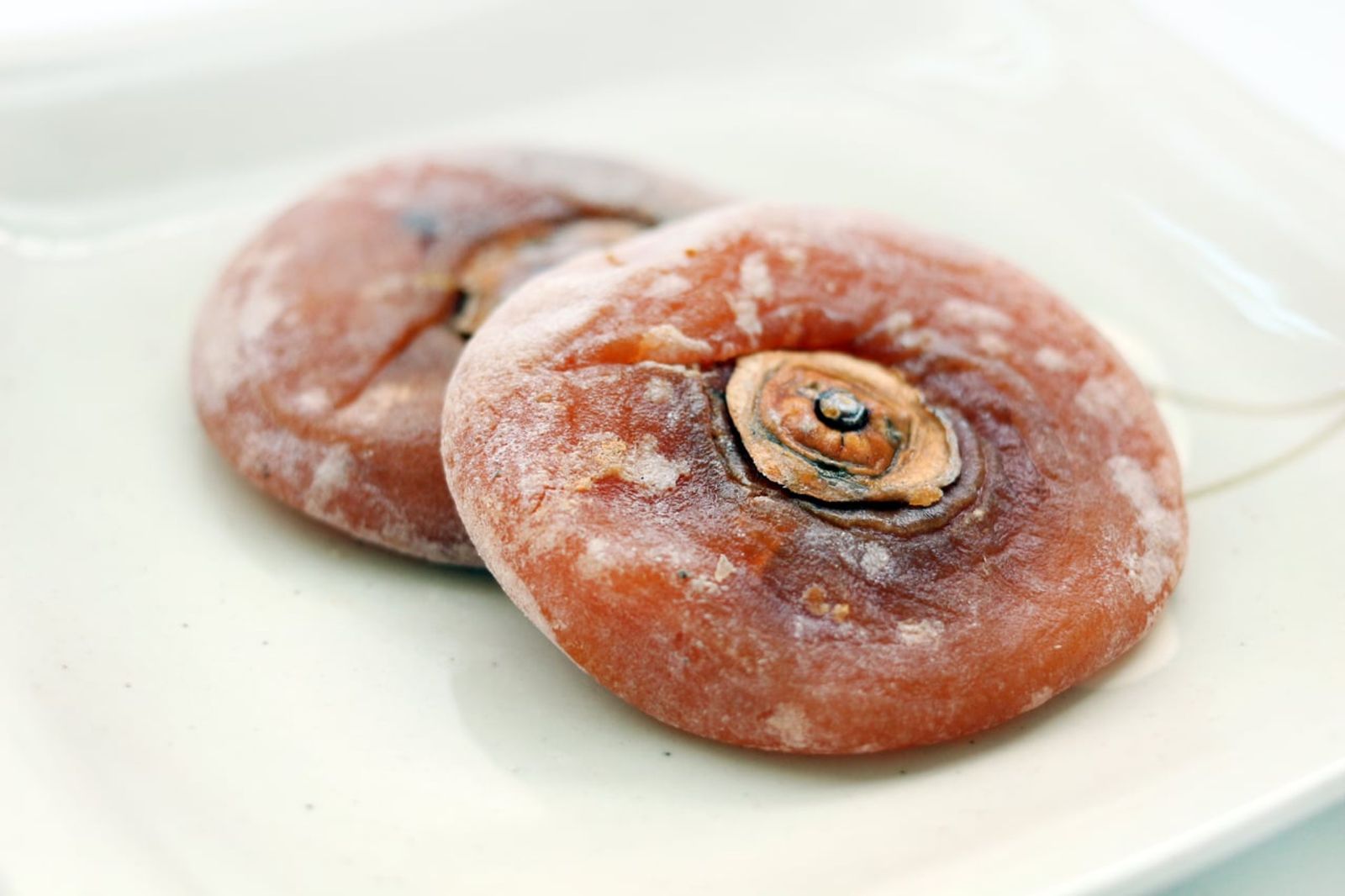
Gotgam with its natural white sugar bloom · Photo: Hyeon-Jeong Suk / CC BY 2.0 (Wikimedia Commons)
 KoreaSouth Gyeongsang · Sancheong
Sancheong Gotgam: Deoksan's Dried Persimmons, Shaped by Jirisan's Cold Winds and a Winter Auction House
In late autumn, rows of orange persimmons hang under the eaves of villages at the foot of Jirisan. Here is the Gojongsi persimmon with its royal name, why freezing nights and thawing days make it sweeter, the winter scene at the dried-persimmon auction and how to enjoy Sancheong gotgam.
Persimmon Villages on Jirisan's Eastern Slopes
Gotgam is a peeled, dried persimmon, and in Korea it is a fixture of holiday gift sets and ancestral-rite tables. Alongside Sangju in North Gyeongsang, one of the best-known producers is Sancheong in South Gyeongsang, especially Sicheon-myeon and Samjang-myeon on the eastern slopes of Jirisan. The area is also known by its old name, Deoksan. Sancheong gotgam is made from two native astringent varieties that grow here, Gojongsi and Danseongsi. In September 2006 it was registered as Korea's third geographical-indication forest product, meaning only persimmons dried in the designated area by the set method can carry the name. Mountain families planted persimmon trees in their yards and along the edges of their fields, picking the fruit in autumn and drying it through the winter.
Where the Name Gojongsi Comes From
Any conversation about Sancheong gotgam soon turns to the word Gojongsi. According to Korean press reports, the variety has been grown in the Deoksan area of Sancheong since the Goryeo dynasty, and it is said to have earned the name Gojongsi after being sent as a tribute to Emperor Gojong. Many articles say it was offered to the court in the Joseon era, but no widely known old document spells out how the name arose, so it is best enjoyed as a story handed down. Gojongsi is also grown in other gotgam regions such as Wanju in North Jeolla, which tells its own tribute story, so what sets Sancheong apart is less the variety name than the Jirisan climate of the Deoksan area and the production methods protected by its geographical indication. Gojongsi fruits are not too large and have few seeds, which is said to make them ideal for drying. A 2010 article described Sancheong gotgam as very sweet, with flesh that is sticky yet tender and few seeds. It is also a popular gift for important guests; reports say it was presented to Queen Elizabeth II in 2010.
Freezing at Night, Thawing by Day
Gotgam-making starts with peeling persimmons in late October. The firm, astringent fruit is peeled and strung or hung where sun and wind reach it, and whole villages look as if orange curtains have been drawn across them. According to encyclopedia sources, once the fruit has lost about two-thirds of its moisture it is shaped and dried again, then left until a white powder forms on the surface before the final drying. That powder is not mold but the fruit's own sugar rising to the surface and crystallizing. The reason Sancheong gotgam is so sweet is always said to be Jirisan's climate. Press reports explain that cold air from the mountain makes the fruit freeze at night and thaw by day, over and over, raising its natural sweetness. Since the big day-night temperature swing shapes the flavor, a warm autumn worries farmers: the fruit can turn mushy or grow mold.
The Winter Gotgam Auction
Sancheong's gotgam all comes together at the dried-persimmon auction house in Cheonpyeong-ri, Sicheon-myeon. Gotgam from Sicheon, Samjang, Jungtae and Deoksan is collected here, and auctions usually start in the first week of December. A 2013 article put annual auction sales at over 20 billion won. Gotgam has traditionally been counted in jeop of 100 pieces, and the article described 100 jeop as one dong, with more than 2,000 dong traded. A 2010 report said about 1,300 farms in Sancheong County produced 1,700 tonnes of gotgam. Sancheong's Gojongsi has been chosen for several years in a row since 2016 as one of the Ministry of Agriculture's "Representative Fruits of Korea"; the number of consecutive years differs by source depending on when each article was written. Pass by the auction house in winter and you will see gotgam neatly lined up in box after box.
How to Enjoy Gotgam and When to Go
Gotgam tastes quite different depending on how long it is dried. Half-dried bangeonsi stays soft and moist inside, sweet and tender, and is a popular holiday gift; fully dried gotgam is chewy and keeps longer. Bangeonsi spoils easily, so store it in the fridge or freezer. It is delicious on its own, but gotgam-ssam, a dried persimmon rolled around walnuts, is a traditional Korean sweet often served to guests. Sujeonggwa, a cinnamon and ginger punch with a dried persimmon floating in it, is a classic winter drink. For a visit, the best times are late October to November, when persimmons are peeled and hung, or December to January, when auctions are held. Sancheong County has held a gotgam festival in winter around the Sicheon-myeon auction house; the third edition took place in January 2010. Dates change every year, so check the county's announcements first.