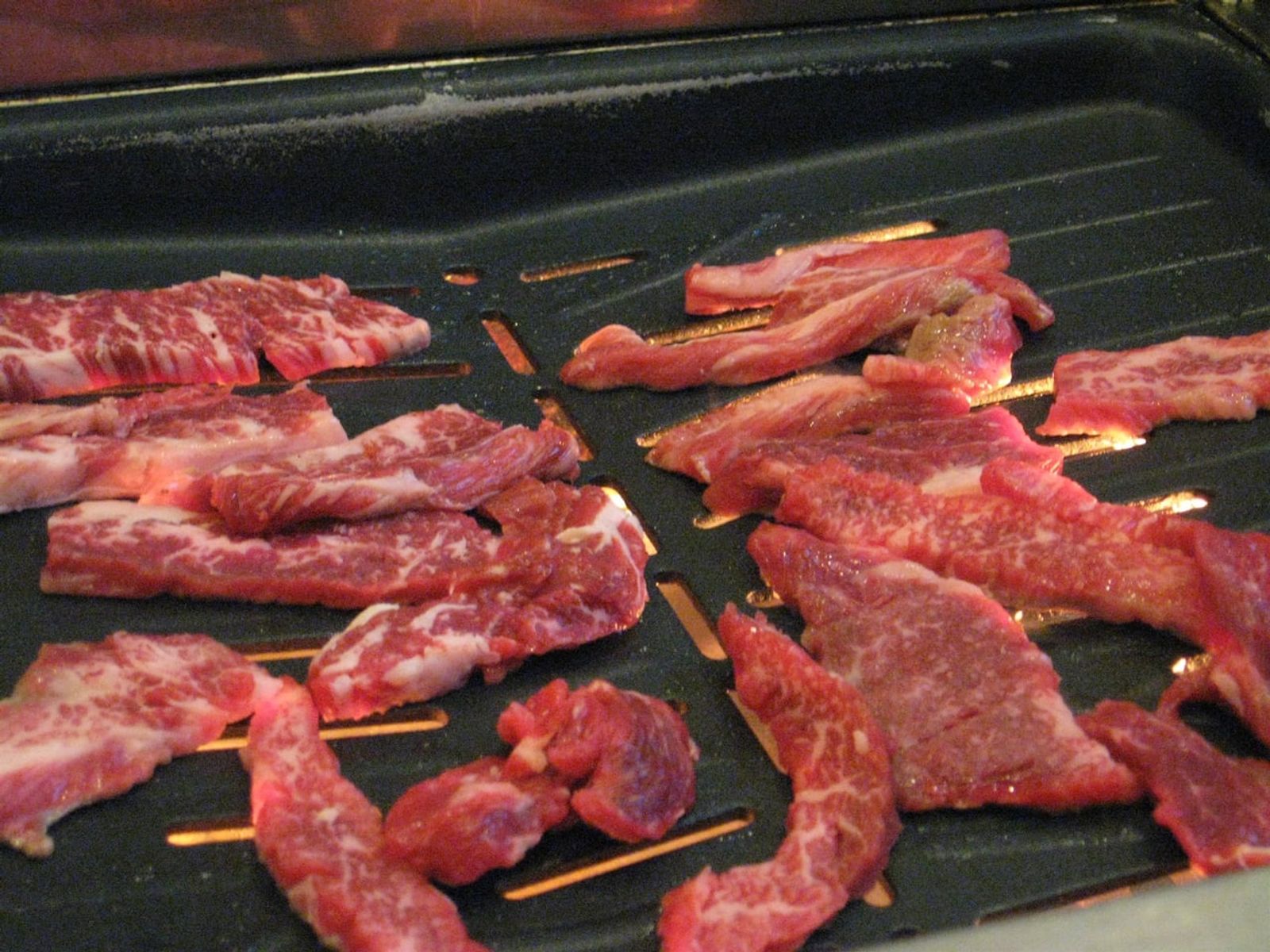
Hapcheon Samga Hanwoo · Photo: Ken Eckert / CC BY-SA 4.0 (Wikimedia Commons)
 KoreaSouth Gyeongsang · Hapcheon
Hapcheon Samga Hanwoo: The Market Town Where Butcher Shops Became Barbecue Restaurants
Every weekend, cars from Busan, Daegu and Jinju crowd into Samga, a small township in Hapcheon, South Gyeongsang, for one thing: Korean beef. Here is the nearly 300-year-old market and its cattle fair, how butcher shops turned into restaurants, and how to order a mixed platter and finish with doenjang stew.
Samga Market, Nearly 300 Years Old
In Samga-myeon, Hapcheon County, South Gyeongsang Province, a five-day market called Samgajang is held. It is said to be nearly 300 years old and was once so large that the whole township center served as the marketplace, making it one of the biggest in western Gyeongsang. Samga borders eastern Jinju, so it sat on the route linking Hapcheon and Jinju. Goods from many areas gathered here, and the market had a large rice exchange and a large cattle fair. With its mountainous terrain and clean environment, the area suited cattle raising, and its cattle fair, which supplied work animals to surrounding farm villages, is said to have thrived more than most. The name Samga hanwoo grows directly out of this cattle-fair tradition.
Cauldron Soup Next to the Cattle Fair
Food naturally gathered around the cattle fair. Near the old cattle yard at Samga market stood a row of soup shops simmering rich market-day gukbap in iron cauldrons, and it was the go-to meal for market visitors. Samga's soup was counted, along with those of the Uiryeong and Haman markets, among the signature market soups of western Gyeongsang. Market gukbap was a filling bowl for people buying and selling cattle and for those who had walked a long way to the market. Beef, bones and offal went generously into a long-simmered broth served with rice, so it made sense that the bigger the cattle fair, the better the soup. Even today some of Samga's beef restaurants also serve market-style gukbap on the side, a taste of those days.
From Butcher Shop to Barbecue Restaurant
Samga began turning into a "hanwoo street" in the late 1980s. According to a local newspaper column, butcher shops around then started, one by one, to become sigyuk sikdang (butcher-shop restaurants) serving beef dishes instead of soup. It worked like this: each butcher bought a whole animal at auction, broke it down and sold the meat, and on market days used the trimmings and offal to make cheap gukbap. As more customers asked to grill the meat right there, the shops set up a grilling area on one side, and that is said to be how today's beef-barbecue street began. There are now around 20 beef restaurants, most of them combined butcher shops and restaurants. Because they bring in whole animals and butcher them themselves, they can serve high-grade hanwoo at relatively low prices, which is the street's pride.
How to Order: A Mixed Platter, Then Stew and Rice
The signature order at Samga's restaurants is the hanwoo modum, or mixed platter. Traditionally several cuts are portioned generously onto one plate, usually including salchisal (chuck flap), anchangsal (outside skirt), tosisal (hanger), chimatsal (flank) and jebichuri (a thin strip along the neck bone). Some old-timers skip the fine butchering and simply hack the mixed beef into big, rough chunks, while more places now divide it further and serve special cuts on their own. If it is your first time, start with the platter and add whatever cut you liked best. After the meat, it is usual to finish with doenjang-jjigae (soybean paste stew). Here it is often made sharp with ttaengcho, a very hot green chili. Add rice and simmer it once more and it becomes sulbap, literally "drinking rice"; lingering over it with one or two more drinks is a familiar scene in Samga's butcher-shop restaurants.
Good to Know Before You Go
Samga is a township center well south of Hapcheon-eup, so most visitors come by car rather than public transport. According to the column, weekends get crowded with diners who drive in from Busan, Daegu and Jinju, so aim for a weekday or an early hour if you want a relaxed meal. Portions are generous, so order a little less at first and add more as needed. As the name butcher-shop restaurant suggests, many places have you pick meat at the butcher counter and grill it at your table. Each place works a little differently, so if it is your first visit, ask how ordering works. If you have come as far as Hapcheon, plan the day around Haeinsa Temple, home of the Tripitaka Koreana, or the scenery along the Hwang River. Tour the temple in the morning and finish with hanwoo in Samga for lunch or dinner for a full day in Hapcheon.