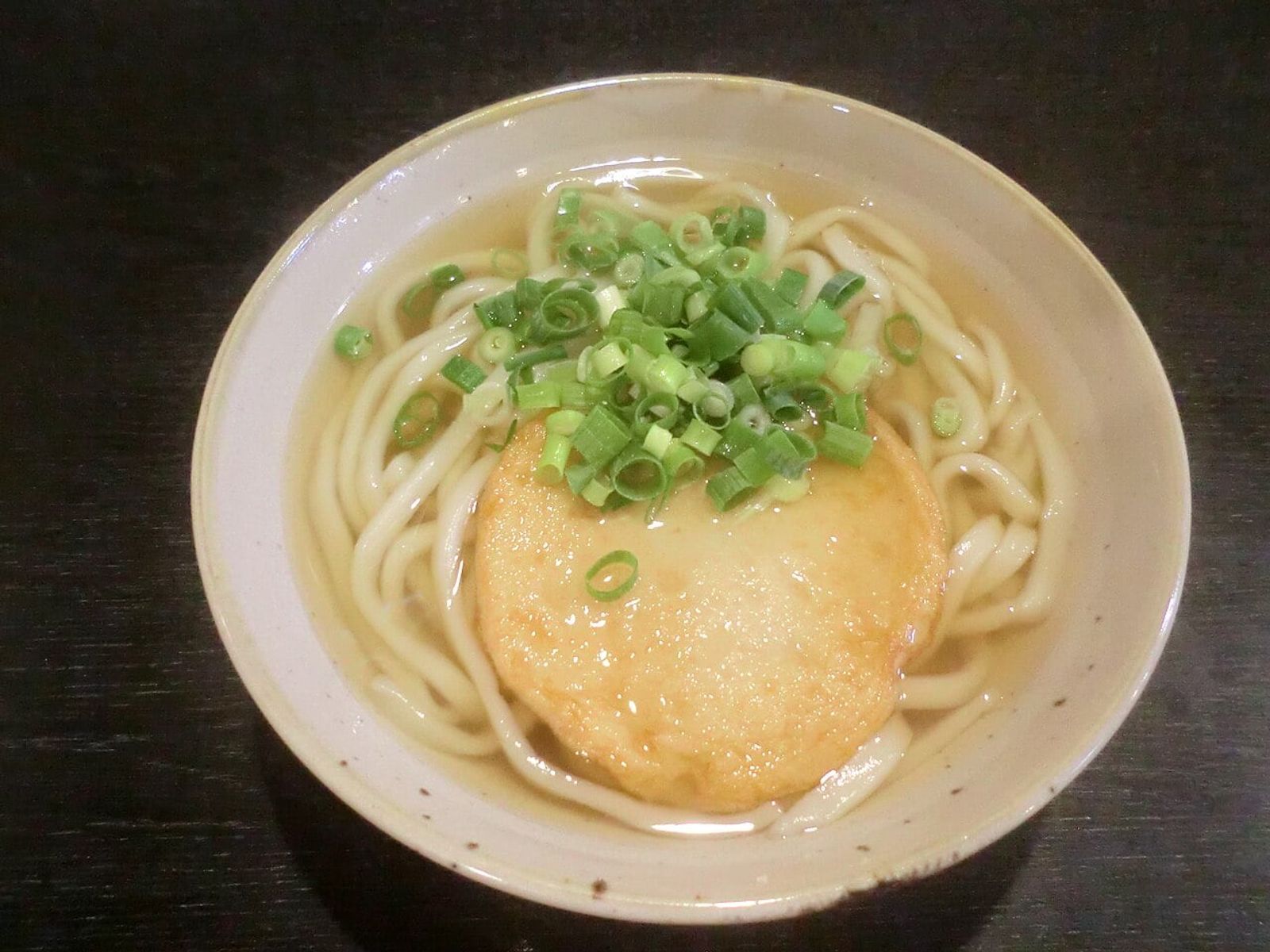
Udon
Udon and Soba: Udon in the West, Soba in the East — and Why the Broth Color Differs
Udon broth in Osaka is clear; soba broth in Tokyo is nearly black. Here are the origins of both noodles, the three great udon (Sanuki, Inaniwa, Mizusawa), why soba is slurped, and the custom of eating soba on New Year's Eve.
Udon and Soba: Wheat and Buckwheat
Udon is a thick, chewy noodle kneaded from wheat flour and salt water; soba is a thin, aromatic noodle made from buckwheat flour. Pure 100 percent buckwheat is 'juwari soba', while 'nihachi soba' — eight parts buckwheat to two parts wheat — is the most common. Both come as 'kake' (in hot broth), 'zaru' or 'mori' (chilled, dipped in a concentrated sauce) and 'bukkake' (cold noodles with broth poured over). A Japanese saying goes 'udon in the west, soba in the east'. Kansai, Shikoku and Kyushu, where wheat was widely grown, are udon country; Kanto, Tohoku and Nagano, whose volcanic soil suits buckwheat, are soba country. Tokyo's stand-and-eat 'tachigui' soba stalls at station fronts are a symbol of the working breakfast, and Osaka has udon shops in the same spots. A bowl of kake udon or soba costs 400 to 700 yen, or 800 to 1,200 yen with tempura or meat on top.
Why the Broth Differs: Kansai Dashi vs. Kanto Soy
In Kansai (Osaka, Kyoto), udon broth is a clear dashi of kelp and bonito flakes seasoned with pale 'usukuchi' soy sauce, giving it a transparent golden color. The aim is to showcase the dashi's umami, so seasoning is gentle and scallion, fried tofu and fish cake suit it. In Kanto (Tokyo), soba broth combines a strong bonito dashi with 'kaeshi' — dark 'koikuchi' soy sauce, mirin and sugar — making it dark and intense. The difference comes from water and ingredients. Kansai's soft water draws out kelp umami well, and Hokkaido kelp arrived by sea in Osaka first. Kanto's harder water favored bonito over kelp, and the region sat next to the dark-soy-sauce producing towns of Choshi and Noda in Chiba. The old joke that Tokyoites find Osaka udon 'like plain water' while Osakans find Tokyo soba 'too salty to eat' comes from this history. Even instant cup udon is sold in separate East Japan and West Japan versions.
The Three Great Udon: Sanuki, Inaniwa, Mizusawa
Kagawa Prefecture (formerly Sanuki) is called 'Udon Prefecture', the holy land of udon. Sanuki udon has square-edged, firmly chewy noodles, and at self-service shops you reheat the noodles yourself in hot water, ladle on broth, add tempura and pay — a bowl for 300 to 500 yen. Local styles include 'kamatama', fresh-boiled noodles with raw egg and soy sauce only, and 'shoyu udon', cold noodles with a splash of soy. Takamatsu Airport even has a tap that dispenses udon broth. Inaniwa udon from Akita is a thin, glossy dried noodle stretched by hand, with 300 years of history and a silky slide when eaten cold with dipping sauce. Mizusawa udon from Gunma developed along the pilgrimage road to Mizusawa Kannon temple; translucent and springy, it is dipped in sesame sauce. Other regional specialties include Nagoya's miso-nikomi udon simmered in miso broth, Fukuoka's soft-noodle udon topped with burdock tempura (goboten), and Osaka's kitsune udon with fried tofu.
Soba Culture: Edo Style and New Year's Eve
Soba flowered as a stylish commoners' food in Edo-period Tokyo. Edoites prided themselves on eating soba 'iki' (with flair): dipping only the tips of cold zaru soba in the sauce and slurping it up in one go. Slurping draws air in with the noodles so you smell the buckwheat through your nose, so at a soba shop the sound is not rude but the correct way. When you finish, staff bring 'sobayu', the water the soba was boiled in, in a small pot. Pour it into your leftover dipping sauce and drink it like a soup — the buckwheat's nutrients dissolve into it, so nothing is wasted. On New Year's Eve the custom is to eat 'toshikoshi soba': the long, thin noodles wish for long life, and just as buckwheat noodles break easily, they cut off the year's misfortunes. There was also 'hikkoshi soba', given to neighbors after moving house. Tokyo's historic soba houses include Kanda Yabu Soba (1880), Sarashina Horii (1789) and Sunaba, while Nagano's Shinshu soba, Shimane's Izumo soba and Iwate's wanko soba (endless refills in tiny bowls) are regional specialties.
Reading the Menu and Eating Well
Udon and soba menus are organized by topping. Kake (plain in broth), kitsune (fried tofu), tanuki (tempura crumbs), tsukimi (raw egg, 'moon viewing'), tempura (shrimp), niku (simmered beef), kare (curry broth), sansai (mountain vegetables), oroshi (grated daikon), nishin (simmered herring, Kyoto) and kamo-nanban (duck and scallion) are the classics. Cold styles are zaru, mori, bukkake and hiyashi; hot ones are kake and nikomi. A large portion is 'omori', extra-large 'tokumori'. When zaru soba arrives, add the scallion and wasabi to the dipping cup, pick up a mouthful of noodles, dip only the bottom third and slurp. When done, pour the sobayu into the cup and drink it. With hot noodles you may drink the broth but need not finish it, and shichimi (seven-spice powder) changes the flavor. Soba is dangerous for anyone with a buckwheat allergy, and udon broth usually contains bonito, so it is not fully vegetarian. Old shops turn tables quickly, so lingering is considered impolite.