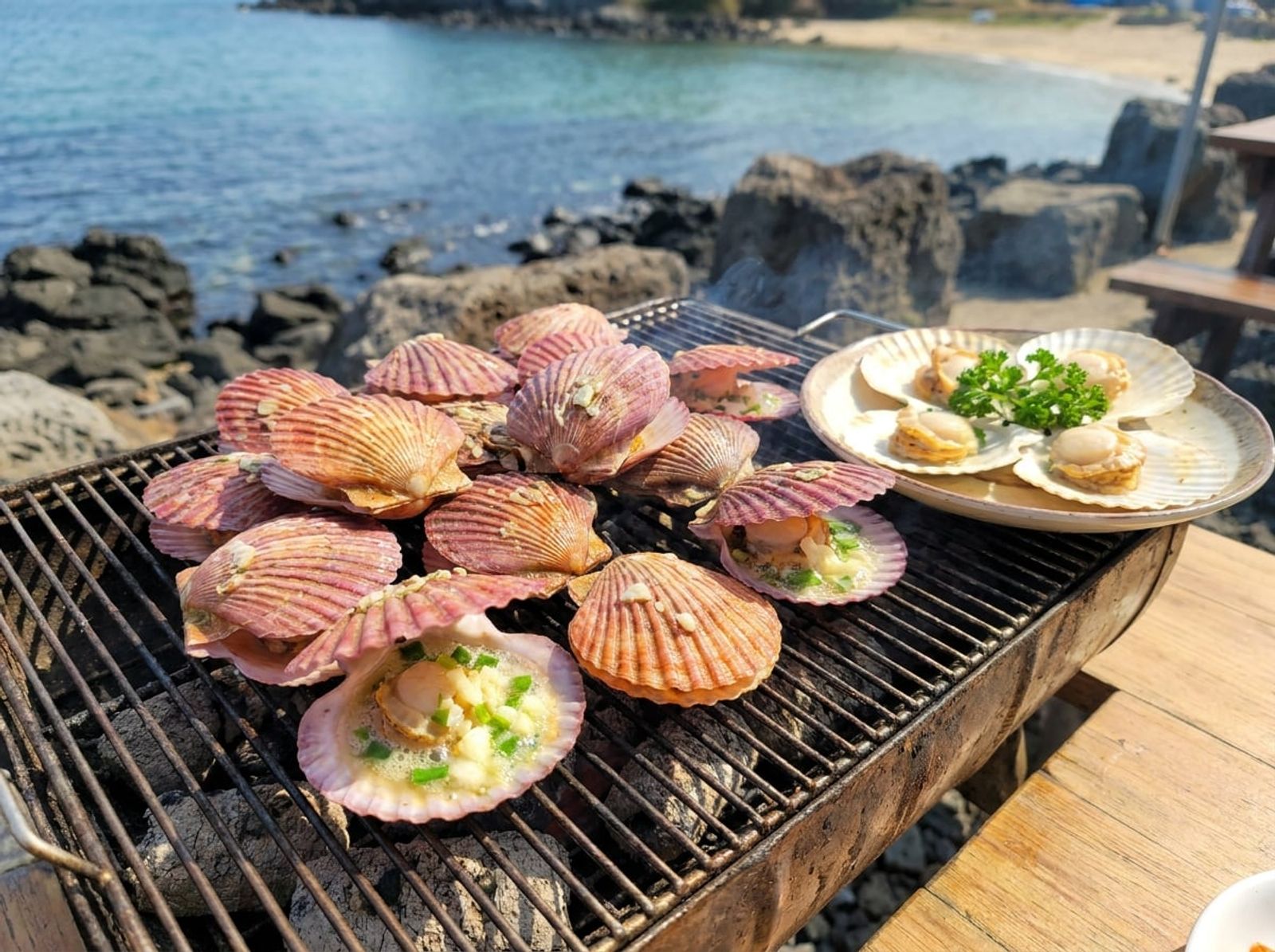
Goseong Scallops
 KoreaSouth Gyeongsang · Goseong (Gyeongnam)
Goseong Scallops: How Jaran Bay Grows Most of Korea's Scallops
Many of the scallops served steamed or grilled in Korean seafood restaurants in winter come from the waters off Goseong in South Gyeongsang. Here is why calm Jaran Bay suits scallop farming, the numbers behind Goseong's dominant share, the autumn scallop festival and how to enjoy steamed scallops.
Jaran Bay, a Calm Sea
Goseong County in South Gyeongsang is known for its dinosaur footprint fossils, but turn toward the sea and it is also scallop country. At the heart of it is Jaran Bay, south of the county. According to Korean press reports, Jaran Bay has slow currents and the water temperature and nutrients scallops need. Scallops are farmed hanging from lines in the water, so a sea with gentle currents and plenty of food is a big advantage. Jaran Bay is also designated by the U.S. Food and Drug Administration as a shellfish-growing area for export, and its water quality is checked regularly. That clean-water image underpins the Goseong scallop name, which is why you often see the label "Jaran Bay scallops" around Goseong.
Scallop Country in Numbers
Most Korean scallops come from South Gyeongsang, and most of those from Goseong. A 2023 report said Goseong produces about 70% of Korea's scallops and is the only area on the south coast whose biggest seafood income comes from a single product. A 2025 report citing provincial data said South Gyeongsang produced 11,525 tonnes in 2023 and 8,642 tonnes in 2024, over 90% of the national total, while another report that year put the share at 95%. Figures vary a little depending on how they are counted. Growth brought labor shortages. In 2023 Goseong became the first county in Korea to bring in foreign seasonal workers for scallop farming. It is a sign of just how much handwork goes into tending and harvesting scallops on their lines.
Scallop Season Arrives With the Cold Wind
Scallops are at their best from autumn into winter, when the cold winds blow. A regional food column explains that shellfish fill out and gain deeper flavor in cold weather. Around this time, scallops pile up at seafood restaurants and fish markets across Korea and are a must in grilled-shellfish platters. Goseong holds a scallop seafood festival in autumn to match the season. According to a 2023 report, the 7th festival ran for three days, October 20 to 22, around Nampo port under the theme "Into memories with scallops on an autumn night," returning to an in-person event after four years because of COVID-19. Visitors could sample scallops and oysters for free, and about 70,000 people attended in 2019. Dates and programs change every year, so check Goseong County's announcements.
How to Eat Steamed Scallops
The simplest and tastiest way to enjoy Goseong scallops is steamed. The method introduced in a food column goes like this: scrub the scallops in their shells, let them purge any sand, then set them on a steamer over hot steam. They are ready when the shells open and the meat plumps up; steam them too long and the meat shrinks and turns tough. Toppings are up to you. Garlic, hot cheongyang chili and green onion work well, as does a squeeze of lemon, or dip them in chogochujang (vinegared chili paste) or a soy-based sauce. Minari (Korean water parsley) adds a fresh aroma. The juice that collects in the shell is sweet, so spoon it up as it is. Don't throw away the leftover broth. Add kalguksu noodles, or rice to make porridge, and you have a second dish. Steamed scallops go equally well with drinks or with a bowl of rice.
Pairing Scallops With a Goseong Trip
If you visit Goseong in scallop season, the easiest plan is to time your trip to the autumn festival around Nampo port. Outside festival days, you can still find scallops all winter at fish markets in neighboring Tongyeong and Sacheon and at seafood restaurants along the south coast. When buying at a market, pick lively ones that try to close when you touch the shell. For a day by the sea, stop at the Sangjogam area on Goseong's coast, where dinosaur footprint fossils remain on the flat seaside rocks; it is a good walk with children. Hunt for footprints along the shore in the morning and finish the day with a platter of steamed scallops for a very Goseong day. It is also fun to combine it with oysters in nearby Tongyeong for a south-coast shellfish trip. Winter is when shellfish and oysters on the south coast taste best.