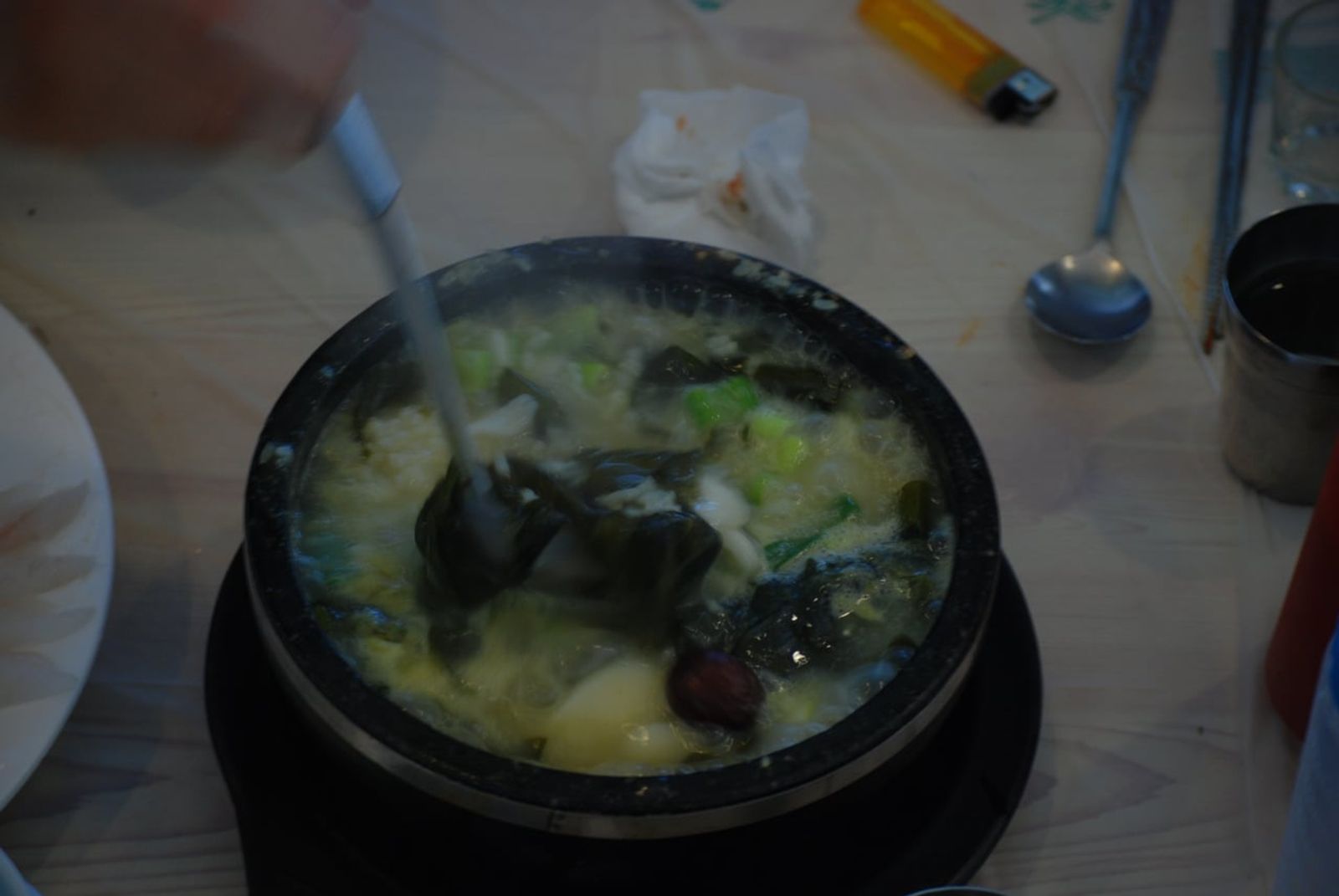
Muju Eojuk · Photo: suksim / CC BY 2.0 (Wikimedia Commons)
 KoreaNorth Jeolla · Muju
Muju Eojuk: A Spicy Freshwater Fish Porridge From the Upper Geumgang River
Muju, set between Deogyusan Mountain and the upper Geumgang River, is known for eojuk: freshwater fish simmered until the bones can be picked out, then cooked with rice and gochujang. Here is how a riverside picnic dish became the county's signature food, which fish go in, how cooks get rid of the fishy smell, and how to enjoy it.
Born From Riverside Fishing Outings
Eojuk simply means fish porridge. According to Korean press reports, its roots lie in cheollyeop, the traditional riverside fishing outing. After the lean spring months, as farming season approached, villagers would gather by the river, hang an iron cauldron over a fire, toss in the fish they had caught and share the pot to build up their strength. It was a communal dish and a pick-me-up before the summer heat. The word eojuk is said to appear in Sallim gyeongje, a late-Joseon household encyclopedia by Hong Man-seon. Muju is where streams from Deogyusan Mountain gather into the upper Geumgang River, so freshwater fish were plentiful, and the habit of cooking fish in a pot by the stream is said to have grown naturally into a local dish.
What Goes In: Bagasari and Other River Fish
Muju eojuk is made from fish caught in the upper Geumgang. The species most often mentioned in Korean reports are bagasari (Korean bullhead catfish), sand gudgeon, pale chub and Korean aucha perch. One report says the local style is bagasari eojuk, built around the catfish locals call jagami. Another names jagasari, a small torrent catfish, as the fish that makes or breaks the flavor. Local names overlap, so sources differ slightly. The fish is boiled and the bones are picked out. Rice (sometimes glutinous rice) goes in, along with perilla oil, green onion, onion, water dropwort, garlic, perilla leaves, garlic chives and homemade gochujang. Ground perilla seeds thicken it, and some kitchens add hand-torn dough. The result is red, peppery yet gentle, somewhere between a porridge and a stew.
The Secret to No Fishy Smell
Many people worry that freshwater fish will taste muddy or fishy. The one thing every article about Muju eojuk stresses is that it doesn't. The secret is time and careful prep. The fish is simmered until the flesh falls apart, and the bones are strained out. In a 2001 interview, one restaurant owner said she boiled it three times to get rid of the smell: after the first boil, the stock is strained through a sieve, then seasoned again. Another report describes fish cooked all day with constant stirring, ground fine, and soaked rice added only when an order comes in, so each bowl is cooked fresh. Gochujang and perilla add heat and a nutty richness. The broth is so refreshing that people in Muju also eat it as a hangover cure.
How Muju Became Eojuk Country
Eojuk is popular all along the Geumgang, including Yeongdong in North Chungcheong and Geumsan in South Chungcheong. Muju, though, is known for having many places that make it well, and some say it was the first place to serve eojuk as a restaurant dish. According to a 2001 Kyunghyang Shinmun article, a couple started selling porridge made from mixed fish caught in the Geumgang to make a living some 20 years earlier (around 1980). The husband grew up in Naedo-ri, a Muju village wrapped in a bend of the river. Word spread, and customers came from all over the country. Their restaurant was the first designated local-food restaurant in Muju County, and cooks from neighboring Geumsan reportedly came to learn the recipe. The claim to be Korea's first, however, comes from the owner herself. Today you may also spot local twists such as cheonma eojuk, made with gastrodia root, a Muju specialty.
How to Eat It and Where to Go
Eojuk usually arrives bubbling in an earthenware pot. It is very hot, so scoop from the edges a little at a time and let each spoonful cool. Side dishes are simple, such as dongchimi (radish water kimchi), kimchi, raw onion and green chili, and the cool dongchimi broth pairs perfectly with the spicy porridge. With a bigger group, locals often add a spicy stew of mandarin fish or catfish. Eojuk restaurants cluster around downtown Muju-eup and along the Geumgang near Naedo-ri's Apseom islet. Muju is full of mountain destinations such as Hyangjeokbong Peak on Deogyusan, Gucheondong Valley and Jeoksangsan Mountain, so a bowl makes a perfect warm-up after a hike or a day of skiing. It is also special during the Muju Firefly Festival, held since 1997, when you can eat by the river in the evening breeze.