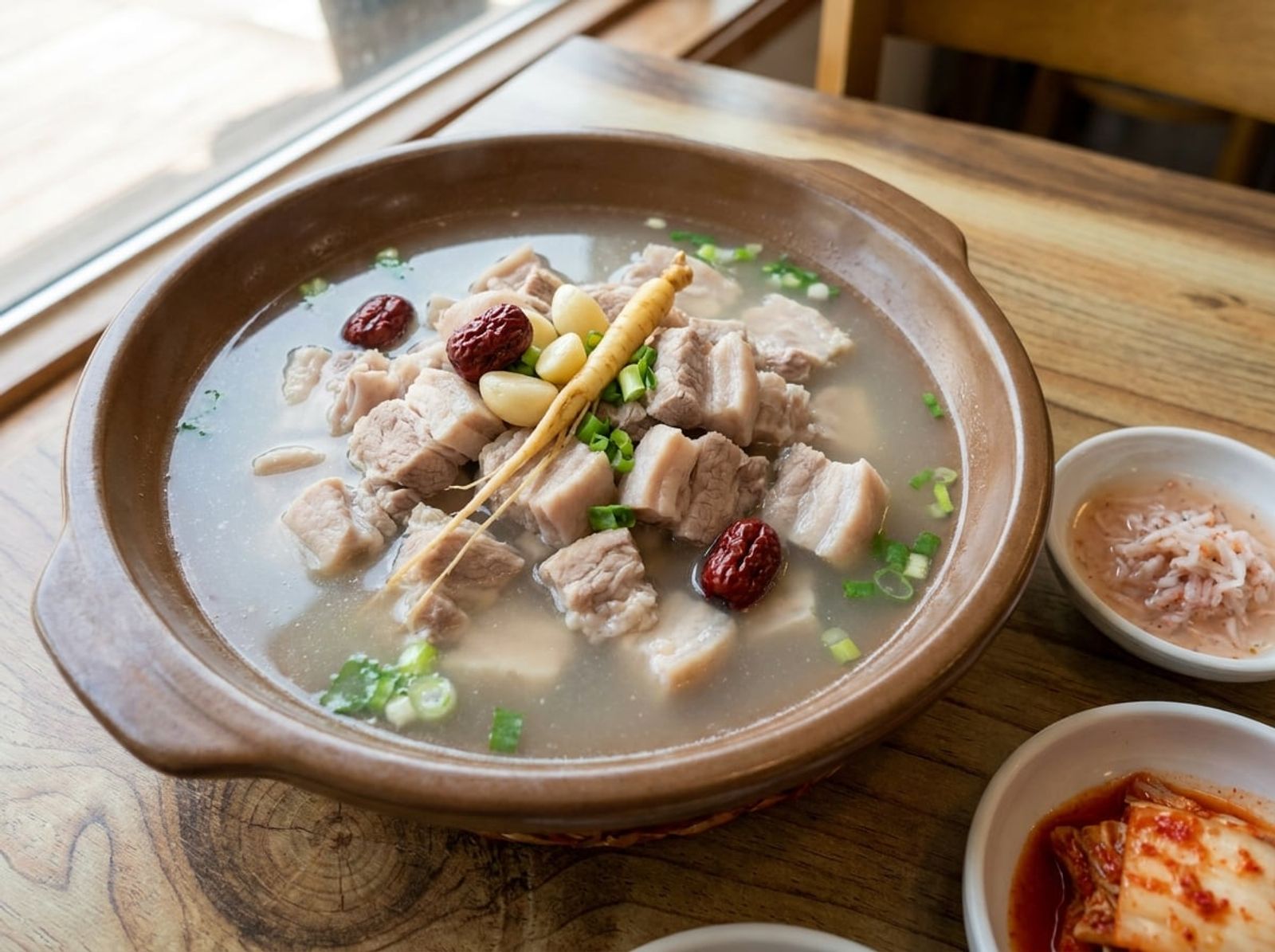
Jinan Aejeo-jjim
 KoreaNorth Jeolla · Jinan
Jinan Aejeo-jjim: The Fading Local Dish Nicknamed 'Sad Pig'
Jinan, home of Maisan Mountain, is known for aejeo-jjim, a whole young piglet slowly steamed or simmered. Here is how it went from a poor farm family's way of not wasting a lost piglet to a rich merchant's delicacy, what its name means, its link to a Jinan village rite, and why so few places still serve it.
'Child Pig' and 'Sad Pig'
Aejeo means a very young piglet, and aejeo-jjim is that piglet cooked whole. The name is written two ways in Chinese characters. The original uses 兒, meaning child. According to a Jeonbuk Ilbo column, because the word child could feel off-putting, people also wrote it with 哀, meaning sorrow. Two explanations of the 'sad pig' name are passed down. One is the sorrow of a piglet that died before it could be born. The other is the sorrow of people who had no choice but to eat even a piglet that had died. Either way, the name itself shows that the dish began not in plenty but in hardship. English-language articles have also introduced it under the name 'sad pig'.
From Poor Farm Kitchens to Rich Men's Tables
A sow gives birth to many piglets at once. Some die before birth, and some are crushed by the mother while nursing. In hungry times, farm families could not bring themselves to throw such piglets away, so they steamed them. That, according to a Jeonbuk Ilbo column, is how aejeo-jjim began. The dish then took an unexpected turn. According to the same column, late-Joseon merchants sought out aejeo-jjim to show off their wealth, to the point that pregnant sows were slaughtered so the unborn piglets could be cooked. Steamed piglet appears in cookbooks such as Gyuhap chongseo, Jeungbo sallim gyeongje and the colonial-era Joseon mussang sinsik yori jebeop, and it is said to have been served at aristocratic homes and royal banquets as a special dish.
Why Jinan? Memories of a Village Rite
Aejeo-jjim was never exclusive to Jinan. In 2002, the Kyunghyang Shinmun described a version served at a restaurant in Gwangju as a classic southern regional dish. Still, people in Jinan regard their county as the true home of aejeo-jjim. They point to a village rite. According to the Jeonbuk Ilbo column, the list of offerings for the dangsanje (guardian-spirit rite) of Gangjeong-ri in Jinan includes a baby pig, and although no one knows exactly when, villagers are said to have shared the piglet offered at the rite as a steamed dish. The column calls aejeo-jjim the most intriguing of Jeonbuk's ten signature tastes. A 2016 Korea Times article notes that while other folk dishes spread nationwide, steamed piglet stayed in and around Jinan.
Aejeo-jjim Today and How It Tastes
Aejeo-jjim made the old way no longer exists. According to the 2016 Korea Times article, laws and supply issues mean lost piglets can no longer be used, so cooks use suckling piglets that have not yet eaten feed, which keeps the meat from being greasy. The cooking is closer to a clear soup than a steamed dish. The same article describes the piglet simmered in a stone pot with ginseng and onion over a burner at the table, with white, faintly pink meat, jelly-like skin and very tender flesh. Old cookbooks also record stuffing the piglet with seasonings and steaming it in a pot. In 2002, a Gwangju restaurant was reported to serve a version simmered with medicinal ingredients such as jujubes, ginkgo nuts and deer antler, wrapped in aged perilla leaves, and finished with porridge made in the leftover broth.
How to Eat It and What to Know Before You Go
Aejeo-jjim is usually shared from one pot by a group. According to the 2016 article, the meat is dipped in salted tiny shrimp or vinegared chili paste, with raw garlic and green chili on the side to add heat to the mild meat. The most important tip is to check ahead. That article called aejeo-jjim an endangered dish and reported that the owner said theirs was the only such restaurant in the whole country, while another steamed-piglet restaurant in Jinan had closed about two years earlier. Recent reports on the dish are hard to find. Because the ingredient is hard to source, menus may change or a reservation may be needed, so confirm before you head to Jinan. It is also worth knowing that a dish using a whole piglet may not be for everyone. A good plan is to tour Maisan Mountain, whose twin peaks look like a horse's ears, and Tapsa Temple with its stone towers, and then try this old Jinan flavor.