Jindo Hongju
 KoreaSouth Jeolla · Jindo
Jindo Hongju: The Ruby-Red Spirit Colored With Gromwell Root
On Jindo Island in South Jeolla, the local soju is not clear but ruby red. Here are the competing theories about how hongju reached the island, how it is traditionally distilled and colored with gromwell root, how it nearly vanished before becoming protected heritage, and how to enjoy it.
A Soju That Isn't Clear
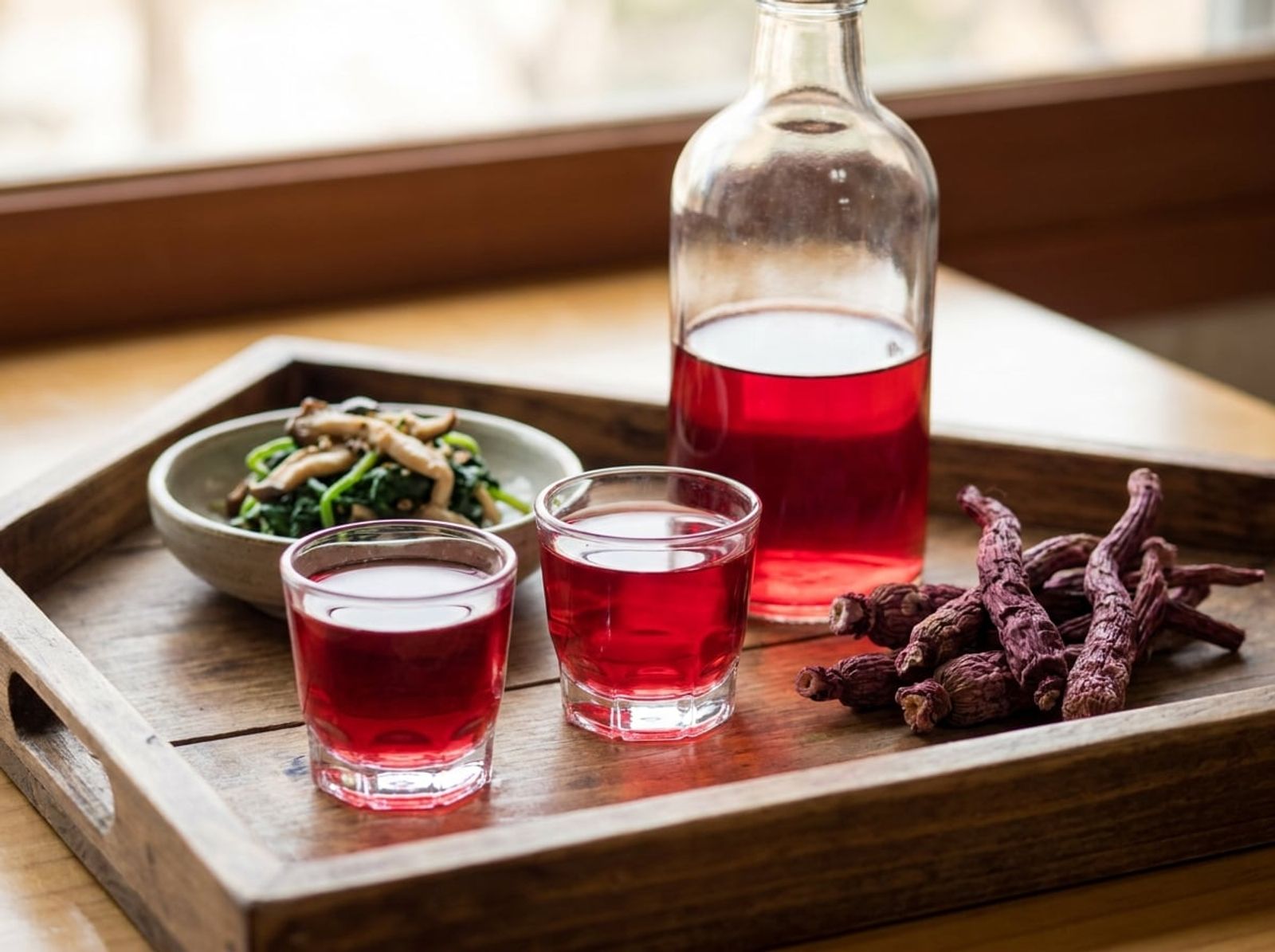
Korean distilled soju is usually as clear as water. On Jindo, an island county in South Jeolla Province, however, the soju pours a bright reddish pink. This is Jindo hongju, literally "red liquor." The color does not come from added dye: the freshly distilled spirit is filtered through the root of a medicinal herb called jicho (purple gromwell), which tints it. That is why it was also known in the past as jichoju, "gromwell liquor." According to Korean press reports, traditionally made hongju is strong, around 40 to 45 percent alcohol. Many drinkers still describe the finish as clean. Another fun detail: depending on how much root is used and how hot the still runs, the color ranges from deep crimson to pale pink.
When Did It Start? Several Theories
There is no exact record of when or by whom hongju came to Jindo. Distilling itself is generally believed to have entered the Korean Peninsula through the Mongol Yuan dynasty in the late Goryeo period, but there are several stories about how the technique reached the island. One links it to the Sambyeolcho, the rebel force that held Jindo during the resistance against the Mongols, or to the Mongol troops sent to crush them; but since gromwell hardly grows in Mongolia, some say a Mongol origin is unconvincing. Another says the recipe arrived with the Yangcheon Heo clan, who moved to Jindo around the reign of King Yeonsangun in the Joseon era. Yet another credits exiles sent to the island. Sources differ, but many outlets agree that in the Joseon period it was known as jichoju and sent to the king as a tribute item.
From Steamed Rice to Red Spirit
A 2004 Seoul Shinmun article described the traditional process like this. Rice and barley are mixed roughly 7 to 3 and steamed into firm godubap, then mixed with nuruk (a grain-based fermentation starter), packed into jars and left to ferment for about two weeks in a warm ondol room. The resulting mash goes into an iron cauldron and is distilled through an earthenware still called a sojutgori to collect clear spirit. The last step is hongju's secret. Finely chopped gromwell root is placed in a hemp pouch, and the fresh spirit is run through it, picking up its bright red hue. Gromwell has long been used as a medicinal herb. It once grew wild on Jindo but is now said to be cultivated only in certain areas. If the liquor is kept for a long time, it darkens toward a deep red-black and bits of root settle at the bottom, which is described as a natural result of aging.
From Near Extinction to Protected Heritage
In the 20th century hongju faced a real crisis. Crackdowns on home brewing grew stricter and cheap diluted soju spread, leaving little room for traditional distilled spirits. According to a 2004 article, before liberation in 1945 it had been a luxury drink made in prominent households, but once the crackdown intensified it was ordinary islanders, brewing in secret, who kept it alive. Preservation efforts gained momentum in the 1990s. A preservation society was formed in 1993, and hongju is reported to have been designated South Jeolla Intangible Cultural Property No. 26 in 1994. It was registered as a geographical indication in 2007, the same year exports began, starting with the United States. Jindo County has even named July 7 "Hongju Day," because the liquor's color resembles ruby, July's birthstone.
How to Enjoy It: Tips for Travelers
Because hongju is strong, it is best poured into a small glass and sipped slowly, enjoying the aroma and the color first. Jindo locals are said to have once taken a shot or two when they had an upset stomach or felt a cold coming on, but treat that as old folk custom rather than advice. It also works in cocktails. In a 2012 competition for cocktails based on Korean liquor, a hongju cocktail named "Jindo" was selected, and it has reportedly been part of Korea's bartender certification exam since 2014. Jindo County runs hongju experience programs, so check the county's tourism information for schedules before your trip. Many visitors also buy a bottle as a souvenir at local specialty shops in Jindo town. Just don't taste it on a day you are driving.