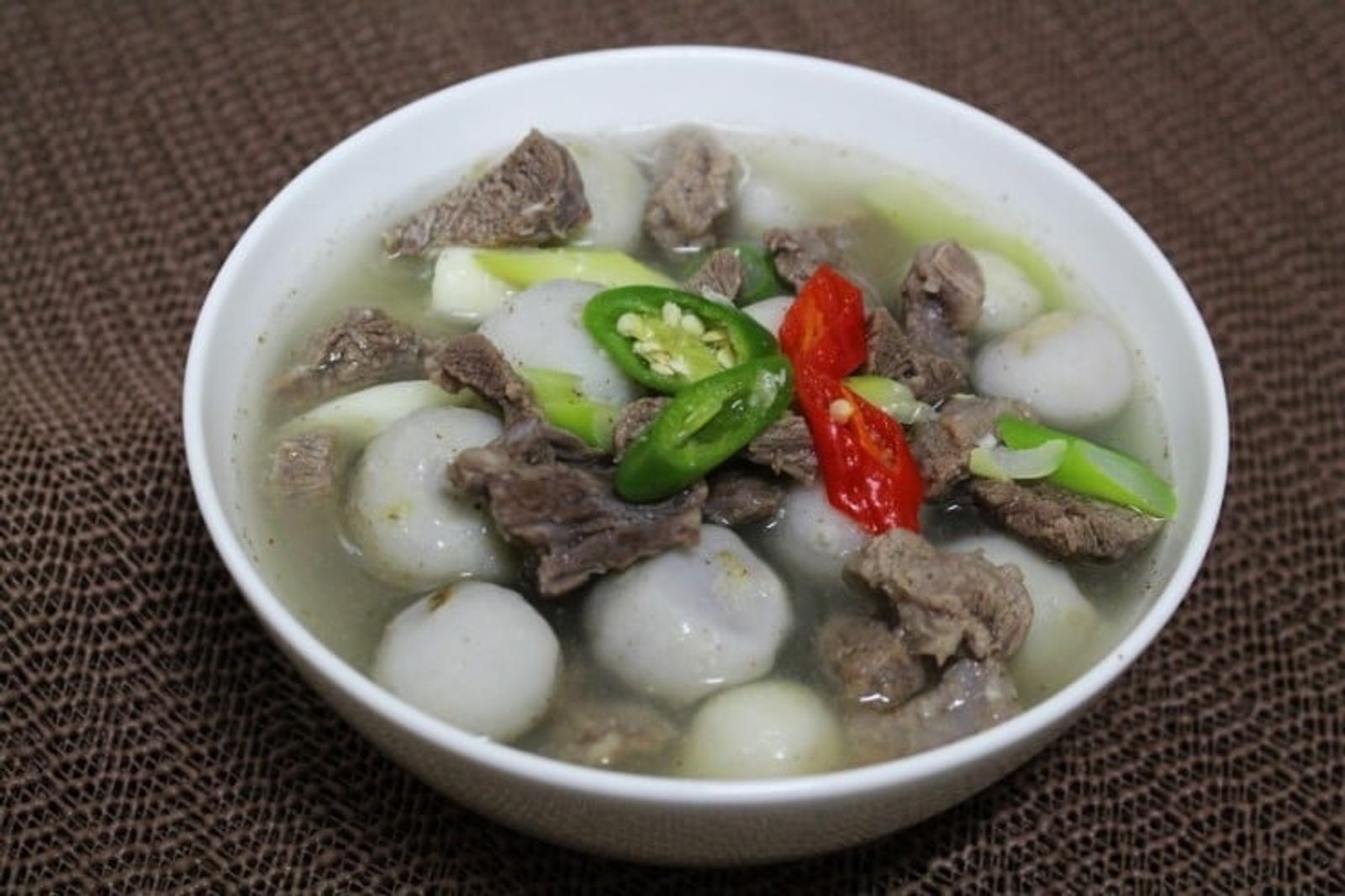
Clear taro soup with beef · Photo: 김정옥 / CC BY 2.0 kr (Wikimedia Commons)
 KoreaSouth Jeolla · Gokseong
Gokseong Taro: Home of Chuseok Taro Soup, and How to Prep and Eat Korea's First GI Taro
Many Korean families serve taro soup at Chuseok, the autumn harvest holiday, and the biggest source of that taro is Gokseong in South Jeolla. Here is the story of the county that first grew taro commercially and earned Korea's first geographical indication for it, tips for prepping taro without the itch, and how taro soup differs by region.
The Taro on the Chuseok Table
Taro (toran in Korean) is a vegetable grown for its underground corm. It looks a bit like a potato, but when boiled it turns silky and slightly sticky. Many Korean households make taro soup with the new crop around Chuseok, so a lot of people remember it as a holiday food. The leading place for taro is Gokseong County in South Jeolla. Gokseong is described as the first place in Korea to grow taro commercially, and in September 2019 "Gokseong Toran" became the country's first taro to receive a geographical indication. Figures on its share vary: a 2015 article said Gokseong accounted for about a third of Korea's 280 hectares of taro fields, while a 2022 article said it produced 70 percent of the national crop. The bases differ, so they are hard to compare directly, but reports agree that it is Korea's largest taro-growing area.
Why Gokseong Taro Is Prized
A 2019 report says Gokseong taro is known for the biggest corms in the country and for fetching the highest prices. According to the same article, taro is barely troubled by pests or disease, so it can be grown without pesticides. Taro is mainly harvested between August and November, and outside that window, cold-stored taro is sold. In a 2015 article, one farm owner said about 70 percent of Gokseong's taro is sold for Chuseok ancestral rites and most of the rest as health food. For Gokseong people, the weeks before Chuseok are the busiest of the year, spent digging, trimming and shipping taro across the country.
How to Prep Taro Without the Itch
What surprises first-time taro cooks most is the itch. According to a 2015 article, taro contains calcium oxalate, which causes itching if raw taro touches bare skin or is eaten raw. So taro must always be cooked, and wearing gloves while prepping is a good idea. Soaking it in vinegar water, rice-rinsing water or salt water is said to reduce the irritating compounds to some extent. Because peeling is fiddly, many people now buy machine-peeled taro. If you buy it unpeeled, choose smooth, unblemished corms, since damaged ones rot quickly. At home, it is much easier to boil the taro lightly in its skin and then peel it, and many households rinse the boiled taro in cold water to reduce the sliminess before adding it to soup.
Clear or With Perilla: Taro Soup by Region
Chuseok taro soup looks a little different depending on the region. According to a 2015 article, central regions usually make it clear with beef broth, while southern regions often add perilla seeds for a nutty richness. The clear version is made with a broth of beef and kelp, seasoned with soup soy sauce, while perilla taro soup has ground perilla seeds stirred in for a thick, toasty flavor. Taro has many uses beyond soup. Dried taro stems, torandae, are stir-fried as namul or added to soups such as yukgaejang (spicy beef soup), and the corms are braised or made into perilla stew. Gokseong has also been turning taro into products like ice cream and liquor; Gokseong's 2022 ice cream festival even featured taro ice cream as a headline flavor.
Finding Taro in Gokseong
To buy new-crop taro, visit Gokseong from late summer into autumn, during the harvest, especially around Chuseok. At markets in Gokseong town and local produce shops you can find soil-covered taro, peeled taro and dried taro stems side by side. Around Chuseok, Gokseong County has also held direct-sale markets in big cities such as Seoul, selling taro along with Gokseong melons, which also carry a geographical indication. Gokseong is known for the Seomjingang Train Village with its steam locomotive and for scenery along the Seomjin River, so it is easy to pair with a rail trip. Fresh taro spoils quickly at room temperature, so wrap it in newspaper, keep it somewhere cool and use it soon. Keep peeled taro refrigerated and use it within a few days.