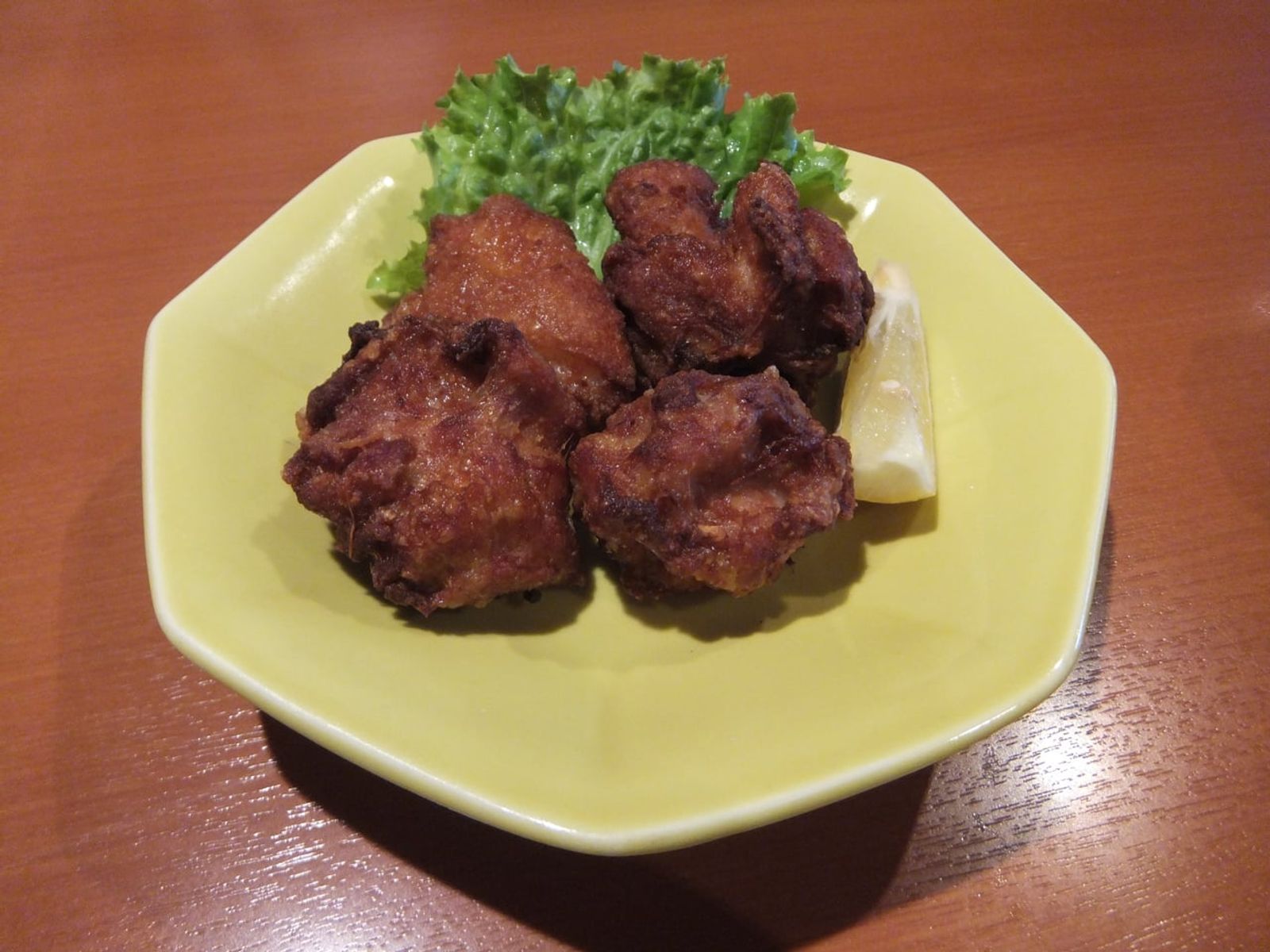
Zangi, Hokkaido-style fried chicken · Photo: 欅 / CC BY-SA 3.0 (Wikimedia Commons)
 JapanOtaru
Otaru's Half-Chicken Fry and Hokkaido Zangi: Half a Bird, Fried Without Batter
In Otaru, the hanmi-age, a young chicken split in half, marinated and fried without batter, is often called the city's soul food. Here is when it appeared, how it relates to zangi, Hokkaido's own fried chicken, and how to enjoy it.
Half a Chicken, Fried Whole
Otaru is known for sushi and seafood, but one of the foods locals call their soul food is chicken: wakadori no hanmi-age, or fried half young chicken. A small young chicken is split lengthwise, marinated in a house seasoning and then fried as is, with no batter at all. The skin puffs up crisp while the meat stays juicy, and the sight of half a bird arriving whole on the plate is impressive in itself. Unlike karaage elsewhere in Japan, it is not cut into bite-size pieces but fried on the bone. Even within Hokkaido, Otaru shops tend to use a salt-based seasoning while shops in Kushiro, in the east, tend to use soy sauce, so the flavor leans a little differently by area.
When Did It Start? Accounts Differ
Sources disagree on how the half-chicken began. The Hokkaido Shimbun says Otaru's hanshin-age was born "nearly 70 years ago," while the founding year of the old restaurant credited with popularizing it is given variously as 1952, 1956 or 1965 depending on the outlet. Some overviews of regional karaage say it started around 1965 in either Otaru or Kushiro. Whichever is right, several sources agree that the dish spread among Otaru's residents in the 1950s and '60s. Today you can find half-chicken shops bearing Otaru's name across Hokkaido and beyond.
Zangi: Hokkaido's Name for Fried Chicken
Talk about fried chicken in Hokkaido and one word always comes up: zangi (ザンギ), Hokkaido's name for karaage. Chicken is usually marinated in soy sauce, garlic and ginger, coated in potato starch or flour, and fried in hot oil. A strong marinade, sometimes left overnight, is often named as its defining trait. The line between zangi and karaage is blurry, though, and the view that they are essentially the same thing is said to be growing. In Hokkaido the word is also used beyond chicken: fried octopus is tako-zangi, and salmon or squid can be zangi too, so it has become a name for the cooking style itself.
Did the Name Come From Chinese?
There are several theories about where the name zangi comes from. The most widely cited is that it derives from the Chinese word for fried chicken, zhaji (炸鶏). Kushiro in eastern Hokkaido, which promotes zangi as a local specialty, even has a council dedicated to it, which defines zangi as something made as karaage. Other theories say it combines the Chinese dish zhazi ji (炸子鶏) with the Japanese word zangiri, meaning to chop short, or that it is related to senzanki, an old fried-chicken dish from Ehime Prefecture in Shikoku. Niihama in Ehime even has a local dish called zanki, and opinions differ on which came first. None of these theories has been settled.
Tips for Ordering and Eating
Because hanmi-age is half a chicken on one plate, the portion is generous. On your own it makes a full meal; in a group, share it alongside zangi or other dishes. It comes on the bone, so if it is awkward to eat, ask whether they can cut it up for you. Many places fry to order, so expect a short wait. Shops serving hanmi-age are found around Otaru Station and in the city center, and plenty of customers take it to go. Zangi, meanwhile, is everywhere in Hokkaido: izakaya, set-meal restaurants, bento shops and supermarket delis. If a menu lists both karaage and zangi, the shop has its own distinction in mind, and asking about the difference makes for a fun conversation.