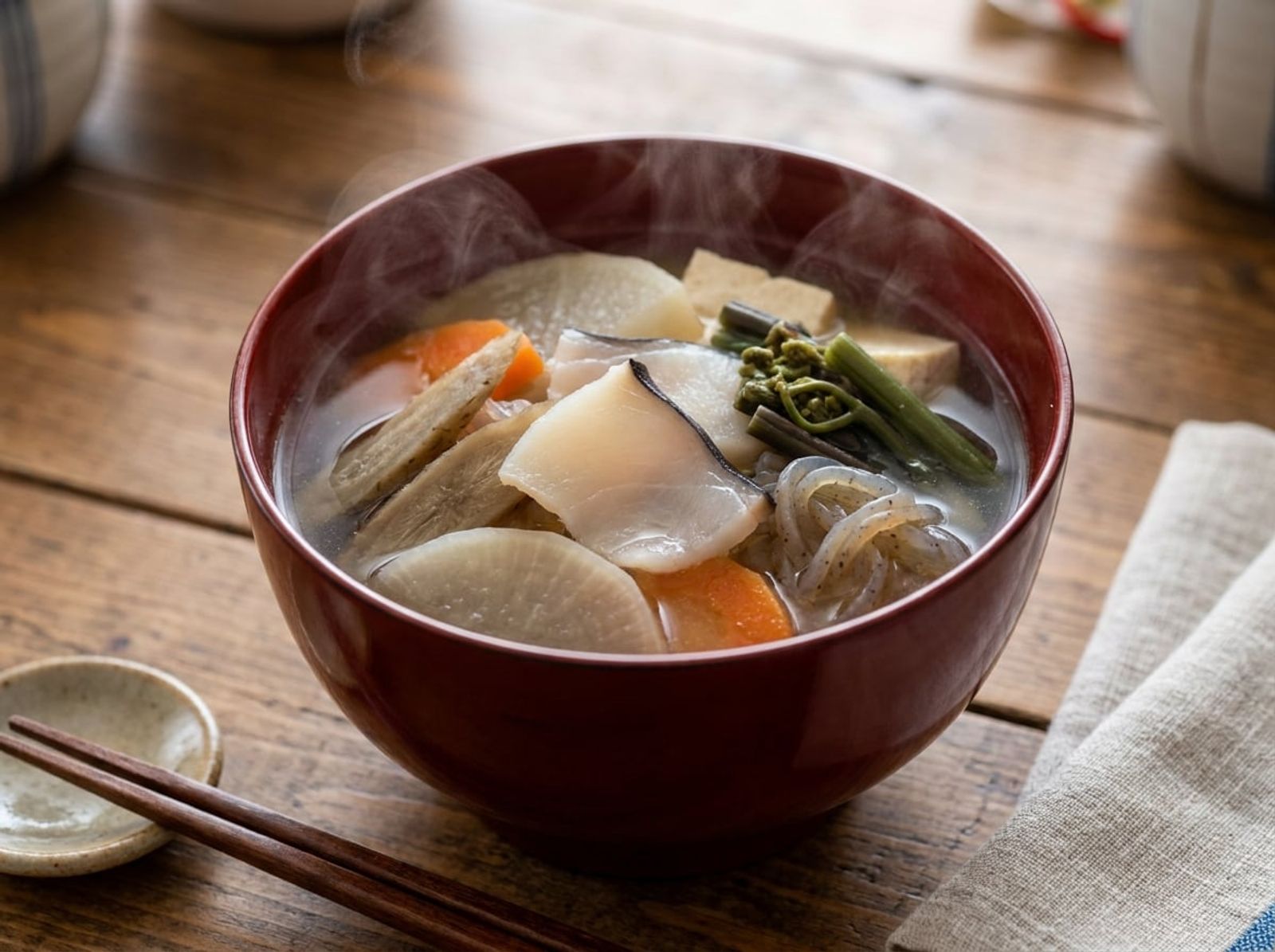
Kujira-jiru
 JapanHakodate
Kujira-jiru: Southern Hokkaido's New Year Whale Soup and the Whales That Drove In the Herring
In Hakodate and the rest of southern Hokkaido (Donan), New Year means kujira-jiru, a big pot of salted whale blubber, vegetables and wild greens. Here is why whale is eaten at New Year, what goes into the soup and how it differs from whale soups elsewhere in Japan.
A Must at New Year in Southern Hokkaido
Kujira-jiru (くじら汁, whale soup) is a New Year dish of Donan, the southern part of Hokkaido. The Hokkaido office of the Ministry of Agriculture, Forestry and Fisheries describes it as an indispensable festive dish of the Donan New Year, eaten since long ago on New Year's Eve and over the holiday. It is also said to have been widely made in the herring-rich fishing towns along the Sea of Japan coast. Many households are said to have made a big pot of salted whale, vegetables and wild greens as the New Year approached and reheated it through the holiday. Salted whale (shio-kujira) still appears in Hokkaido supermarkets at year's end, so the soup remains part of welcoming the new year.
Why Whale at New Year?
The Donan region thrived on herring fishing from the late Edo period through the Meiji era. According to the agricultural office, whales were seen as lucky because they drove herring schools toward the shore, so the soup carries a wish for a good catch. Another meaning comes from the way whales spout water so vigorously: the soup also carries the hope of becoming a person of great stature (omono) in the new year. In one bowl you can taste the life and hopes of fishing towns built on herring.
What Goes Into It
The basic recipe from the Hokkaido office goes like this. Thinly slice salted whale with the skin on and blanch it in boiling water to remove excess fat and salt. Cut daikon, carrot and konnyaku into strips, and shave burdock thinly and soak it. Make stock with kombu, add the whale, vegetables and bite-size wild greens, skim and simmer until tender, season with soy sauce, then finish with hand-crumbled tofu and green onion. In the past, bottled bamboo shoots and salt-preserved wild greens such as butterbur and bracken were desalted and added. Soy sauce is the standard seasoning, but salt or miso works too, and the ingredients vary from household to household. Crumbling the tofu by hand rather than cutting it helps it soak up the broth, a small trick handed down in home kitchens.
Compared With Whale Soups Elsewhere
Whale soup was once common across Japan. In Edo, people shared whale soup after the big year-end cleaning on the 13th day of the 12th lunar month, and in Hachinohe and the Shimokita Peninsula in Aomori, whale soup with grilled mochi is eaten at New Year. In Yamagata, by contrast, it is a summer dish cooked with new potatoes, eggplant and green beans to beat the heat, and in Niigata a miso-based whale soup with eggplant has long been eaten as midsummer stamina food. So Donan's kujira-jiru, eaten at New Year in winter, seasoned with soy sauce and full of wild greens, is a version tied to this region's herring-fishing culture. Because commercial whaling was halted from 1988 to 2019, though, home cooking of whale has declined nationwide.
How Visitors Can Try It
Kujira-jiru is basically a home dish for New Year, so it is not easy for visitors to find in restaurants year-round. Still, there are cafés in Hakodate that serve it as a taste of the region. Even if it is not on the menu, asking whether they have kujira-jiru around New Year might turn up a place that serves it. If you visit Hakodate at year's end, simply seeing salted whale laid out for New Year preparations in supermarkets and markets gives you a sense of how Donan welcomes the year. The soup is lighter than you might expect: a clear soy-sauce broth with the richness of the blubber and the aroma of wild greens. Attitudes toward eating whale differ from country to country, so whether to try it is your own call.