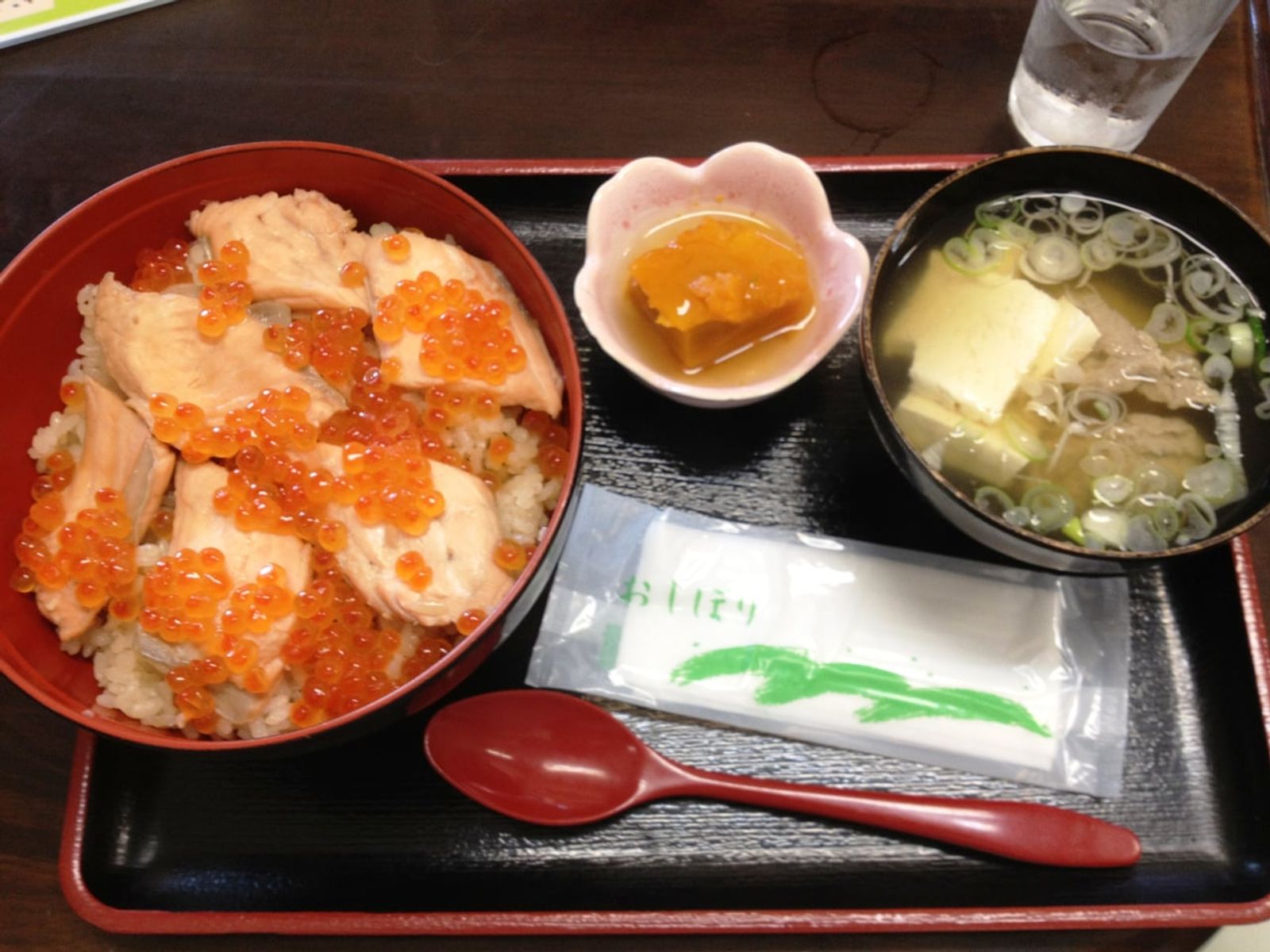
Harakomeshi with clear soup, as commonly eaten in Watari · Photo: クリオネサラダ / CC BY-SA 3.0 (Wikimedia Commons)
 JapanSendai
Harakomeshi: Miyagi's Autumn Salmon Rice Cooked in Salmon Broth and Crowned With Ikura
Born in the fishing villages at the mouth of the Abukuma River south of Sendai, harakomeshi is rice cooked in the broth used to simmer salmon, topped with the salmon itself and glistening ikura. Here is what the name means, the legend linking it to Date Masamune, how it is made and when to eat it.
"Harako" Means the Roe in the Belly
Harakomeshi (はらこ飯) is Miyagi Prefecture's signature autumn rice dish. Salmon is simmered in soy sauce, mirin and similar seasonings, the rice is then cooked in that same broth, and the bowl is finished with pieces of the salmon and a generous layer of ikura. Because the rice is cooked in the broth, it comes out a light brown. The name is usually explained as coming from harako or hara no ko, local words for the roe inside a salmon's belly. It is not the same as a salmon-and-ikura bowl on plain white rice: harakomeshi belongs to the takikomi gohan family, where the flavor of the salmon soaks into every grain. Today the toppings are arranged neatly on top, but in the past everything was apparently mixed together.
A Fishermen's Dish From the Mouth of the Abukuma River
The town usually named as the home of harakomeshi is Watari (亘理町), south of Sendai, and in particular the Arahama district at the mouth of the Abukuma River. Arahama was long known for salmon beach-seine fishing, where nets are hauled in from the sea onto the shore. In autumn, salmon gather at the river mouth before heading upstream, and the story goes that harakomeshi began as a dish fishermen cooked and shared after a big catch. Watari's own materials also mention another tradition: that it started as an offering to the local shrine in thanks for a good harvest and plentiful fish. Either way, it is a coastal dish that uses the whole salmon, flesh, roe and even the simmering broth, with nothing wasted.
The Legend of a Bowl Offered to Date Masamune
The story most often told about how harakomeshi became famous involves Date Masamune, the first lord of the Sendai domain. According to the Ministry of Agriculture and the town of Watari, when Masamune came to Arahama to inspect construction of the Teizanbori, a canal running along the coast, local fishermen offered him rice cooked with salmon roe. He was delighted and told his retainers about it, and its reputation spread. Accounts differ on what Masamune came to see, though; some say it was repairs to the Abukuma River. Miyagi Prefecture, while introducing the anecdote, adds that the dish's actual history is still a mystery. It is best enjoyed not as documented history but as a story that shows how proud the area is of this dish.
How It Is Made, and How It Differs by Area
The basic method is simple. The salmon is divided into fillet and roe sacs, and the roe is separated into individual ikura eggs. The fillet is simmered in a sauce of soy sauce, sake, sugar and so on, and the leftover broth is thinned and used to cook the rice. Ikura and salmon are then placed on top. Some cooks flake the salmon into the rice and put only the ikura on top. Whether the ikura is served raw, lightly blanched or cooked until the surface turns white varies from home to home; specialty restaurants often blanch it briefly to soften any fishy smell. The dish also changes by area: around Kesennuma in northern Miyagi, and in Iwate and Niigata, plain white rice is often used, so the rice stays white. The brown rice is a hallmark of the Watari style.
When and Where to Eat It
Harakomeshi is at its best in autumn, when the salmon return. Watari has named October 8 "Harakomeshi Day", and the dish was chosen for the national Ministry of Agriculture, Forestry and Fisheries list of 100 representative local dishes of rural and fishing villages. Watari also has a different rice dish for each season: hokki-meshi with surf clams in winter, shako-meshi with mantis shrimp in spring and asari-meshi with short-neck clams in summer. If you cannot get to Watari, harakomeshi is also sold as an ekiben (station bento) at Sendai Station and other stations across Tohoku. Back when Morioka was the end of the Tohoku Shinkansen line, it was reportedly a favorite of passengers changing to limited express trains bound for Aomori. If you visit Sendai in autumn, it is well worth trying alongside gyutan.