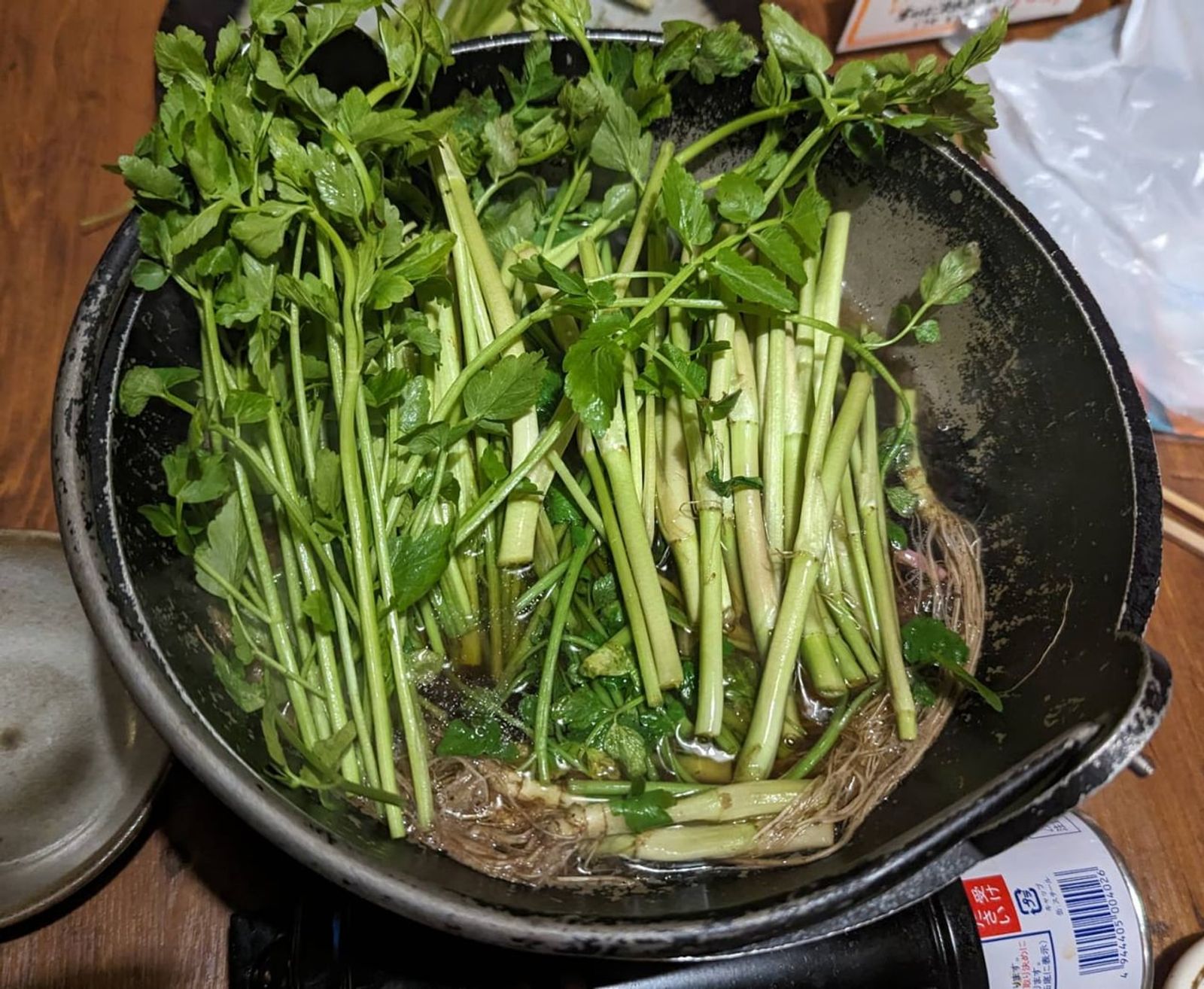
Seri nabe, a Sendai specialty · Photo: Hanabishi / CC0 (Wikimedia Commons)
 JapanSendai
Sendai Seri Nabe: The Winter Hot Pot Where You Eat Japanese Parsley Roots and All
A fixture of Sendai's winter izakaya, seri nabe is a hot pot of Japanese parsley in which the leaves, stems and even the white roots go into the pot. Here is the history of Sendai Seri, now protected as a Geographical Indication, and how this 2000s creation became a local classic.
Miyagi Grows More Seri Than Anywhere in Japan
Seri, known in English as Japanese parsley or water dropwort, is one of the seven herbs of spring (haru no nanakusa) and appears in the eighth-century poetry anthology Man'yoshu. Its fresh aroma has earned it the nickname "Japan's herb". Miyagi Prefecture leads Japan in seri shipments, and about 80 percent of them are Sendai Seri: seri grown to agreed standards in Natori (the former town of Masuda), just south of Sendai, and in Sendai's Taihaku Ward. In March 2024 it was registered under the Ministry of Agriculture's Geographical Indication (GI) protection system. It is prized for the contrast between bright green leaves and snow-white roots, and for its crisp bite.
Four Centuries of Seri Fields in Natori
Natori has grown seri for a very long time. According to the Natori city history, a document left by the headman of Kamiyoden village in the 1770s records that people began improving wild seri around 1620, and this is regarded as the start of cultivation. The land was a natural wetland fed by abundant groundwater from the Natori River, which flows down from the Ou Mountains, so seri had always grown thickly here. A verse by Date Masamune, lord of Sendai, about picking root seri survives, and records show that the area's seri was a specialty of the domain. A Meiji-era record even mentions 35 horse-loads of seri being shipped to Sendai. Since the Edo period, it has been famous as a vegetable that brings the scent of spring in the coldest part of winter.
How the Roots Went From Garnish to Star
The official GI specification for Sendai Seri actually tells the story of how seri nabe was born. In hot pots, seri used to be a supporting player added for color, so only the leaves and stems were used and the roots were thrown out. Around 2004, seri farmers in Natori teamed up with a restaurant in Sendai to create a hot pot with seri as the star, and proposed a new way of eating it: leaves, stems and roots all in the pot. Word quickly spread that it let you taste seri itself, and many restaurants began serving it as a Sendai specialty. From around 2014 it won a string of awards at hot pot contests in Sendai and nationwide, and it is also said to have spread further during the recovery after the Great East Japan Earthquake. The current practice of shipping seri with the roots attached dates back to a standard set in 1966.
What Goes In and How to Eat It
The basic combination is seri with chicken, or seri with duck. Leeks, burdock, tofu and fried tofu are sometimes added. The broth is often chicken stock seasoned with soy sauce, mirin and sake, but some places use a bonito-and-kelp dashi instead, so each restaurant has its own character. The fun is in tasting each part of the plant. The stems are crunchy, the leaves are the most fragrant, and the white roots release sweetness and an earthy aroma the more you chew. Because long simmering dulls seri's scent and texture, it is usually dipped into the pot briefly and eaten right away. Staff will often explain what to add when, so if it is your first time, it is worth asking.
When and Where to Try It
Seri is usually thought of as a spring green, but locally seri nabe is mainly a winter dish, because winter seri, tender enough to eat roots and all, is in season right when hot pot weather arrives. If you visit Sendai in winter, you will easily find it on the menus of izakaya and local-cuisine restaurants around Sendai Station and in the downtown nightlife areas. Seri also turns up all over Miyagi's table beyond the hot pot. It is essential in Sendai zoni, the mochi soup served at celebrations and New Year, and in nanakusa-gayu, the seven-herb rice porridge eaten on January 7 to wish for good health. It has long been used in dressed greens, tempura, miso soup and as a topping for soba. If you spot bundles of seri with roots attached at a market, you are looking at a winter scene from a 400-year-old growing region.