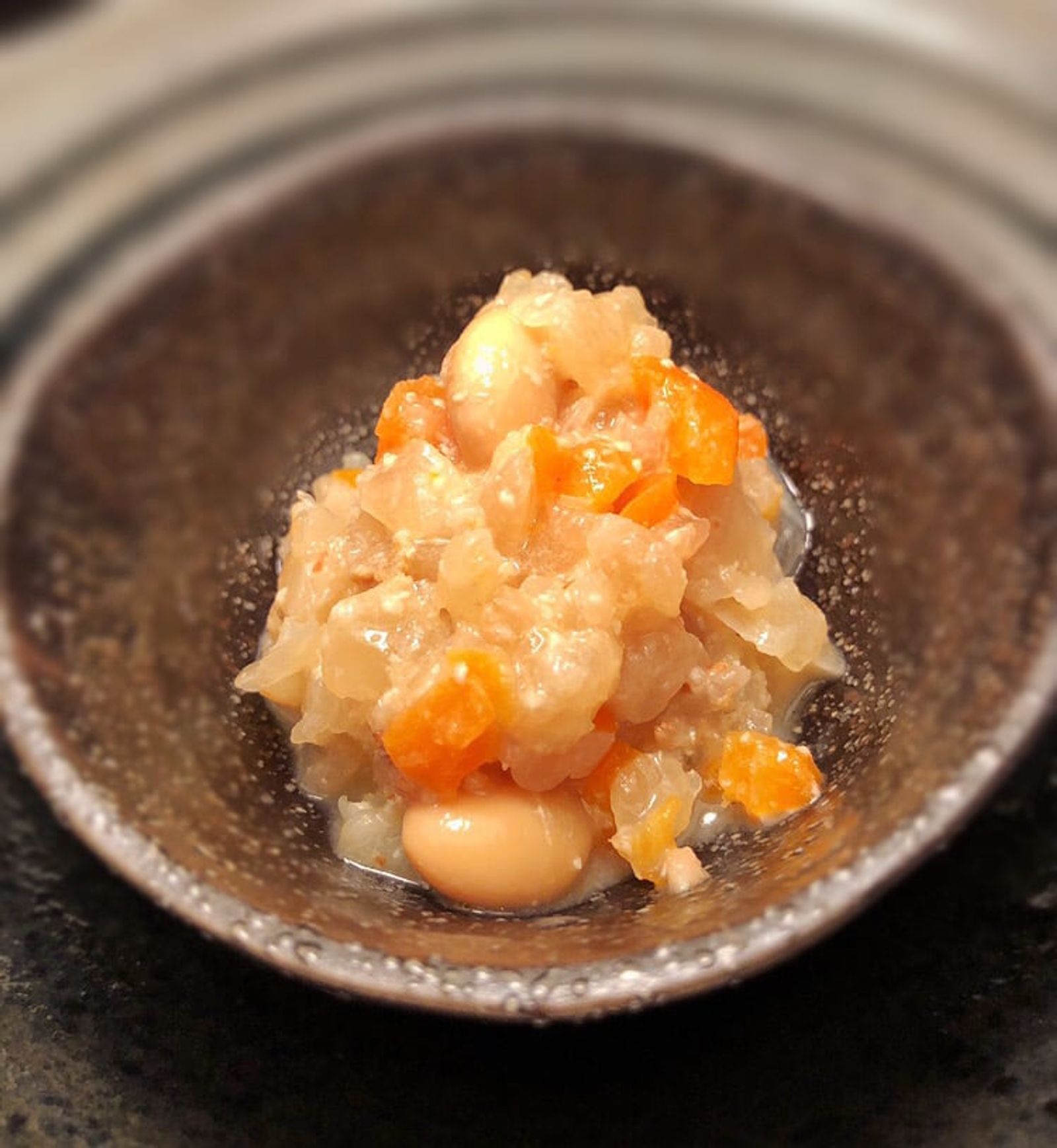
Shimotsukare, a Tochigi local dish · Photo: あきらぱいせん / CC BY-SA 4.0 (Wikimedia Commons)
 JapanNikko
Shimotsukare: Tochigi's Hatsuuma Dish of Salmon Heads, Leftover Setsubun Beans and Sake Lees
In Tochigi, the prefecture that is home to Nikko, there is a local dish made on the first Day of the Horse in February: salmon heads, beans left over from Setsubun and coarsely grated daikon simmered with sake lees, then offered at Inari shrines. Here is the origin, the customs and the puzzling name of shimotsukare, a famously divisive dish.
A Dish Made Wisely From Leftovers
Shimotsukare is a local dish handed down in the northern Kanto region, centered on Tochigi Prefecture. Its ingredients are unusual: the head of a shiozake salted salmon left over from New Year, roasted soybeans left over from Setsubun in early February, when beans are thrown to drive out evil, and odds and ends such as carrot, all finely chopped. Daikon is grated coarsely on an onioroshi, a rough bamboo grater, and everything is simmered with sake lees. It is a dish of household thrift, gathering what is left at the end of winter into a single pot instead of throwing it away. With its distinctive flavor and aroma and humble appearance, it is also famous for dividing people sharply into fans and detractors. In 2007 it was chosen, together with chitake soba, as one of Tochigi's representative dishes in the Ministry of Agriculture's list of 100 local dishes of rural and fishing villages.
An Offering to Inari on the Day of the Horse
Shimotsukare was traditionally not an everyday side dish but a dish for a particular day. It is made on Hatsuuma, the first Day of the Horse in February, and offered with sekihan (red bean rice) at the local Inari shrine. Inari is the deity of grain and abundance, so the offering carries a prayer for a good harvest before the farming year begins. The dish also comes with a charming belief: eat the shimotsukare of three households (some say seven) and you will not suffer a stroke, and the more homes you try it from, the healthier you will be. In some areas, the custom of sharing it with neighbors in tiered lacquer boxes still continues. Every household's version tastes a little different, so sharing it was also a chance to compare one another's cooking.
The Puzzle of the Name: Three Theories
No one knows for sure where the name shimotsukare comes from, and there are three main theories. The first links it to shimitsukaru, an old word meaning that flavor has soaked in, or that something is cold. The second traces it to sumutsukari, a vinegared dish mentioned in old texts such as the Uji Shui Monogatari, because the dish was once eaten with vinegar. The third says it is a corruption of shimotsuke karei, "a custom of Shimotsuke households", Shimotsuke being the old name of Tochigi. The dish also goes by many local names, including shimotsukari, shimitsukari, shimitsukare, sumitsukare and sumitsukari. The very fact that the name has branched in so many directions shows that it was passed down separately in village after village over a long time.
In the Edo Period It Was Just Beans and Daikon
Today's shimotsukare is a rich dish with salmon heads and sake lees, but until 100 to 200 years ago it was apparently much simpler. The 1830 essay collection Kiyu Shoran describes it as soybeans and grated daikon dressed with vinegar. An "Edo-period shimotsukare" recreated from this record was served as a school lunch at a nursery school in Kanuma, Tochigi, on March 23, 2021, the date of Hatsuuma on the old lunar calendar, and drew attention. The dish is also more widespread than you might think: it is made not only across Tochigi but also in western Ibaraki, eastern Saitama, northern Chiba and Okuaizu in southern Fukushima. Kashiwazaki in Niigata has a similar dish of salmon trimmings, coarsely grated daikon, sake lees and miso, though any connection is unclear.
Meeting Shimotsukare in Nikko
Shimotsukare has close ties to Nikko. In early February, the Michi-no-Eki Nikko roadside station hosts the All-Japan Shimotsukare Contest, where cooks compete with their household versions; in 2026 it returned after a five-year break. If you visit Nikko in winter, this is the season when you are most likely to come across it locally. It can be unfamiliar to first-timers, but these days cooks take care with preparation, for example grilling the salmon heads first to cut any fishy smell, and ryokan serve it neatly in small dishes, all to make it easier for younger people and visitors to enjoy. The gentle sweetness of the sake lees, the nuttiness of the beans and the crunch of the daikon come together, and it is eaten with warm rice or as a snack with sake. New twists have appeared too, such as a curry version served as a local specialty at Shiobara Onsen.