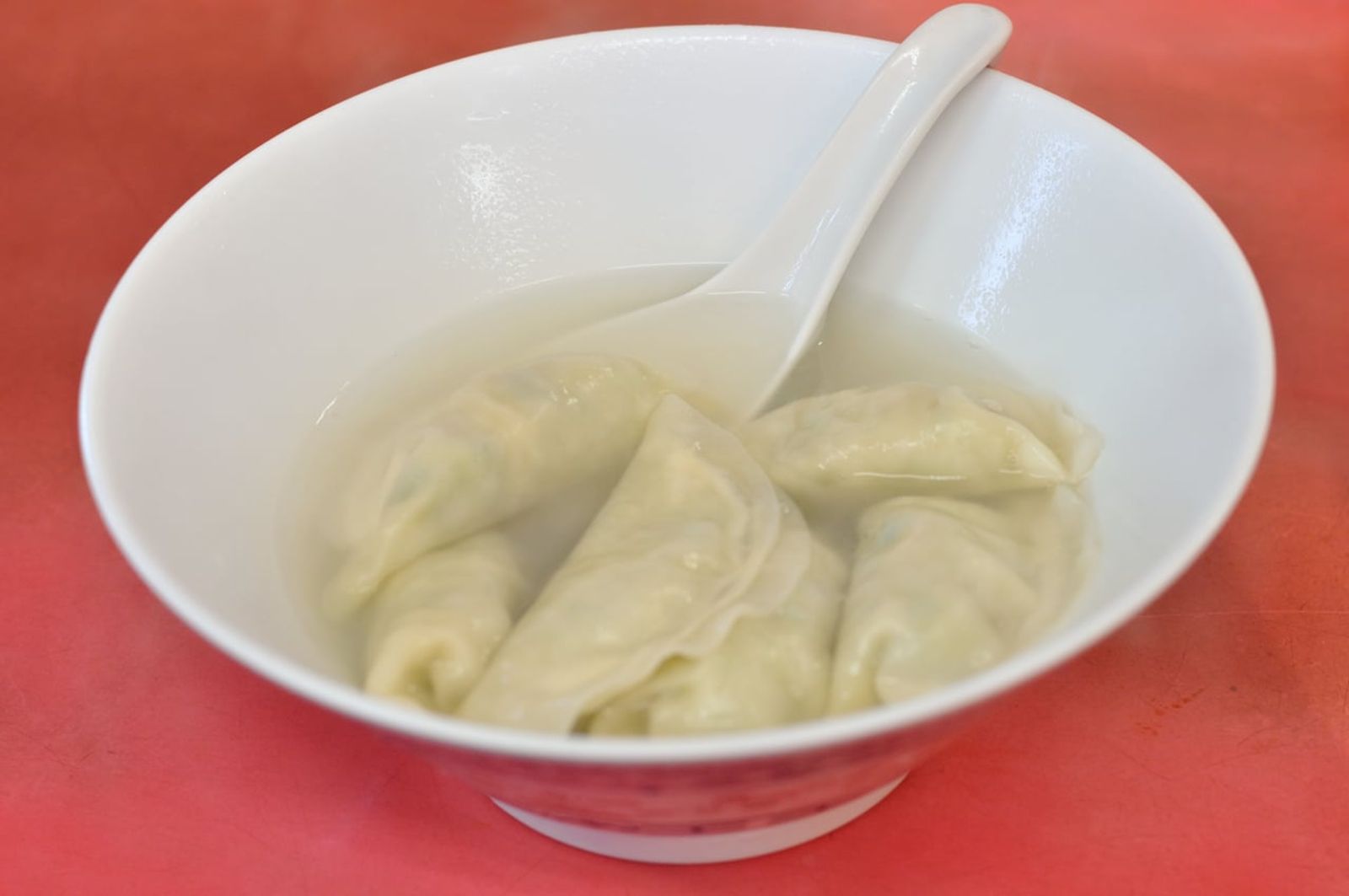
Boiled gyoza (sui-gyoza) in Utsunomiya · Photo: Ocdp / CC0 (Wikimedia Commons)
 JapanNikko
Utsunomiya Gyoza: How the "Gyoza City" on the Way to Nikko Came to Be, and How to Eat There
Utsunomiya, where you change trains on the JR route from Tokyo to Nikko, is one of Japan's great gyoza cities. Here is the taste brought back by soldiers and settlers after the war, the 1990 town revival that began with a city official's idea, and local tips for ordering grilled and boiled gyoza.
A Taste Brought Home From Manchuria
Behind Utsunomiya's gyoza fame lies a piece of wartime history. The Imperial Japanese Army's 14th Division, based in Utsunomiya, was stationed in what was then Manchukuo from August 1940. The usual explanation is that after the war, soldiers and settlers from around Utsunomiya returned home with the Manchurian-style gyoza recipes they had learned there, and spread them. Gyoza thus became part of everyday life in Utsunomiya. But it did not immediately become a famous local specialty. For a long time it was simply a familiar food that local people loved, and it was only decades later, in 1990, that the city began promoting it as its signature.
1990: A Town Revival That Began With One Line of Statistics
The trigger was an unexpected accident. In 1989, a cave-in at an Oya stone quarry west of Utsunomiya caused a sharp drop in tourists. Looking for a solution, an official in the city's tourism section noticed in the national Family Income and Expenditure Survey that Utsunomiya had ranked near the top for household spending on gyoza ever since the item was first surveyed in 1987, and proposed reviving the city through gyoza. In 1991, the city's gyoza restaurants formed an association and worked with the city on a range of promotions. In the early 1990s, a gyoza statue carved from local Oya stone was installed outside JR Utsunomiya Station: a Venus wrapped in a gyoza skin. It fell and broke during a move in 2008, but was repaired and relocated to the bus terminal at the west exit.
The "Number One Gyoza City" Rivalry With Hamamatsu
The household survey then became both a point of pride and a battleground. Hamamatsu in Shizuoka is also a famous gyoza city, and every year the ranking of household spending on gyoza in the two cities makes headlines. In the 2009 survey the two were nearly tied for first, and in 2011 Hamamatsu overtook Utsunomiya. In 2021 and 2022, Miyazaki City took first place, adding a new rival. The rankings change from year to year and depend on how they are measured, so what is more interesting than which city is "really number one" is how the rivalry has pushed both to grow their gyoza culture. Hamamatsu gyoza is known for being fried in a circle with bean sprouts in the middle, so comparing the two is one of the small pleasures of traveling in Japan.
Not Just Pan-Fried: Ordering the Utsunomiya Way
There are said to be around 300 gyoza specialists and other restaurants serving gyoza in Utsunomiya. According to one source, a serving typically costs around 200 to 300 yen, cheap enough to be a popular student snack. The fun here is eating the same gyoza in different ways. Restaurants serve pan-fried (yaki), boiled (sui), deep-fried (age) and soup gyoza, so many people order several kinds at once to compare. At most places, boiled gyoza arrive in a bowl of hot water or broth, and you season them yourself with chili oil, soy sauce, pepper and so on. Dipping in vinegar alone is sometimes called the "Utsunomiya style", so it is worth trying at least one plate that way.
Pairing It With a Trip to Nikko
When traveling from Tokyo to Nikko by JR, the classic route is to change to the JR Nikko Line at Utsunomiya Station, which makes it a perfect place to try gyoza on the way there or back. Gyoza restaurants cluster around the station and in the city center, so it is easy to drop in even during a short layover. If you go in autumn, consider timing your trip for the Utsunomiya Gyoza Festival, held on a weekend in early November each year. Participating restaurants set up stalls, and since Utsunomiya also calls itself a jazz city, there are live jazz performances at the venue. A plate originally cost 100 yen and has been 200 yen since 2022. Utsunomiya Station is also known as the birthplace of the ekiben, and a gyoza ekiben created to celebrate that history is still sold in limited quantities.