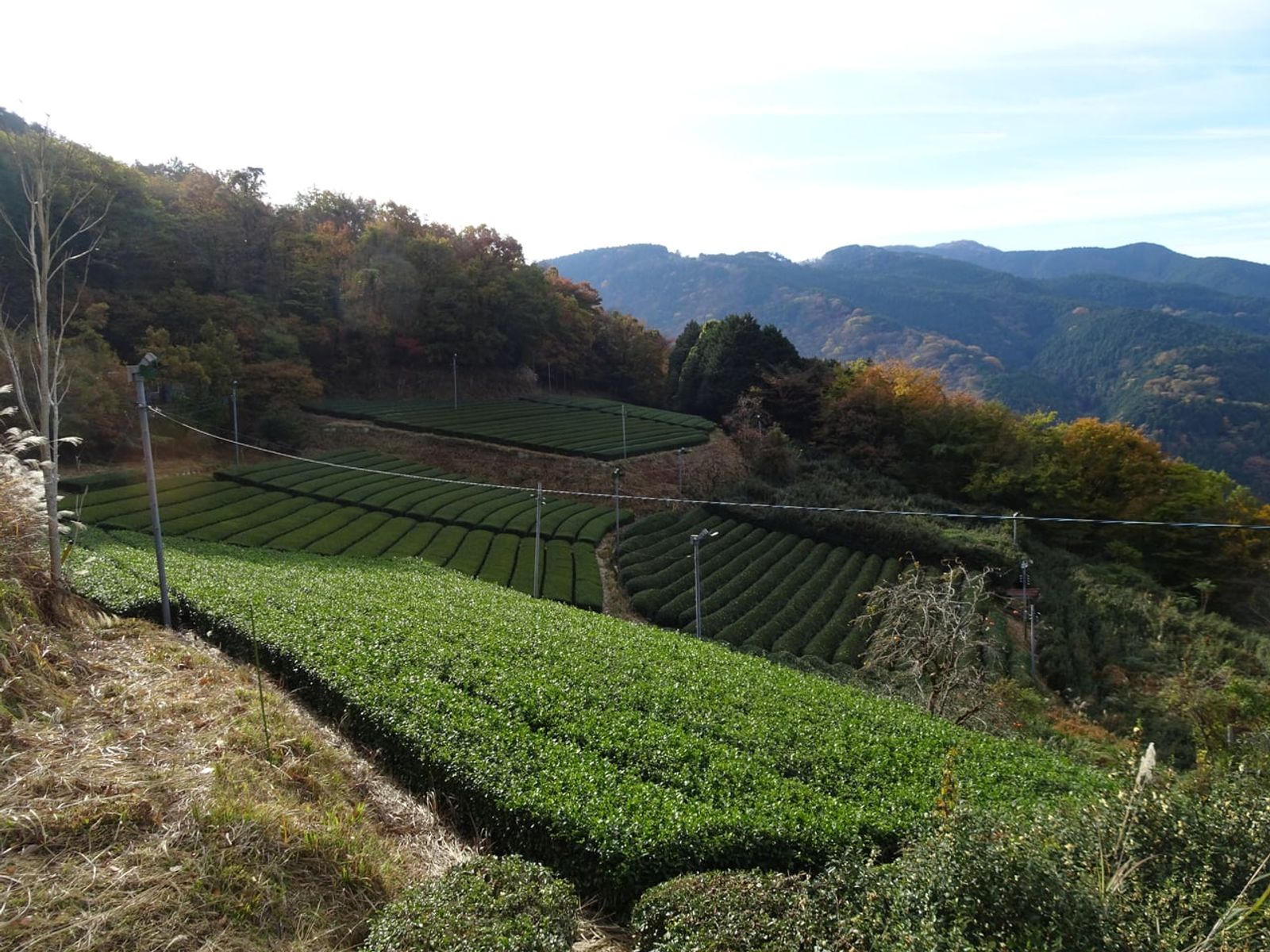
Ashigara tea fields on a mountainside · Photo: Azegamaru / CC BY 4.0 (Wikimedia Commons)
 JapanHakone
Ashigara Tea: Kanagawa's Green Tea, Born in the Hakone Foothills After the Great Kanto Earthquake
Travel around Hakone and Odawara and you will keep seeing the name Ashigara tea. Planted to revive mountain villages after the 1923 Great Kanto Earthquake, Kanagawa's green tea marked its 100th year in 2025. Here is its history, flavor and how to enjoy it.
After the Earthquake, Tea for the Mountain Villages
The Great Kanto Earthquake of September 1923 hit not only Tokyo and Yokohama but also the mountain villages of western Kanagawa. One of the recovery measures to rebuild livelihoods there was tea growing. In 1925 tea was introduced in what was then Shimizu village, now the town of Yamakita. Villagers began rolling tea leaves by hand together in 1927, and a village-run tea factory opened in 1928. Tea fields later spread to many communities in the Tanzawa and Hakone foothills. That tea is today's Ashigara-cha. The name comes from the Ashigara area north of Hakone, and 2025 marked 100 years since cultivation began, celebrated with anniversary events.
Grown in the Hakone and Tanzawa Foothills
Ashigara tea is a regional green tea brand grown in western Kanagawa, in the Tanzawa mountains and the foothills of Hakone. Tea fields are spread across several municipalities, including Yamakita, Minamiashigara, Odawara, Hadano, Atsugi and Yugawara. In other words, Odawara and Yugawara, gateways to Hakone, are Ashigara tea country too. Kanagawa Prefecture says the climate and terrain of the Tanzawa and Hakone foothills are well suited to growing good tea. Some also credit the short hours of mountain sunlight and the morning mist in the new-leaf season for its flavor. Tea terraces climbing the slopes make a distinctive scene in autumn against the colored hills. Growers work through cooperatives that handle everything together, from fertilizing and cultivation to processing, blending, final firing (hiire) and sales.
The Taste: Pale Gold, With Sweetness and Astringency in Balance
Ashigara tea is an asamushi (lightly steamed) sencha, with leaves steamed for only about 40 seconds. Unlike deep-steamed fukamushi sencha, which is dark green and full-bodied, lightly steamed sencha keeps the leaf shape and has a fresh, clean aroma. The brewed tea is a pale golden yellow, described as a balanced cup of sweetness, astringency and fragrance. As with most sencha, the trick is to let boiled water cool a little before brewing. Water that is too hot tends to bring out bitterness, so start a bit cooler than you think and steep slowly to find the sweetness. Brewing the same leaves two or three times and comparing how the flavor changes is part of the fun of green tea.
A National Prize, a Century, and Shrinking Fields
Ashigara tea made its name by winning first prize at the 17th National Tea Competition in 1963. In 2000, 14 processing plants were consolidated into a single factory in Yamakita, and in 2007 Ashigara-cha became the first Kanagawa farm product registered as a regional collective trademark. It has also been named one of the Kanagawa Meisan 100. The future is not all bright, though. Kanagawa's tea output fell from 411 tonnes in 1975 to 146 tonnes in 2020. The challenges include aging growers and a lack of successors, abandoned tea fields, falling tea consumption and climate change. To bring city dwellers to the growing area, the Kanagawa agricultural cooperatives' tea center has run an Ashigara Tea Farm Owner program since fiscal 2018. One share covers one tsubo (about 3.3 square meters) of tea field for 16,500 yen a year, and owners receive new-season green tea and black tea twice a year, plus perks such as tea-picking experiences.
Enjoying Ashigara Tea on a Hakone or Odawara Trip
Ashigara tea leaves are easy to find in souvenir shops around Hakone and Odawara, and they make a light gift that keeps well. If you do not have a teapot, there are easy tea-bag versions, and the same growing area also produces black tea if you want something other than green. It is even better with other local foods. Pair a warm cup with the specialties of the road to Hakone, such as Odawara kamaboko or umeboshi, and you can feel a little like the old travelers who rested along the Tokaido. As you drink, remember that this tea grew from bushes planted by mountain villagers in the ruins of a great earthquake a century ago, and became Kanagawa's signature tea. The cup may taste a little different.