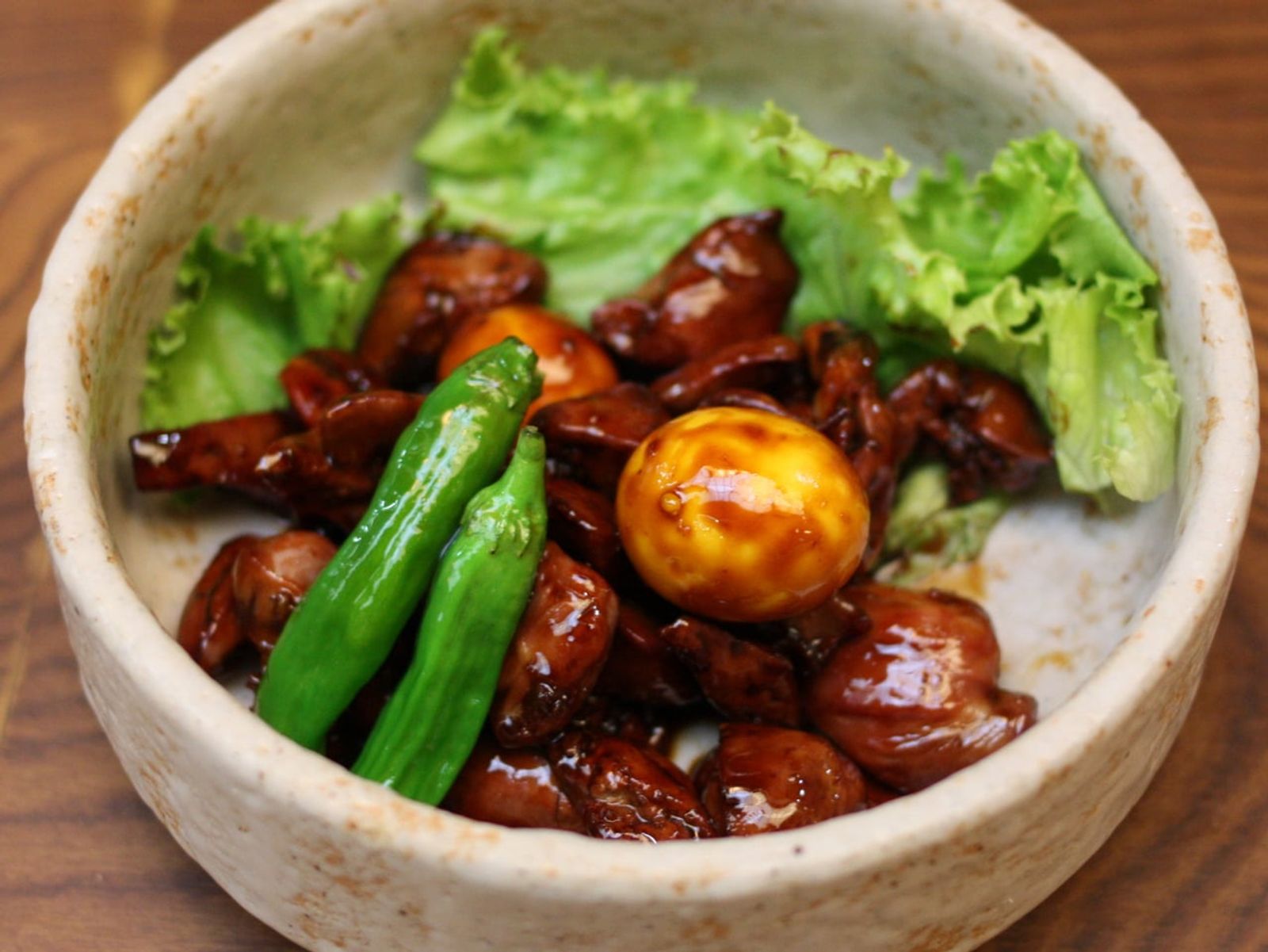
Kofu torimotsu-ni with shishito peppers and lettuce · Photo: Gizmo355 / CC BY-SA 3.0 (Wikimedia Commons)
 JapanKawaguchiko
Kofu Torimotsu-ni: How Discarded Chicken Giblets Won Japan's B-1 Grand Prix
Born in a Kofu soba shop, torimotsu-ni is chicken liver, gizzard and heart glazed in a glossy sweet-and-salty soy sauce. Here is how it began, what goes into it, how a team of city workers made it famous, and how to enjoy it in Kofu.
A Dish Born From Not Wanting to Waste
Torimotsu-ni comes from Kofu, the capital of Yamanashi Prefecture. According to the prefecture's tourism site, it was first made around 1950 at a soba restaurant in Kofu and later spread to the surrounding area. Local promotional material says it was devised when people lamented that chicken giblets were simply being thrown away. That is why torimotsu-ni has always been a soba-shop dish. Yamanashi Prefecture describes it as a standard item at Kofu's soba and hoto restaurants: a nibble with a drink while you wait for your noodles, and a side for rice. Today, as "Kofu torimotsu-ni," it is one of Yamanashi's signature local foods.
What Goes Into It
Yamanashi Prefecture lists the basic ingredients as chicken liver, gizzard, heart, plus kinkan and himo. Kinkan are the small yolk-like eggs found inside a hen before a shell forms; they are the round yellow spheres you see in the photo. Himo is the tube those eggs travel through, cut into pieces about 3 cm long. The prep is careful. Only the red heart-shaped lobes of the liver are used, the white sinew is trimmed from the gizzard, and the heart is split in half to remove any blood clots. Everything is then washed well in lightly salted water to remove odors and drained. The appeal is getting several textures in one bowl: tender liver, crunchy gizzard and rich kinkan that bursts in your mouth.
Glazed Fast Over High Heat
The name contains "ni" (simmered), but torimotsu-ni is not a stew with a pool of broth. In the method Yamanashi Prefecture introduces, soy sauce and sugar go into a frying pan and are brought to a boil over high heat, thinned with a little sake or water if they are too strong. When the sauce starts to foam, the cleaned giblets go in, get a quick stir and a lid. Stir now and then so nothing burns; it is done when the sauce begins to stick to the edges of the pan. Because the sauce is reduced hard in a short time and coats each piece, the finished dish has the deep, glossy shine (teri) you see in the photo. The flavor is intensely sweet and salty, so it is usually served with lettuce or cooked shishito peppers.
The City Workers Who Put It on the Map
For decades only Kofu locals knew this dish, and how it became famous is a story in itself. According to Yamanashi Prefecture, in June 2008 a group of young Kofu City employees formed a volunteer team called "Minasama no En o Torimotsu-tai." Their slogan was "Cheer up Kofu with torimotsu-ni!", and the name is a pun: in Japanese, torimotsu also means "to bring people together." At the 5th B-1 Grand Prix, held in Atsugi, Kanagawa in 2010, the team won the top prize, the Gold Grand Prix. It took gold again at the 2011 Kanto contest in Gyoda and the 2013 Kanto-Koshinetsu contest in Katsuura. Since then, Kofu torimotsu-ni has become a dish travelers seek out on purpose.
How to Try It in Kofu
The easiest place to try torimotsu-ni is around Kofu Station; Japan's Ministry of Agriculture also introduces it as a local dish served at restaurants near the station. True to its origins, it is still a common side order at soba and hoto restaurants, and a standard izakaya snack. If you pass through Kofu on the way to Lake Kawaguchi and the Fuji Five Lakes, a plate near the station makes an easy stop. A few tips: order it with soba, and the salty glaze and the plain noodles balance each other. The sauce is strong, so it also goes well with rice, beer or local wine. If you are unsure about organ meat, start with the crunchy gizzard or the rich kinkan before the liver. Each restaurant balances soy sauce and sugar differently and reduces the sauce to a different point, so comparing a few places is half the fun.