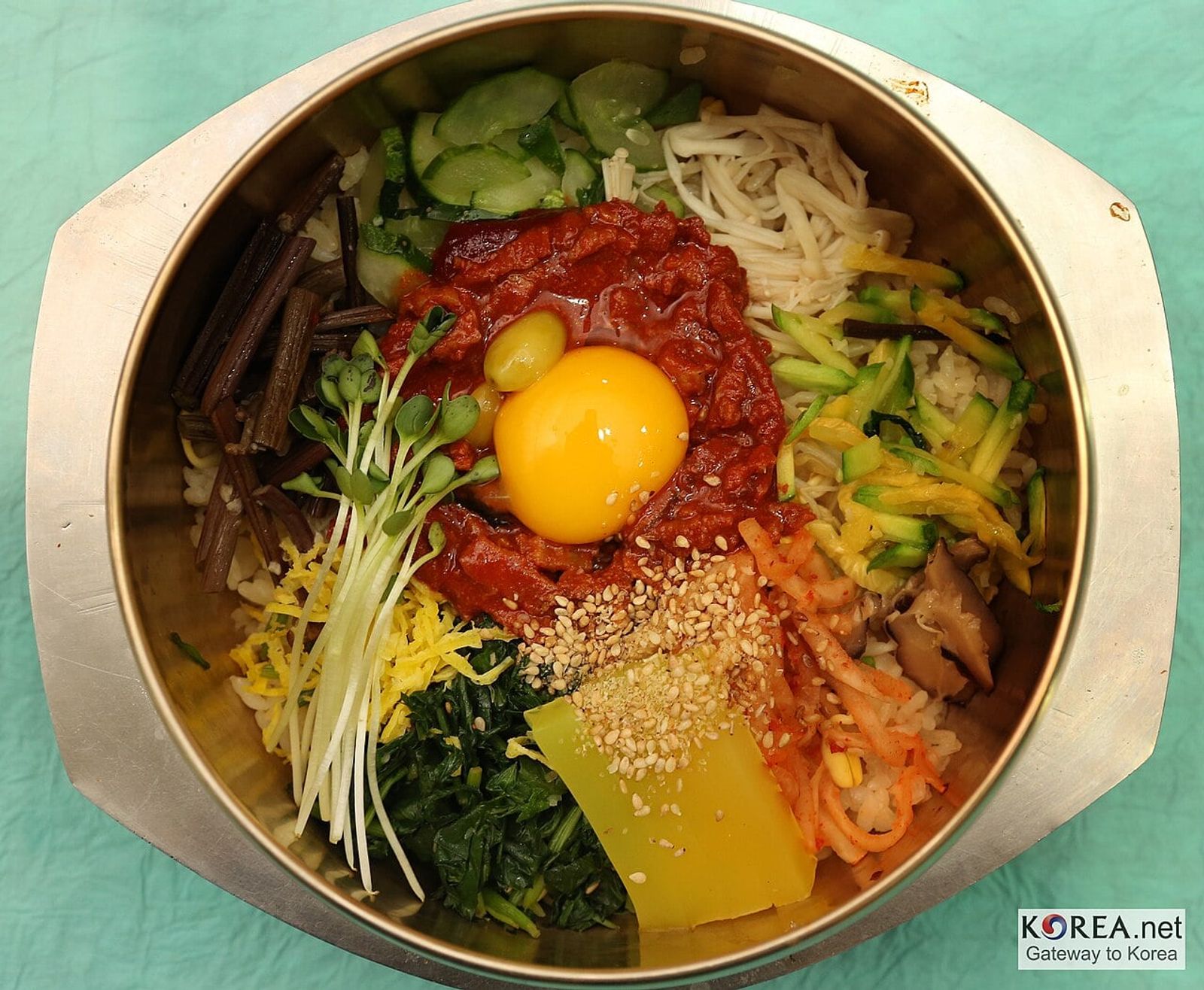
Jeonju bibimbap
Bibimbap: Its Origins and How to Eat It, from Goldongban to the World's Favorite In-Flight Meal
Bibimbap simply means 'mixed rice'. Learn how this dish, first written down in a late-Joseon cookbook, became the pride of Jeonju and Jinju — and how much gochujang to add and how to mix it.
The Name and the Basic Build
Bibimbap combines 'bibida' (to mix) and 'bap' (rice): rice topped with assorted seasoned vegetables (namul), meat and egg, then mixed with gochujang chili paste and sesame oil. Its old Sino-Korean name, goldongban, means 'rice with many things mixed together'. The standard build is rice, three or more namul (bean sprouts, spinach, bracken, bellflower root, zucchini and so on), stir-fried beef or raw beef tartare, an egg (fried or just the yolk), gochujang and sesame oil. Each vegetable is blanched and seasoned separately, which makes it a labor-intensive dish. By tradition the toppings are arranged by color, so red (gochujang), yellow (egg), green (vegetables), white (rice) and black (seaweed or bracken) — the five cardinal colors — all sit in one bowl.
Four Theories on Its Origin
Bibimbap first appears in writing in the late-1800s cookbook Siuijeonseo under the name 'bubuimbap'. The habit of mixing side dishes into rice is far older, though, and several origin theories exist. The first is the ancestral-rite theory: after a memorial ceremony, the namul and meat from the altar were mixed into rice and shared, giving bibimbap its shape. The second is the farming-season theory — a field meal in which several side dishes were piled into one bowl during the busy season. The third is the royal-court theory, in which the king's light lunch of goldongban spread to commoners. The fourth ties it to New Year's Eve, when leftovers were mixed and eaten so nothing carried over into the new year. Whichever is true, all reflect the Korean table's spirit of 'nothing wasted, shared, and simple'.
Jeonju vs. Jinju Bibimbap
The name most associated with bibimbap is Jeonju in North Jeolla Province. Jeonju bibimbap is made with rice cooked in beef-bone broth, topped with local bean sprouts, yellow mung-bean jelly (hwangpomuk), beef tartare and gochujang. Around 30 ingredients are served in a brass bowl with bean-sprout soup on the side. Specialty restaurants cluster around Jeonju Hanok Village, at roughly 12,000 to 15,000 KRW. Jinju bibimbap from South Gyeongsang Province is also called 'flower rice' (hwaban): the namul are arranged like petals with beef tartare in the center, a stir-fried gochujang is used instead of plain paste, and it comes with ox-blood soup. Elsewhere, Andong's heotjesabap is mixed with soy sauce instead of gochujang, Tongyeong is known for sea-squirt bibimbap, and Gangwon Province for wild-mountain-vegetable bibimbap.
Dolsot Bibimbap and Bibimbap Goes Global
Dolsot bibimbap, served sizzling in a hot stone bowl, is a relatively new style developed by a Jeonju restaurant in the 1960s. The heat crisps the rice at the bottom into a nutty crust called nurungji, and the dish stays hot to the last bite, which makes it especially popular with visitors. The bowl is extremely hot, so do not touch it. Bibimbap reached the world when Korean Air introduced it as an in-flight meal in 1997 and won the International Travel Catering Association's Mercury Award in 1998. Its vegetable-forward profile gives it a healthy image, and without meat it is easily vegetarian, which made it a flagship dish at Korean restaurants abroad. Today you can find it in any Korean city — at Korean restaurants, snack bars and highway rest stops — for about 8,000 to 12,000 KRW.
How to Mix It Properly
Bibimbap is not eaten as it arrives — it must be mixed. Start by adding gochujang to taste; if it is your first time, add half of what is served, mix, taste, then add more. If you find it too spicy, skip the gochujang and mix with soy sauce or sesame oil alone; it is still delicious. Use a spoon to turn the rice and toppings from the bottom up until evenly combined. Koreans mix and eat bibimbap with a spoon, not chopsticks. Breaking the egg yolk into the mix makes it silkier. In a stone bowl, you can press some rice against the hot sides before mixing to create extra crispy nurungji. The soup that comes with it (bean-sprout or soybean-paste soup) is for sipping between bites, and kimchi and side dishes go alongside as you like.

Click to play