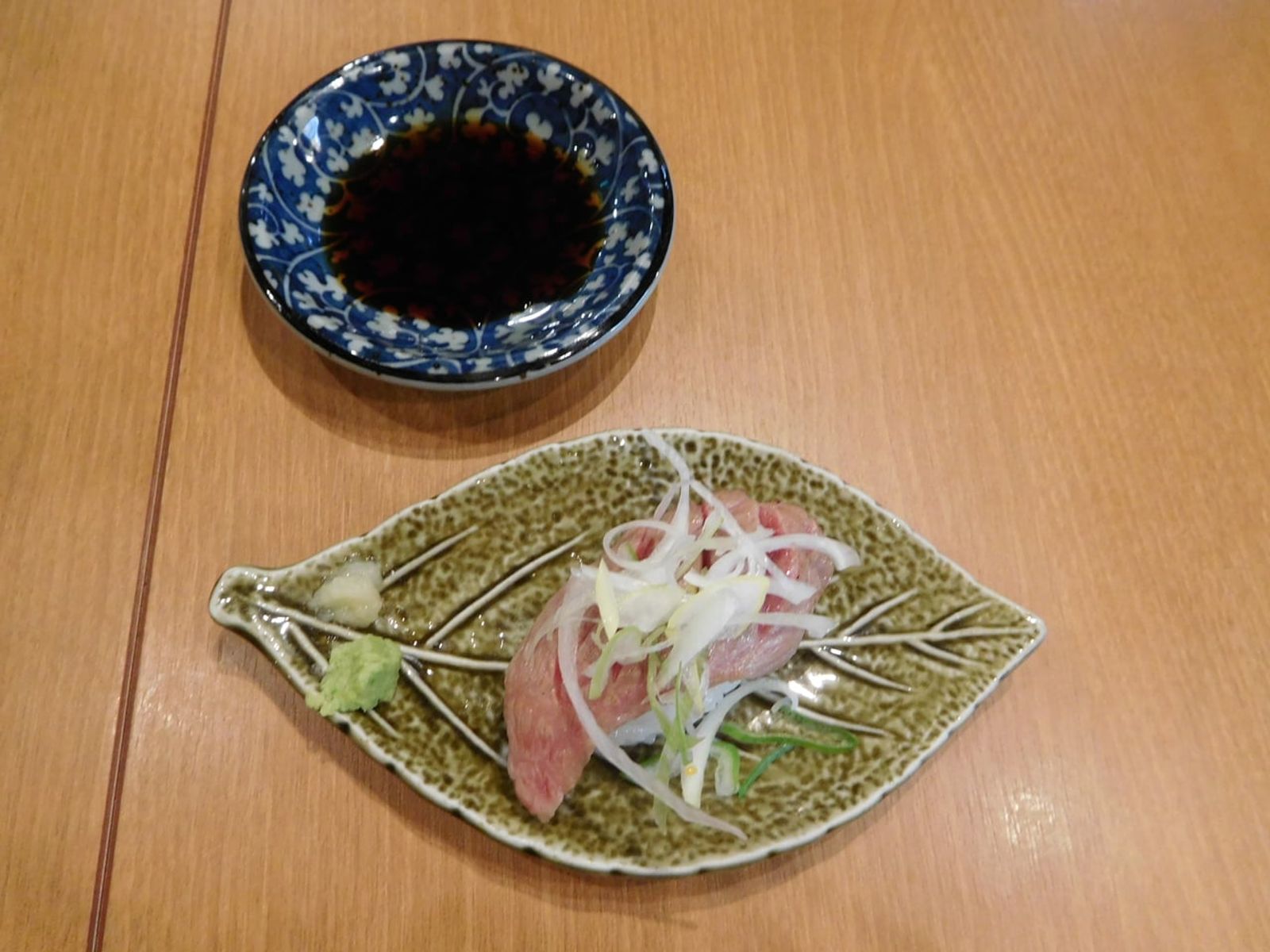
Hida beef nigiri in Takayama · Photo: Miyuki Meinaka / CC BY-SA 4.0 (Wikimedia Commons)
 JapanTakayama
Hida Beef: From Yasufuku, "Father of Hida Beef," to Nigiri in Takayama's Old Town
Walk Takayama's old town and Hida beef skewers and nigiri are everywhere. Here is what it takes to be called Hida beef, how one breeding bull built the brand, and how to enjoy it in Takayama.
What It Takes to Be "Hida Beef"
Hida beef (Hida-gyu) is Gifu Prefecture's signature Japanese Black wagyu brand and is registered under Japan's Geographical Indication (GI) system. According to the registration specification, to carry the name the cattle must have spent the longest part of their lives in Gifu, be Japanese Black raised for at least 14 months by a producer registered with the Hida Beef Brand Promotion Council, and pass set meat-quality standards. Interestingly, the production area is all of Gifu, not just the Hida region. The name comes from northern Hida, where Takayama is, but when the council was founded in 1988, "Hida beef" became the prefecture's unified brand. Today about 10,000 head a year are certified, and the name was registered as a regional collective trademark in June 2007.
From Plow Oxen to Beef Cattle
Hida beef's history is younger than you might think. According to the specification, cattle in Japan were long used for plowing and hauling, but mechanization and changing diets gradually turned them into beef cattle. In Gifu, organized breeding began in the decade after 1945, bringing in bloodlines such as Hyogo's Tajiri, Hiroshima's Fukagawa and Okayama's Nakaya lines. Until then, cattle raised in the prefecture went by different names in each area. From the late 1970s, efforts to fix bloodlines and stabilize meat quality went hand in hand with branding, and in 1979 a project to fix the Gifu beef (later Hida beef) line was launched.
Yasufuku, the "Father of Hida Beef"
The hero of the Hida beef story is a single breeding bull. According to the specification, in 1981 a sire named Yasufuku was brought from Hyogo to Gifu's livestock research institute. His offspring produced excellent meat, and breeding and fattening came to center on Yasufuku and his bloodline. His calves graded high so often that they drew national attention, and Gifu's calf prices became the highest in Japan. They swept prefectural shows, and his offspring numbered about 25,000 by fiscal 1991. Many bulls carrying his blood are still active in Gifu today, which is why Yasufuku is called "the father of Hida beef" and credited with building the brand.
How to Taste It in Takayama
Takayama's old town (around Sanmachi) is a great place to sample Hida beef casually. The Gifu Prefecture tourism federation's site lists street-food favorites such as Hida beef nigiri on hand-grilled rice crackers, Hida beef skewers and rolled-beef rice sticks. Nigiri like the one in the photo, with thin slices of Hida beef over rice and topped with green onion and ginger, are popular for letting you taste the melting fat in one bite. For a proper meal, order steak or sukiyaki at a restaurant, or try Hida beef grilled on hoba miso, a Hida breakfast staple. Beef cooking with miso on a dried magnolia leaf is a pairing found only in Hida.
Certified Shop Signs and Other Tips
When choosing Hida beef, it helps to know the "designated shop" system. According to the specification, designated retailers were introduced in fiscal 1989 and designated restaurants in fiscal 1990; as of the end of January 2022 there were 168 retailers, 193 restaurants and 59 recommended shops overseas. Look for the designation mark at the entrance or on the menu. The specification also notes that Hida beef won the top carcass prize at two consecutive National Wagyu Competitions. It is pricey, so sample a piece or two of nigiri or a skewer in the old town, then choose cuts and portions at a restaurant in the evening. Some old-town food stalls close early, so do your strolling in the daytime.