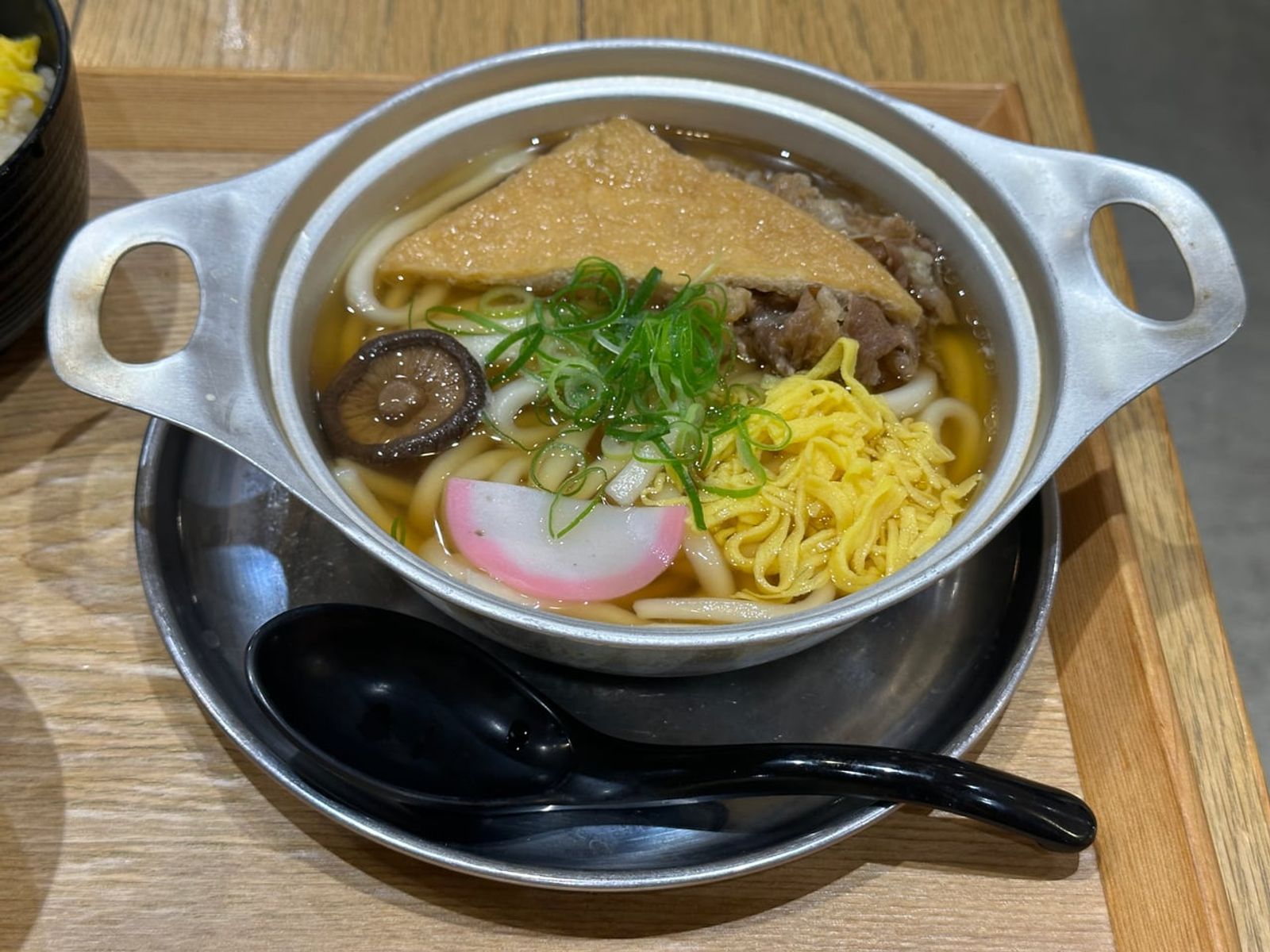
Matsuyama-style nabeyaki udon in an aluminum pot · Photo: ノボホショコロトソ / CC BY 4.0 (Wikimedia Commons)
 JapanMatsuyama
Matsuyama Nabeyaki Udon: Sweet Broth, Aluminum Pots and a Postwar Soul Food
Udon in Shikoku usually means firm Sanuki noodles, but Matsuyama's soul food is the opposite: soft noodles in a sweet broth, served in a small aluminum pot. Here is what makes it different, where it came from and how to order it.
The Opposite of Sanuki Udon
Shikoku is famous for the Sanuki udon of neighboring Kagawa, so many visitors assume udon must be firm and chewy. Matsuyama, however, has an udon culture that goes in a completely different direction: nabeyaki udon (鍋焼きうどん), udon simmered and served in its own small pot, which locals proudly call their soul food. Matsuyama-style nabeyaki udon comes down to three things: soft noodles, a gently sweet broth, and a small single-serving aluminum pot. Instead of bounce, the pleasure is in blowing on noodles that have soaked up plenty of broth, and first-timers are often surprised by how sweet and tender it is.
Sweet Broth and Sweet-Simmered Beef
The key to the Matsuyama broth is sweetness. Shops are known to sweeten the stock with sugar (some use a dried-sardine, or iriko, base), so it is noticeably sweeter than ordinary udon broth. The broth soaks deep into the soft noodles until noodles and soup almost become one. The star topping is beef simmered in a sweet seasoning. Some places add fried tofu, fish cake, thin strips of omelet and green onion, and some shops also offer a version with shrimp tempura. Flavor from the sweet-savory beef seeps into the broth too, so plenty of diners drink it to the last drop. Some shops also offer inari sushi on the side.
Why an Aluminum Pot?
Matsuyama nabeyaki udon usually comes in a small aluminum (alumite) pot with handles. It is not the disposable foil pan sold in convenience stores and supermarkets but a reusable cooking pot that goes straight from the stove to your table. The plain, unadorned silver pot has itself become a symbol of the dish. Light aluminum heats quickly, so the udon can be cooked fast as soon as it is ordered, and because it arrives in the pot it stays hot to the end. The handles and sides get very hot, so do not grab them bare-handed. If there is a lid, a handy trick is to use it as a small plate to cool a few noodles at a time.
A Taste Born Right After the War
Matsuyama-style nabeyaki udon is said to have taken shape in the decade right after World War II (1945 to 1954). Downtown Matsuyama has two nabeyaki udon specialists that have been in business since just after the war; according to several published features, one opened in 1947 and the other two years later in 1949. In a time of shortages, udon in a warm, sweet broth with beef must have been a filling meal and a small luxury. Passed down for more than 70 years, it has become a nostalgic childhood taste for people in Matsuyama, and today it is so emblematic of the city that restaurants downtown and even inside the station serve it as a local specialty.
Ordering Tips and Where to Try It
Menus tend to be simple, and some shops serve nothing but nabeyaki udon. If you expect chewy noodles you may be disappointed, so go in ready to enjoy soft noodles and sweet broth. It arrives piping hot, so allow time and eat slowly. Many shops serve it all year round, even in summer. The long-established specialists cluster around the downtown shopping arcades, and many local-cuisine and ordinary restaurants around Matsuyama Station also have it on the menu. Specialists can have lines at lunchtime and may close early once the broth or noodles run out, so going early is a good idea. If there is a side such as inari sushi, try ordering it too.