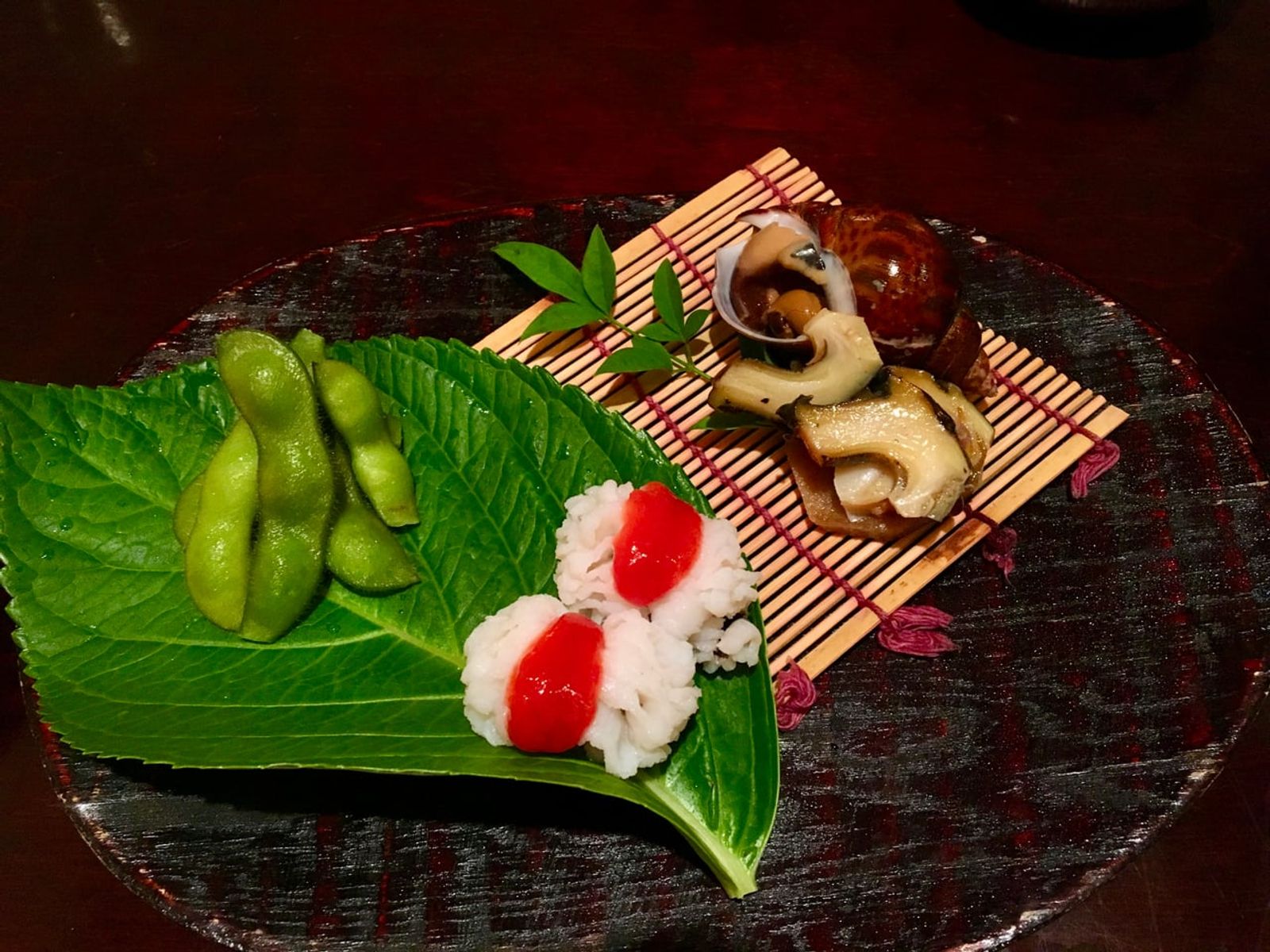
Yubiki hamo topped with plum sauce · Photo: Zheng Zhou / CC BY-SA 4.0 (Wikimedia Commons)
 JapanKyoto
Hamo, Kyoto's Summer Fish: The Gion Festival and the Art of Honekiri
Kyoto is far from the sea, yet one fish defines its summer: hamo, the pike conger. Here is the honekiri knife work that makes this bony fish edible, its link with the Gion Festival and how to eat yubiki hamo with pickled plum sauce.
What Kind of Fish Is Hamo?
Hamo, or daggertooth pike conger, is a sea fish in the eel order. Most are around a meter long, and large ones can exceed two meters. A sharp-toothed predator, it lives in warm waters of the western Pacific and Indian Ocean. MAFF's guide to regional cuisine calls hamo "a fish Kyoto cuisine cannot do without." Hamo bones have reportedly been excavated at sites in central Kyoto, suggesting it has been eaten here for a very long time. One thing to know: hamo blood contains a toxin that heat destroys, so hamo is normally eaten cooked. That is why Kyoto's classic hamo dishes are mostly blanched, grilled or served in clear soup.
Why Kyoto, So Far From the Sea?
Kyoto is a basin city far from the sea, and before refrigeration it was hard to bring fresh fish here. MAFF explains that hamo cuisine took root in Kyoto because this hardy fish could be carried all the way to the city alive, even from far away. Some hamo is landed in the Tango area on Kyoto Prefecture's northern coast, but only a few tons a year; most of the hamo eaten in Kyoto comes from the Seto Inland Sea, the Genkai Sea off northern Kyushu and other waters. In other words, Kyoto is famous not for catching hamo but for eating it. Its hamo cuisine grew out of treating a precious fish that arrived alive from distant seas with great care, and refining the skills to prepare it.
Twenty-Six Cuts per Inch: The Skill of Honekiri
Hamo is full of fine bones, which makes it hard to eat as is. The answer is honekiri, "bone cutting." The fish is opened flat and, leaving the skin intact, scored from the flesh side with extremely close cuts that chop the small bones into tiny pieces. A common benchmark is 26 cuts per sun, an old unit of about 3 cm. The skill is demanding enough that MAFF quotes the saying that a Kyoto chef becomes fully fledged only after mastering honekiri. The crisp sound of the blade passing through is itself part of a Kyoto summer. Once the bones are cut, the flesh opens up white like a flower when heated, and that look has become the symbol of Kyoto's hamo dishes.
The Gion Festival and Hamo: 'Better After Drinking the Rainy-Season Water'
July is when hamo gets the most attention in Kyoto. The Gion Festival of Yasaka Shrine runs for the whole month, from July 1 to 31, and hamo comes into season right then, so it is regarded as the food of the festival. Because eating it at this time is said to give you energy, there is also a custom of eating it in summer much as people eat eel. Kyoto has a saying that hamo becomes delicious after drinking the water of the rainy season. It means that by the time the rains end and the festival begins, the flesh has put on fat, and it shows why hamo and the festival are always mentioned together. These are folk sayings rather than fixed rules, and eating hamo is not an official festival ritual. Still, menus across Kyoto filling up with hamo dishes in July is one of the defining sights of a Kyoto summer.
How to Eat It: Yubiki With Plum Sauce, Plus Ordering Tips
The classic way to eat it is yubiki, also called hamo no otoshi. Bone-cut hamo is sliced into bite-size pieces, dipped briefly in boiling water and chilled in cold water, so the flesh opens like a white flower. Dipping it in tangy pickled-plum sauce (bainiku) is the quintessential taste of a Kyoto summer. Hamo is also grilled, served in clear soup (osuimono), fried or cooked shabu-shabu style. It often appears in summer kaiseki courses, and fishmongers around the city's markets sometimes sell hamo already bone-cut or blanched. Ordering tip: the work involved makes hamo pricier than many fish. If it is your first time, start with a plate of yubiki. MAFF gives its season as early summer to autumn, and in July, during the Gion Festival, it is especially easy to find on menus.