Yoshino Hon-Kuzu
 JapanNara
Yoshino Hon-Kuzu: Nara's Kudzu Starch, Refined in Midwinter Water, and Kuzukiri
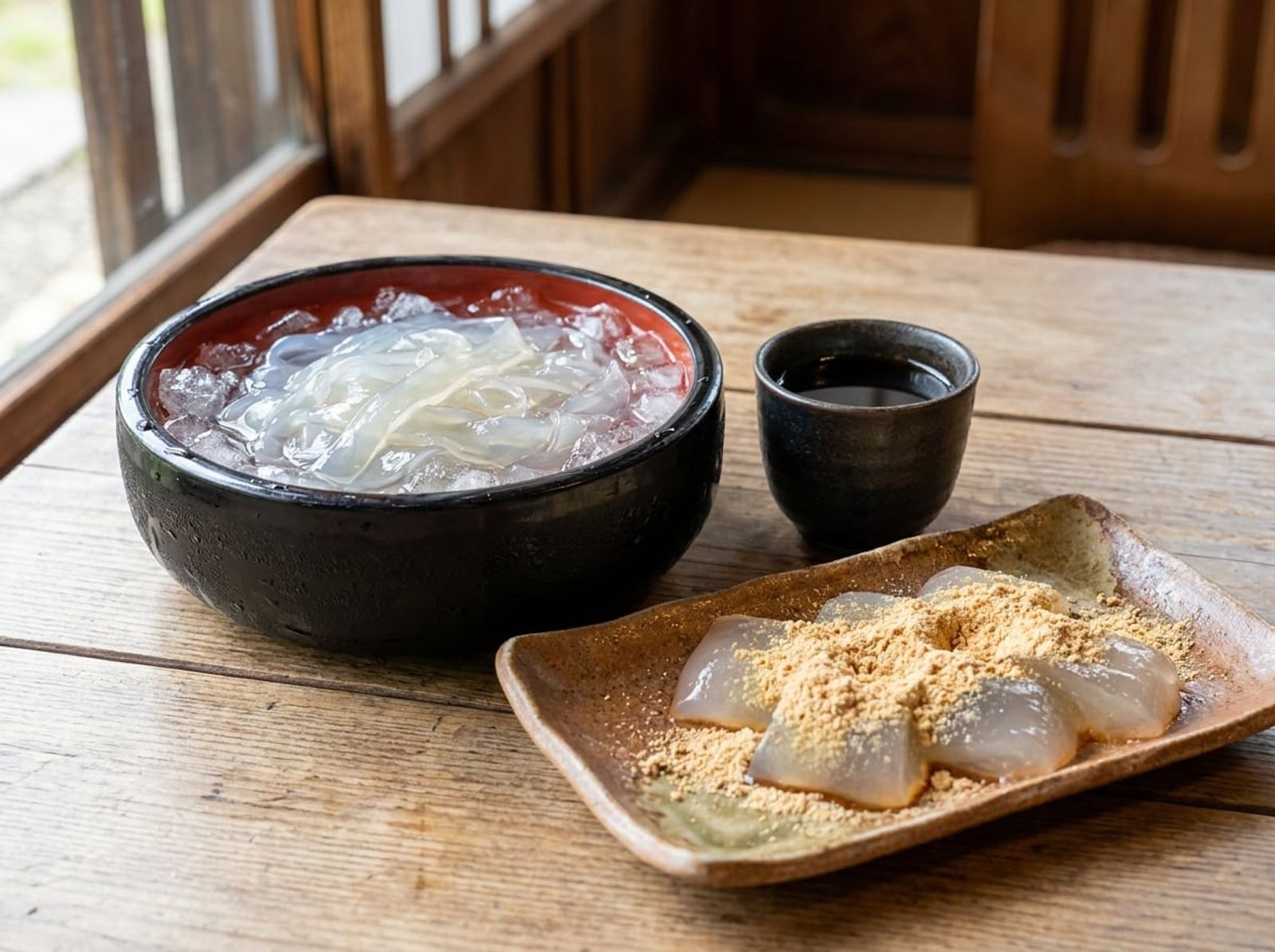
Glassy kuzukiri noodles and wobbly kuzumochi are made from starch drawn from kudzu roots. Here is why Yoshino hon-kuzu from Nara is prized above the rest, how the winter-only Yoshino-zarashi method works, and how to eat and choose it.
Kuzu: A White Powder From Kudzu Roots
Kuzu is kudzu, a climbing perennial of the bean family and one of the "seven herbs of autumn." It has long been a useful plant: according to MAFF, the roots went into herbal medicines such as kakkonto, the leaves into livestock feed, the vines into fabric fiber and the flowers into hangover remedies. What is eaten is kuzuko, refined starch from the roots. Heated with water and stirred, it turns into a clear, springy gel used widely in sweets and cooking. MAFF dates the eating of kudzu starch as kuzumochi to the mid-Edo period or later. And the name that became synonymous with kudzu starch is the Yoshino area of Nara Prefecture.
Why Yoshino? Cold Winters, Clear Water and a Telling Place Name
MAFF explains that Yoshino, a cold area with good water sources, produces high-quality kudzu roots. Kudzu starch from Yoshino was presented to the imperial court and earned a fine reputation, which is said to be how a kudzu food culture took root here. There is also a story about the name. One theory holds that "kuzu" comes from Kuzu, a district on the upper Yoshino River that produced kudzu starch. It is hard to prove, but it shows how long Yoshino and kudzu have gone together. Yoshino's fame even lives on in cooking terms: dishes thickened with kudzu starch are sometimes called Yoshino-jitate ("Yoshino style"), because Yoshino was the famous source of kudzu.
Yoshino-Zarashi: Ten Days of Washing in Cold Water, Over a Month of Drying
What makes Yoshino hon-kuzu expensive is how it is made. Kudzu roots are best dug in winter, when starch gathers in them. According to MAFF, the roots are crushed, put in tubs with water, stirred and left to settle. Skimming off the bitter liquid and impurities is repeated for about ten days until pure white nama-kuzu remains, which is then air-dried on racks for more than a month. The whole process can take two to three months. This traditional method of rinsing the starch again and again is called Yoshino-zarashi. The colder the water, the better the starch separates, so it suits Yoshino, with its harsh cold and clean groundwater. Sadly, fewer artisans now dig the roots, and output is declining.
Hon-Kuzu Is Not the Same as Plain Kuzu: How to Choose
When buying kudzu starch or kudzu sweets as souvenirs, check the label: some products sold as kuzuko are blended with other starches such as sweet potato or potato. According to MAFF, 100 percent kudzu starch is called Yoshino hon-kuzu, while starch that is more than half kudzu is called Yoshino kuzu. Products made only from kudzu-root starch are also registered as a regional collective trademark under the name Yoshino hon-kuzu. In short, whether the name includes hon ("genuine") tells you its purity. Sweets made with hon-kuzu are said to have better clarity and springiness and to melt smoothly in the mouth. They cost more, but if you are in Nara, try one labeled hon-kuzu at least once.
How to Enjoy It: Kuzukiri, Kuzumochi, Goma-Dofu and Kuzuyu
The best-known foods made from kudzu starch are these. Kuzukiri is set kudzu dough cut into thin noodles, chilled and dipped in kuromitsu (brown sugar syrup). Kuzumochi is made by cooking kudzu starch, water and sugar in a pan until it turns sticky and translucent, then cooling it to set; it is served with kinako (roasted soybean flour) or kuromitsu. There are also kuzu manju (bean-paste buns), goma-dofu (sesame "tofu") known from temple cuisine, and kuzuyu, a warming thick drink. In Nara city and around Yoshino, some teahouses make kuzukiri and kuzumochi to order. Freshly made kuzukiri changes texture quickly, so it is best eaten on the spot. For souvenirs, choose long-keeping hon-kuzu powder or kuzuyu.