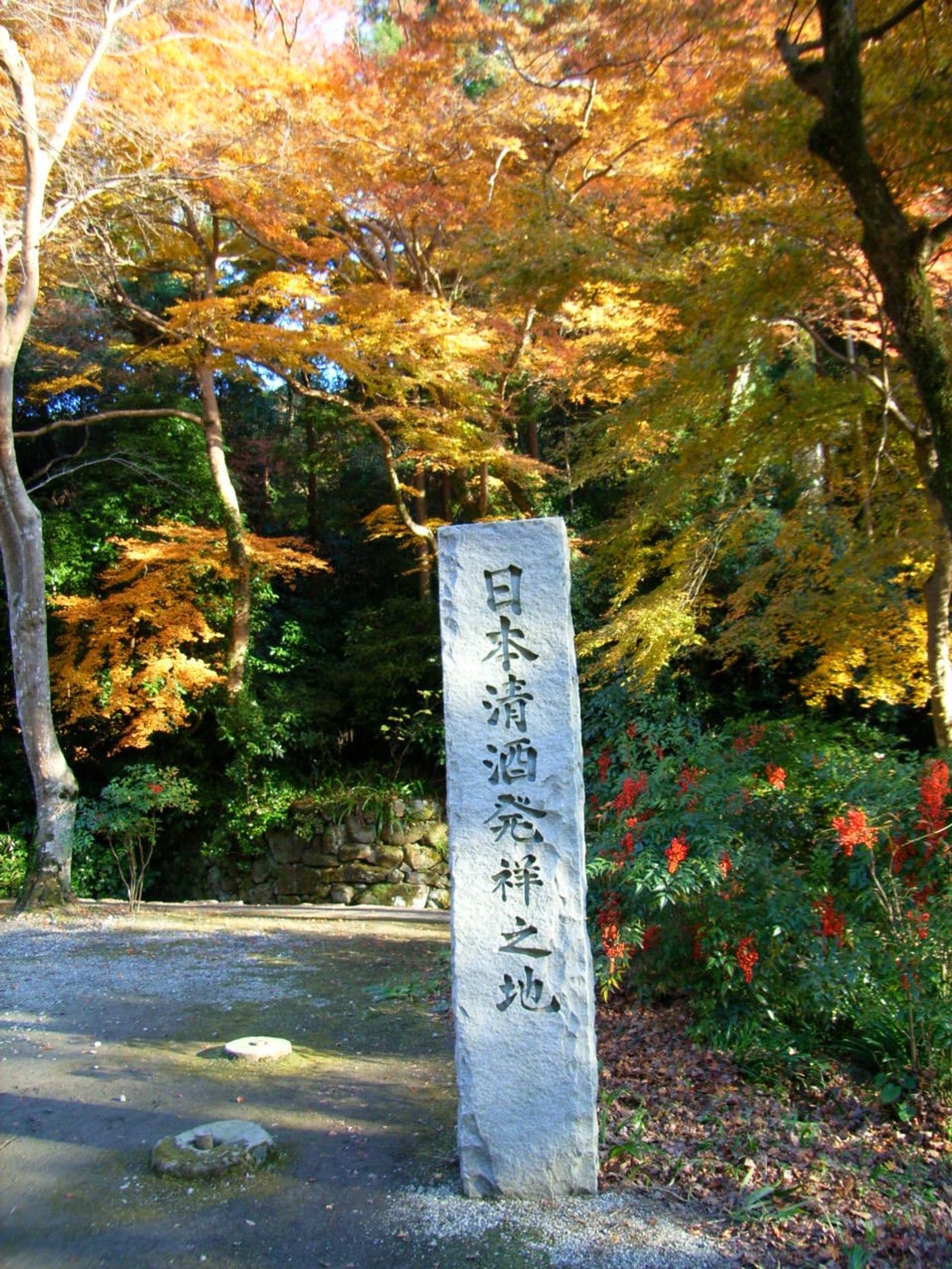
The 'Birthplace of Japanese Sake' monument at Shoryakuji · Photo: Tamago Moffle / CC BY-SA 2.0 (Wikimedia Commons)
 JapanNara
Nara, Birthplace of Japanese Sake: Shoryakuji Temple and the Revived Bodaimoto
At Shoryakuji, a temple in the hills of Nara City, stands a stone marking the birthplace of Japanese sake. Here is the story of the sake monks brewed in the Muromachi period, its secret starter bodaimoto, how it vanished and was revived in the late 20th century, and the sake festival held every January.
When Temples Brewed Sake: The Age of Soboshu
Today sake is naturally made at breweries, but in medieval Japan, great temples brewed some of the finest. Sake made at temples is called sobo-shu. The most renowned was Shoryakuji, a temple in the hills of Bodaisen-cho in Nara City. From the mid-Heian to the late Muromachi period it brewed a sake called Bodaisen, which is said to have been ranked among the very best of its day. On the temple grounds stands a stone monument erected in 2000 that reads "Birthplace of Japanese Seishu (refined sake)," and it draws sake-loving travelers. Keep in mind, though, that there are several theories about the origins of Japanese sake, and some see Nara as one birthplace among others.
What Bodaimoto Is: 'Soyashi-Mizu,' the Starter That Worked Even in Summer
What made Shoryakuji's sake special was bodaimoto, its method for making the moto (yeast starter). The starter grows a large population of yeast to drive the main fermentation, and it is a key step that shapes the sake's flavor. According to the Muromachi-period record Goshu no Nikki, the brewer first makes soyashi-mizu, a sour water produced by soaking raw rice so that it undergoes lactic fermentation, and then uses it to make the starter. The method works well even in hot weather, and it is regarded as an ingenious way of brewing during warm seasons when unwanted microbes multiply easily. Because it uses a bamboo basket called an ikaki, it is also known as ikaki-moto, and the method spread to other temples and to Nara-style breweries.
Lost and Found: The 1990s Revival
Bodaimoto gradually disappeared as other brewing methods took over. In particular, after the faster sokujo-moto starter method was developed in 1909 (Meiji 42), it was thought to have died out by the Taisho era. The turning point came at the end of the 20th century. In the mid-1990s, breweries in Nara Prefecture, the prefecture's industrial technology center, Shoryakuji and others formed a research group on making seishu with bodaimoto, and revived the bodaimoto starter at Shoryakuji. Since around 1999 the breweries have released sake made with it. Sources give slightly different dates for when this began. Thanks to them, you can now actually taste sake made the way monks made it centuries ago.
The Bodaimoto Sake Festival Every January
Every January Shoryakuji holds a Seishu Festival where the making of the bodaimoto starter is shown to the public; in 2026 it took place on January 10. Rice soaked in the temple's spring water is steamed, spread on hemp cloth to cool and put into a tank with koji, a rare chance to watch the old process up close. During the festival you can reportedly taste and buy sake made with bodaimoto, and sake from the research group's breweries is also said to be sold at one of Shoryakuji's sub-temples. Shoryakuji is also known for its autumn leaves, so a fall visit pairs crimson hillsides with the "home of sake." Festival dates, opening hours and transport can change from year to year, so check with the temple or a tourist office before you go.
Enjoying Bodaimoto Sake, and More Sake Stories in Nara
Sake brewed with bodaimoto is often described as having fairly pronounced acidity and a distinctive character, thanks to its lactic-fermented starter. Styles vary by brewery, from clean and crisp to rich and full-bodied. Look for bottles labeled bodaimoto at shops selling local sake in Nara city, and compare one with the same brewery's regular sake. Besides bodaimoto, Shoryakuji is said to have refined techniques such as morohaku, using polished white rice for both the koji and the main mash, and three-stage brewing, and some describe these as the foundation of modern Japanese sake. If you love sake, plan a Nara "sake pilgrimage" that also takes in Omiwa Shrine in Sakurai, known for its god of sake. And if you will be driving, skip the tastings.