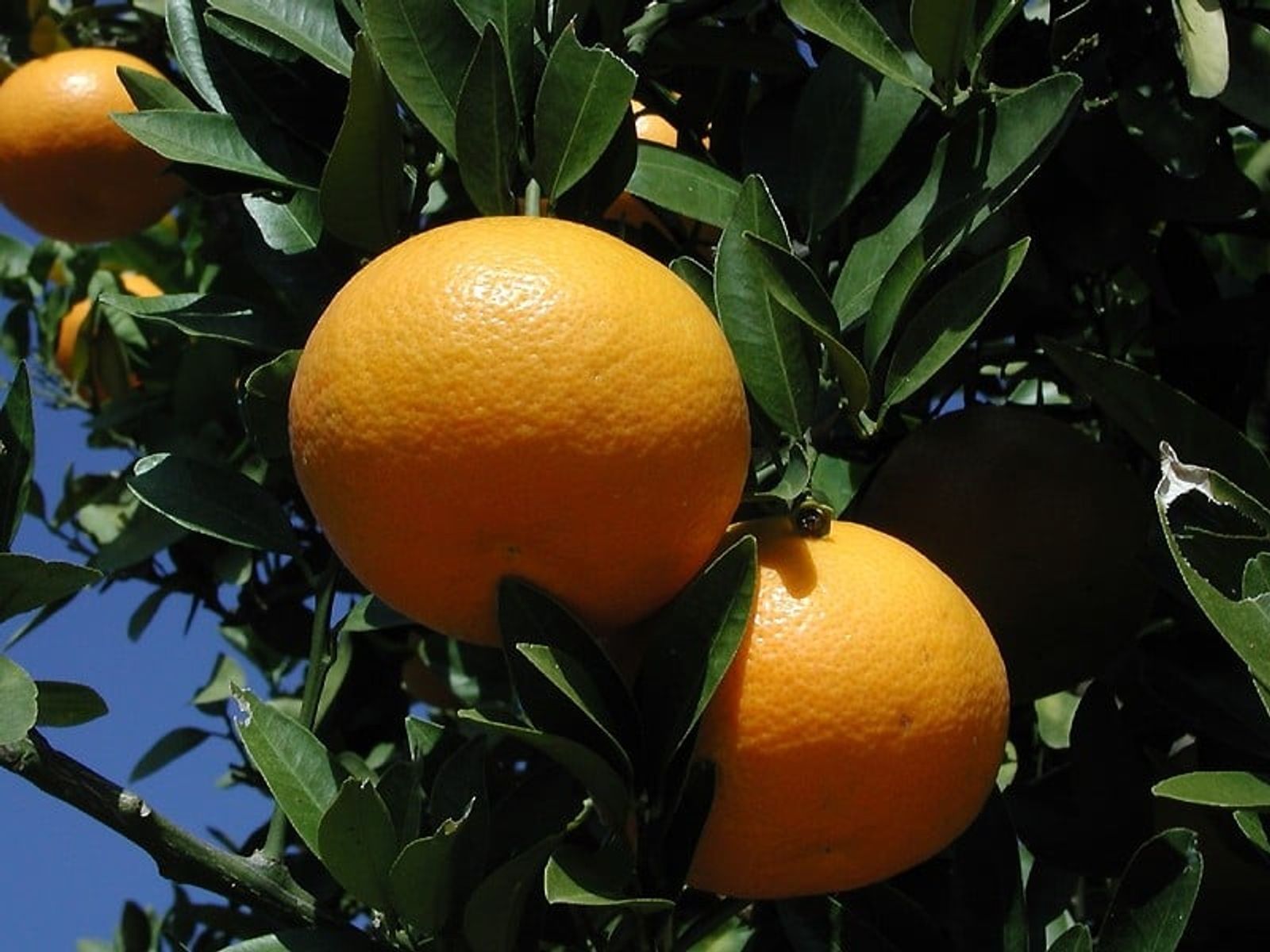
Iyokan on the tree in Ehime · Photo: Uncle Carl (カールおじさん) / CC BY-SA 3.0 (Wikimedia Commons)
 JapanMatsuyama
Ehime and Mikan: Iyokan, Beni Madonna and Life in Japan's Citrus Kingdom
Ehime ranks at the very top of Japan for total citrus harvest. Here is how citrus growing began, how iyokan arrived in Matsuyama and became Ehime's emblem, the varieties grown only in Ehime, and when and how to enjoy them.
Why Ehime Is Called the Citrus Kingdom
In Ehime you will find oranges painted on manhole covers and souvenir shops packed with mikan juice and citrus sweets. The prefecture has plenty of sunny slopes facing the Seto Inland Sea and the Uwa Sea, where citrus has long been grown on terraced fields. In the statistics, Ehime competes every year with Wakayama and Shizuoka for the top three spots in unshu mikan (the common Japanese mandarin), and when late-season citrus such as iyokan is included, it has ranked first in Japan for total citrus harvest. According to a Ministry of Internal Affairs document, Ehime was number one in total citrus for the 2021 crop, and its harvest of late-season citrus was about twice that of second-place Wakayama.
How Citrus Growing Began in Ehime
The unshu mikan, the everyday Japanese mandarin, is said to have originated 400 to 500 years ago in what is now Nagashima in Kagoshima Prefecture. According to Ehime Prefecture, citrus growing in Ehime began in the late Edo period, when people in today's Yoshida, Uwajima, planted mandarin seedlings brought back from pilgrimages to Ise Shrine or around Shikoku. A document from a prefectural research institute adds that cultivation took off after a farmer in Tachima, Yoshida, introduced unshu mikan from Tosa (today's Kochi). Sources differ slightly on the exact date and circumstances, but they agree on the overall story: citrus growing began in hillside villages on the southern coast and then spread across the prefecture to create today's citrus kingdom.
Matsuyama and the Iyokan
Of all Ehime's citrus, the one most closely tied to Matsuyama is the iyokan (伊予柑). It was first found in 1885 in what is now Hagi, Yamaguchi Prefecture, and was originally called anato mikan, among other names. In 1888 Miyoshi Yasunori, a silk farmer and fruit grower from Mochida village in Onsen District, now part of Matsuyama, bought seedlings and began growing it in Ehime. Early shipments from Ehime were sold as Iyo mikan, but because that could be confused with ordinary mandarins, the name gradually became iyokan. Iyo is the old name for the Ehime region. Today about 90 percent of Japan's iyokan harvest comes from Ehime, making it effectively Ehime's own fruit. The peel is thick but can be removed by hand, and the fruit is juicy with a strong aroma.
Varieties Grown Only in Ehime
Ehime also invests heavily in breeding its own varieties, and the best known are Beni Madonna (紅まどんな) and Kanpei (甘平). Beni Madonna is the brand name for fruit of the prefecture-bred variety Ehime Kashi No. 28 that meets set standards, and it can be grown only within Ehime. It is a premium citrus often praised for flesh as smooth and soft as jelly. Kanpei is another original Ehime-bred variety, promoted alongside Beni Madonna as one of the top premium citrus fruits of Ehime. Many other citrus varieties follow one after another through the seasons, so it is fun to spot unfamiliar names at markets and souvenir shops.
Seasons and How to Enjoy Them
Unshu mikan are in season from autumn into winter, while iyokan, Beni Madonna and Kanpei are at their best from winter into early spring. Visit Matsuyama then and you can compare many varieties side by side at local markets, souvenir shops and station and airport stores. Premium brands are usually sold in gift boxes, everyday mikan by the bag. There is plenty to enjoy out of season too. Some 100 percent juices made from Ehime citrus come in small bottles by variety so you can taste the differences, and there are many jellies and sweets. Matsuyama Airport is known for a novelty tap that pours mikan juice, a popular photo spot for travelers; availability and hours can change, so check before you go.