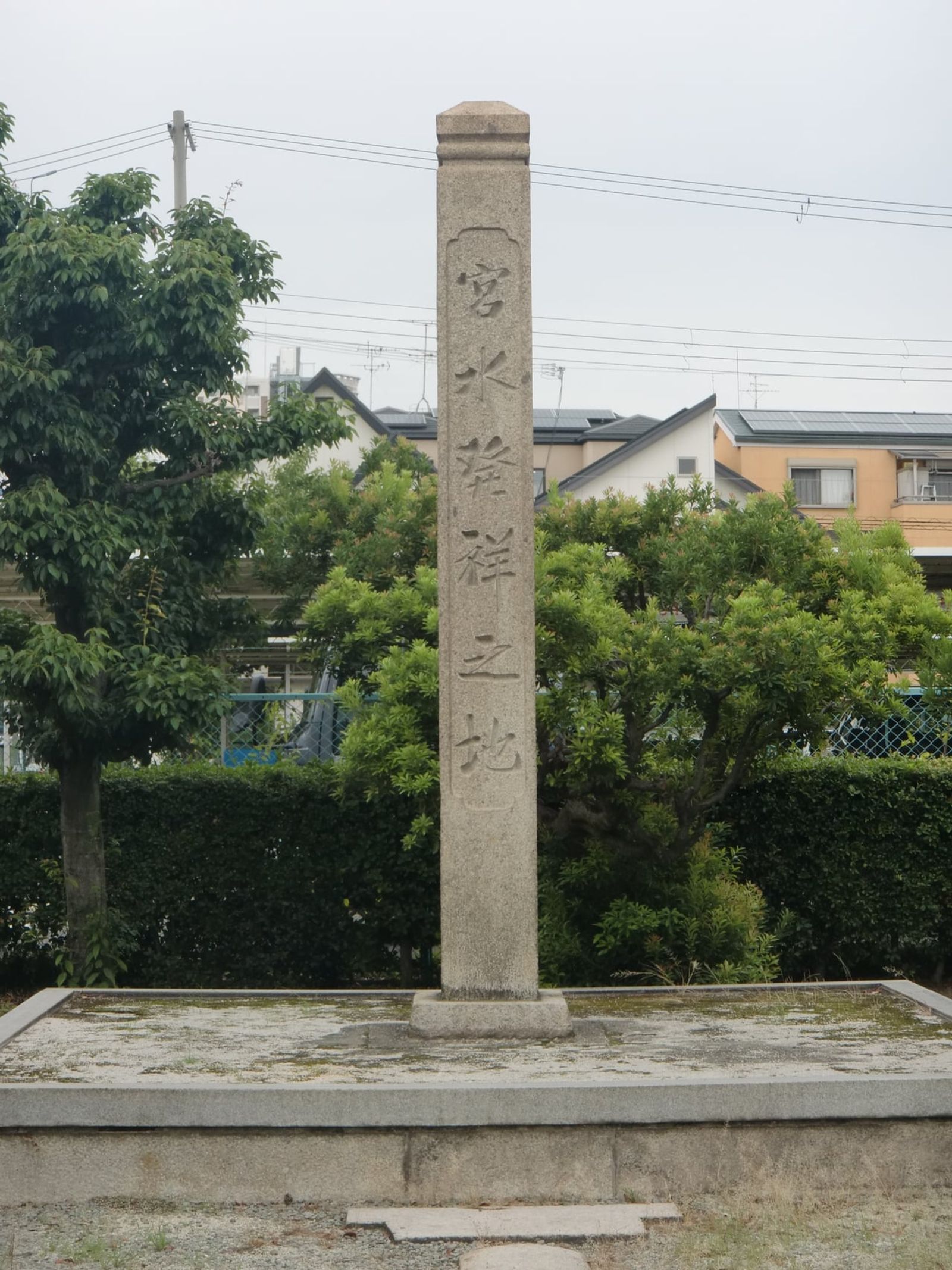
The "Birthplace of Miyamizu" monument in Nishinomiya · Photo: Miya.m / CC BY-SA 4.0 (Wikimedia Commons)
 JapanKobe
Nada Sake: How Kobe's Waterfront Became Japan's Biggest Sake Region
Along Kobe's eastern waterfront lies a chain of brewing towns that makes roughly a quarter of Japan's sake. From a special well water to a mountain wind and the ships that raced barrels to Edo, here is how Nada sake earned its name and how to visit.
Where Is Nada Gogo?
Nada Gogo ("the five villages of Nada") is the collective name for five sake-brewing districts on the Hyogo coast: Nishigo in Kobe's Nada Ward, Mikage-go and Uozaki-go in Higashinada Ward, and Nishinomiya-go and Imazu-go in neighboring Nishinomiya City. Ride the Hanshin line east from central Kobe and the big brewery buildings you see out the window are this area. According to Japanese Wikipedia, Nada Gogo produces more sake than anywhere else in Japan, around 25% of national output as of the 2020s. Along with Fushimi in Kyoto and Saijo in Hiroshima it is counted among Japan's three great sake regions, and many of the country's biggest breweries started here and are still headquartered here. "Nada no Sake" is a registered regional brand, and "Nada Gogo" is a protected geographical indication (GI).
The Sake That Filled Edo's Cups
Nada was not always sake country. As nippon.com points out, it did not have the long brewing history of Nara, Fushimi or Itami. Its rise came in the Edo period, when brewing know-how arrived from Itami and breweries began to cluster along this coast, which was ideal for shipping. From around the Genroku era (1688 to 1704), demand in Edo soared, and Nada sake was sent there on taru-kaisen, cargo ships dedicated to sake barrels. Because it traveled "down" from the Kamigata region around Kyoto and Osaka to Edo, it was called kudari-zake ("down sake") and prized as premium drink in Edo. Sources differ on how much of Edo's sake came from Nada: nippon.com says about 80% by the late Edo period, while Japanese Wikipedia gives 50% of the sake arriving in Edo in the Bunka-Bunsei years (1804 to 1830). Being right by the sea made it easy both to bring rice in and to ship sake out.
The Discovery of Miyamizu
No story of Nada sake skips miyamizu, the groundwater that wells up southeast of Nishinomiya Shrine. In 1837 or 1840 (sources differ), a brewery owner puzzled over why his sake tasted different in Nishinomiya and Uozaki despite identical methods, and concluded that the Nishinomiya well water was the reason. This is remembered as the discovery of miyamizu. Nippon.com adds that the water was carried on the backs of oxen more than 7 km to Uozaki to test it, and the results confirmed its quality. Miyamizu is rich in minerals such as potassium and phosphorus, which feed the koji mold and yeast, while being extremely low in iron, which spoils sake's color and taste. Breweries across Nada rushed to use it, and a trade called mizuya even appeared, with people digging wells to sell the water to brewers. Miyamizu is listed among the Ministry of the Environment's 100 Exquisite Waters, and a stone marks the "birthplace of miyamizu" in Nishinomiya.
Rice, Wind and Master Brewers
Water alone does not make a great sake region. In winter a cold wind called Rokko-oroshi sweeps down from the Rokko mountains to the sea, helping cool steamed rice quickly and suiting kanzukuri, the practice of brewing in the coldest months. According to nippon.com, brewery buildings even had openings on the north side to let this wind in. Waterwheels on the fast Rokko streams powered rice polishing and boosted output. For rice, Hyogo is famous for Yamada Nishiki, a sake rice variety developed in the prefecture in 1923. It is widely considered the finest sake rice, and about 80% of it is grown in Hyogo. On top of that came the skill of the Tamba toji, master brewers from eastern Hyogo and one of Japan's three great brewing guilds. An old saying sums it up as "Harima rice and miyamizu, Tamba toji and Rokko-oroshi", and Nada's firm, crisp sake was nicknamed otoko-zake, "masculine sake".
How to Visit and Enjoy It
The easiest way to enjoy Nada sake from Kobe is to walk the brewery districts around Uozaki, Ishiyagawa and Mikage stations on the Hanshin line. Big breweries run sake museums and shops here, and some are free to enter, with old brewing tools on display and tastings. Hours and closing days vary, so check ahead. Go on to Nishinomiya and you can see the miyamizu birthplace monument too. When tasting, try freshly pressed nama-zake or bottles sold only at that brewery. Some places offer taru-zake, aged briefly in cedar casks to recreate the aroma of old kudari-zake. Kasu-jiru soup made with sake lees and sweets made from lees are part of the fun of the brewery streets. In the new-sake season in winter, fresh green cedar balls (sugidama) hang from the eaves, so that is a lovely time to visit. Take the train after drinking, of course.