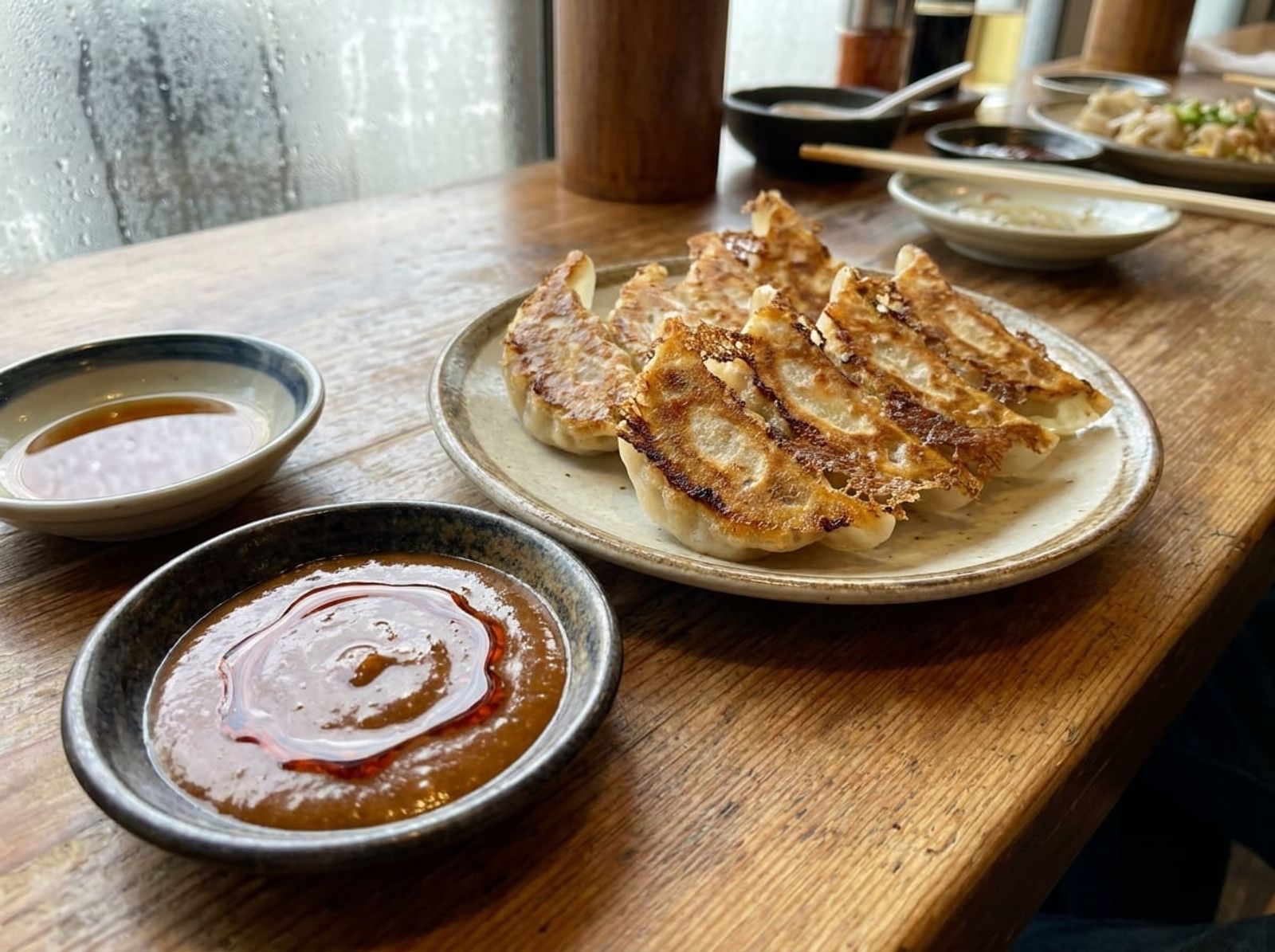
Kobe Miso-Dare Gyoza
 JapanKobe
Kobe Miso-Dare Gyoza: The Port City's Dumplings Dipped in Miso Sauce
At gyoza counters in Kobe, a pot of miso sauce sits next to the soy sauce and vinegar. Here is the story of how this taste came home with people returning from Manchuria, and how to mix your dipping sauce the first time you try it.
The Miso Pot on the Table
In Japan, pan-fried gyoza are usually dipped in a mix of soy sauce, vinegar and chili oil. In Kobe there is one more option: a sauce made from miso, known as miso-dare. The Ministry of Agriculture's "Our Regional Cuisines" lists miso-dare gyoza under Hyogo Prefecture as a local dish handed down in Kobe City. According to the ministry, ramen shops and Chinese restaurants in Kobe still keep miso sauce on the table, and bottled miso-dare is sold for home cooks. Media coverage of it as cheap and cheerful "B-grade gourmet" food has made it known outside Kobe too. In 2014, miso-dare gyoza was even selected for "Five Stars Hyogo", the prefecture's certification for regional products.
A Taste Brought Home From Manchuria
The ministry explains the origin like this. Before World War II, Japanese living in Manchuria (today's northeast China) preferred pan-fried dumplings to the boiled ones the local people ate, and many families dipped them in miso as a taste of home. After the war, a man who had returned from Manchuria opened a restaurant in Shinkaichi in Kobe's Hyogo Ward and served pan-fried gyoza with miso sauce. Word spread among fellow returnees, and other shops began to follow. The exact year and place of that first shop vary by source. The ministry gives no year, while several food articles say it opened in 1951. But the core story, that it began in postwar Kobe as a nostalgic taste of Manchuria returnees, is consistent. It also echoes the wider account that gyoza culture itself spread across Japan through people returning after the war.
What Miso-Dare Tastes Like
Miso-dare might sound like a thick paste, but it is actually a loosened, sweet and savory sauce made for dipping. According to the ministry, it is basically miso mixed with soy sauce, vinegar, sugar and chili oil, and some add sake or garlic soy sauce. The home recipe it gives mixes equal parts miso, soy sauce and vinegar with a little sugar and chili oil. Every shop keeps its blend secret: some are rich and based on red miso, others lean sweet. The sweetness and depth of the miso wrap around the juicy pork filling and leave a richer finish than a soy-based dip. The ministry's example filling uses pork and beef, Chinese cabbage, cabbage, garlic chives and green onion, and it adds that winter, when Chinese cabbage is at its best, is an especially good time to eat it.
Where to Eat: Motomachi, Nankinmachi and Beyond
Good places to try miso-dare gyoza are Nankinmachi, Kobe's Chinatown, and the area around neighboring Motomachi station. Several long-running gyoza specialists are here, and it is common to see customers at a small counter ordering nothing but gyoza and beer. Around Shinkaichi, where the story began, and in the busy Sannomiya area, many Chinese restaurants and ramen shops also have a pot of miso sauce on the table. Gyoza specialists keep their menus short, so ordering "gyoza ichinin-mae" (one portion) and a drink is plenty. Many people casually eat two portions. Popular shops can have long lines, so aim for the gap between lunch and dinner. It is also a great bite to fit in while strolling Nankinmachi's street food stalls.
How to Mix Your Sauce the First Time
At a miso-dare gyoza shop you can put some miso sauce in a little dish and dip straight in, or blend in a bit of soy sauce, vinegar or chili oil to taste. If it is your first time, try the miso sauce alone to get its true flavor, then add a splash of vinegar for brightness or chili oil for heat. The same dumpling tastes completely different depending on the sauce. Some shops serve the miso-dare already in a dish; at others you scoop it yourself from a pot on the table. If there is a spoon sticking out, help yourself. To recreate it at home, bottled miso-dare is sold at souvenir shops and supermarkets, making a fun Kobe gift. For travelers used to soy-based dips, the surprise of "gyoza with miso?" is itself a very Kobe experience.