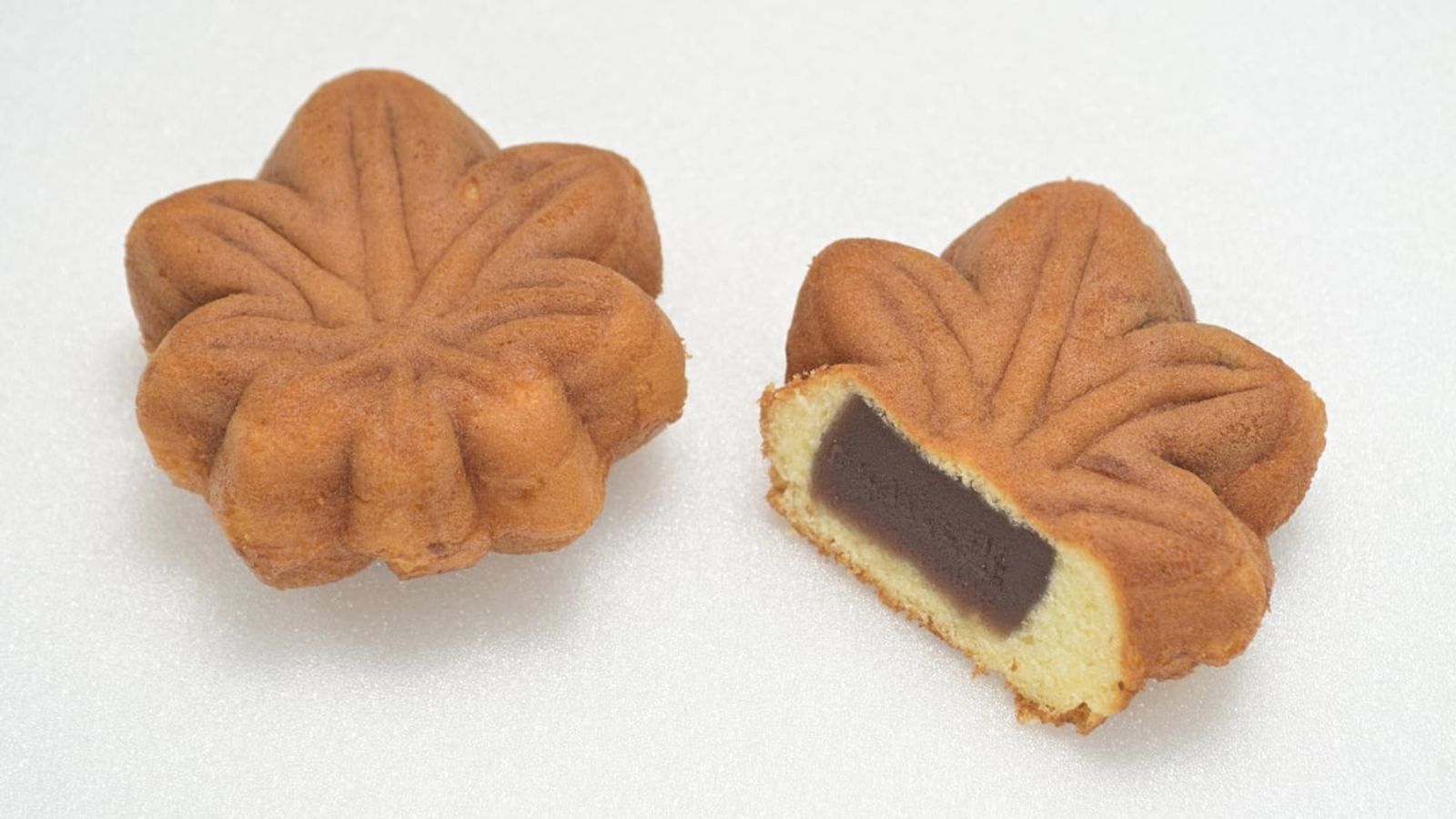
Momiji manju cut open to show the bean paste · Photo: Ocdp / CC0 (Wikimedia Commons)
 JapanHiroshima
Momiji Manju: Hiroshima's Maple-Leaf Cake Born in a Miyajima Valley
A maple-leaf-shaped sponge cake filled with sweet bean paste, momiji manju is the first souvenir anyone names for Hiroshima. Here is how it was born on Miyajima in 1906, the many flavors it comes in, and how to enjoy one fresh off the iron.
The Definitive Hiroshima Souvenir
Momiji manju is a baked sweet shaped like a maple leaf and the signature treat of Itsukushima, better known as Miyajima, one of Japan's Three Views. It has long since outgrown the island to become the souvenir of all Hiroshima Prefecture, known throughout Japan. According to Japanese Wikipedia, it came first nationwide in a 2009 newspaper members' poll asking "What is Japan's best manju?", and it routinely ranks near the top of souvenir charts. The maple runs deep in Hiroshima. The prefecture chose the momiji (maple) as its official tree in 1966, and prefectural materials present it as both the prefectural flower and tree. Miyajima itself is famous for autumn foliage, so a maple-leaf cake captures the region's symbol perfectly. The shopping street leading to Itsukushima Shrine is lined with shops baking momiji manju, and they have become part of the island's scenery.
1906: A Request From an Inn in Maple Valley
The accepted story is that momiji manju was born on Miyajima in 1906 (Meiji 39), named after Momijidani ("Maple Valley"), the island's famous foliage spot. According to Japanese Wikipedia, Momijidani was home to a venerable inn founded in 1854 that hosted royals, politicians and writers. Its proprietress asked a local confectioner who supplied the inn to create a sweet worthy of the Momijidani name, a gift for important guests, and after much trial and error he completed a "maple-shaped baked manju". Another widely told tale credits Ito Hirobumi, Japan's first prime minister and a regular at the inn, who supposedly joked on seeing a teahouse girl's hands that they were as cute as maple leaves and would be delicious baked. Japanese Wikipedia, however, notes there is no official record behind this anecdote. The origin story has several versions, but all agree the setting is Momijidani in the late Meiji era.
Why So Many Makers Share One Name
Momiji manju is made by wrapping bean paste in a castella-like batter of flour, eggs, sugar and honey and baking it in a maple-leaf mold. The classic filling is smooth koshi-an, and the method is almost the same everywhere. According to Japanese Wikipedia, the original confectioner never monopolized the name or recipe, so today everyone from big confectionery companies and tiny Miyajima shops to supermarket private labels sells it under the same name, "momiji manju". Until the 1960s each one was baked by pressing the mold by hand, but a Hiroshima company then developed a machine that rotates molds in sequence, letting any shop produce consistent quality. Watching these machines pour batter, drop in bean paste and close the molds in Miyajima shop windows is part of the island's fun. A few shops still have artisans hand-baking with tongs-style molds out front, and there are places where you can try baking your own.
From Bean Paste to Cheese and Deep-Fried
At first there was only koshi-an, but now the range is huge. According to Japanese Wikipedia, chunky tsubu-an came about in the early Showa era when a member of the imperial family visiting the island asked for it, and white bean, matcha and chestnut fillings followed after the war. During the 1984 momiji manju boom, cheese and chocolate arrived as the first unconventional fillings, followed by custard cream. They are usually called "cheese momiji", "matcha momiji" and so on. In the 2000s the batter and method changed too: black batter made with bamboo charcoal powder, chewy mochi-style dough, and above all momiji manju coated in batter and deep-fried, which became hugely popular as Miyajima street food. Crisp outside and moist inside, it is served warm on a stick. One tip for cheese or chocolate versions: warm them in the microwave for 10 to 20 seconds so the filling melts.
Where to Buy and How to Enjoy It
The most fun place is of course Miyajima. Along the Omotesando shopping street from the ferry terminal to Itsukushima Shrine, many shops sell freshly baked momiji manju by the piece, so you can buy one warm and eat it as you walk. Guides put them at roughly 100 to 150 yen each, so it is easy to sample several flavors. Fresh from the mold the cake is fluffy and fragrant, quite different from the boxed kind. For gifts, Hiroshima Station, Miyajimaguchi Station and department stores in the city offer products from many makers. Even under the same name, the batter and bean paste differ a little from company to company, so comparing them is part of the fun. Most keep for around two weeks at room temperature, but cream varieties may not last as long, so check the date on the box. They pair well with green tea or coffee, and some people like them chilled.