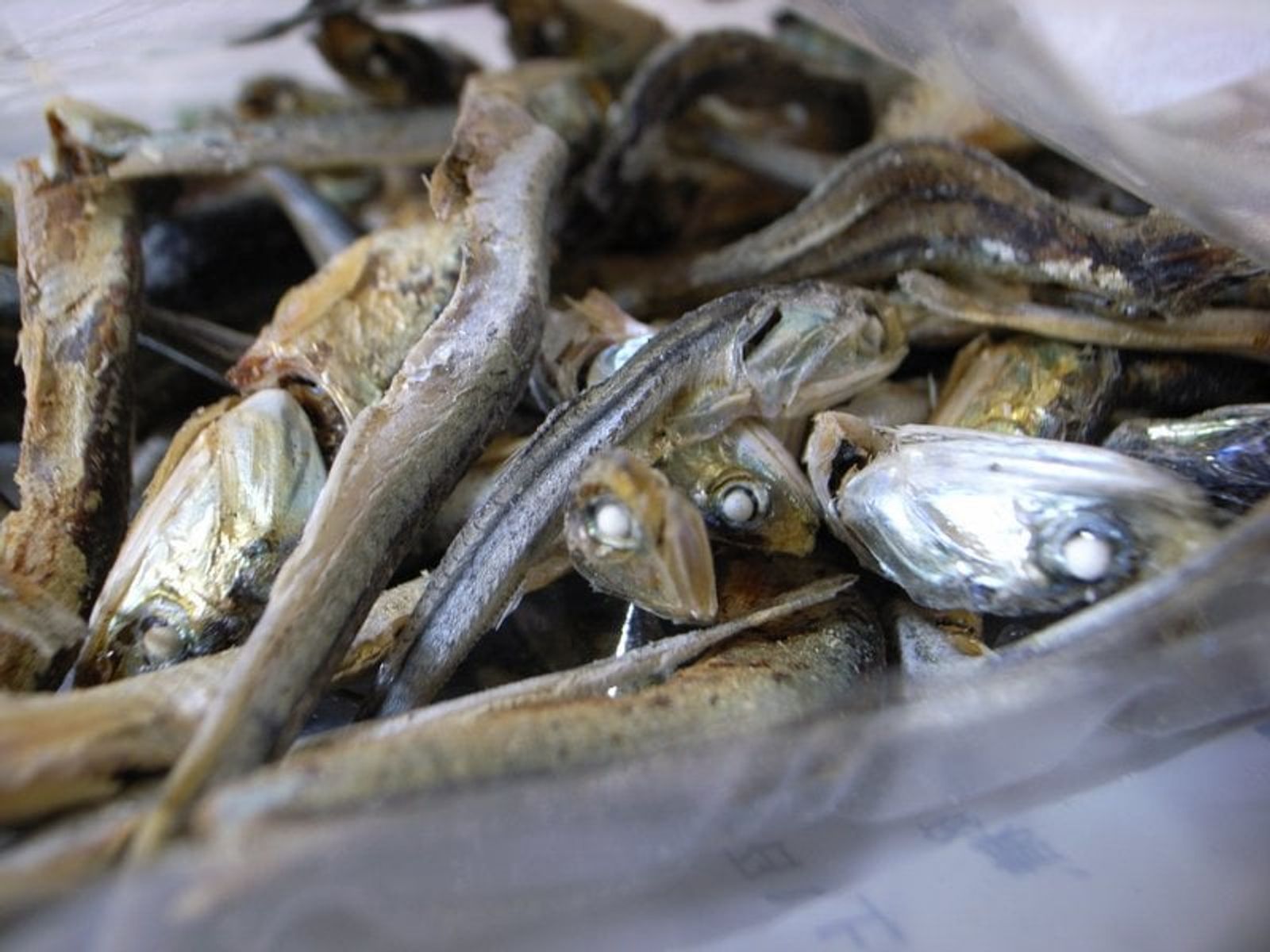
Dried anchovies for stock (iriko / niboshi) · Photo: Chihaya+ Sakura from OSAKA, Japan / CC BY-SA 2.0 (Wikimedia Commons)
 JapanTakamatsu
Iriko and Iriko Meshi: The Dried Sardines Behind Sanuki Udon Broth, Boiled Within 30 Minutes on Ibukijima
Iriko, the dried anchovies Kagawa uses for stock, are the foundation of Sanuki udon broth and everyday home cooking. Meet the famous producing island of Ibukijima and iriko meshi, the mixed rice western Kagawa families still make.
What Iriko Is
Iriko (いりこ) are small Japanese anchovies that have been boiled and dried, the same ingredient Tokyo calls niboshi. In western Japan, and in Kagawa above all, iriko is the more familiar name. In Kagawa, iriko matter because of stock. The agriculture ministry notes that iriko dashi is used widely here, not only for Sanuki udon but in everyday home cooking. Compared with stock made only from kombu or bonito flakes, iriko stock has a clearer fish aroma, which makes it a key part of each udon broth's character. If you have ever wondered where the taste of Sanuki udon broth comes from, iriko is a big part of the answer.
Ibukijima, the Famous Producing Island
Ibukijima, a small island off Kan'onji City in western Kagawa, is known as a top iriko producer. The Seto Inland Sea has an active anchovy fishery, and the waters around Ibukijima are among its best grounds. The reason always given for the island's quality is speed. Anchovies lose freshness very quickly, so the catch is brought back to the island and boiled within about 30 minutes, which is possible because the processing sheds sit close to the fishing grounds. The season usually runs from around June into September; local news reported that in 2026 it opened on June 15 and was scheduled to continue until mid-September. According to the Ibuki fishing cooperative, output was 1,681 tons in 2022 and 1,368 tons in 2025. Summer is when the island is busiest boiling and drying.
What Makes Good Iriko
The agriculture ministry explains Ibukijima's quality in a few points. First is the freshness already mentioned. Second is a system in which the same operator (the net owner) handles everything from the catch to processing, so there is no lost time between steps. Third is skill: adjusting how many fish enter the net so they are not damaged takes experienced hands. From catch to store shelf takes about one to three days. The sea itself is part of it too. Iriko from anchovies raised in the calm Seto Inland Sea are said to give a rich stock. Removing the heads and bellies before making stock is a step you will also see in the iriko meshi recipe below.
Iriko Meshi, a Home Dish of Western Kagawa
Western Kagawa, the Seisan area where iriko are produced, has its own mixed rice made with them: iriko meshi (いりこ飯). According to the agriculture ministry, it is still an everyday dish in ordinary homes, made in every season. It wastes nothing. The heads and bellies are removed and the bodies split in half, while the heads are soaked in water to make stock. Rice goes into the pot with that stock and water, topped with thin strips of fried tofu, carrot, daikon, taro and konjac plus the iriko flesh, then seasoned with soy sauce and cooked. The reference recipe uses a full sho of rice (about 1.8 liters), because rice is said to taste better cooked in large batches. Mushrooms or burdock often go in too, and because it is rich in calcium it appears in school lunches.
Enjoying Iriko as a Traveler
The easiest way to enjoy iriko in Kagawa is, of course, udon. Visit a few udon shops and you may notice the fish aroma of the broth differs from place to place. Order a hot kake udon and taste the broth first; the differences stand out. As a souvenir, iriko for stock are light and keep well. Look in supermarket dried-goods aisles or souvenir shops around Takamatsu Station. At home, remove the heads and bellies, soak them in water and then heat. If you head toward Kan'onji, look across the water at Ibukijima and think of the island's summer that ends up in your bowl of udon.