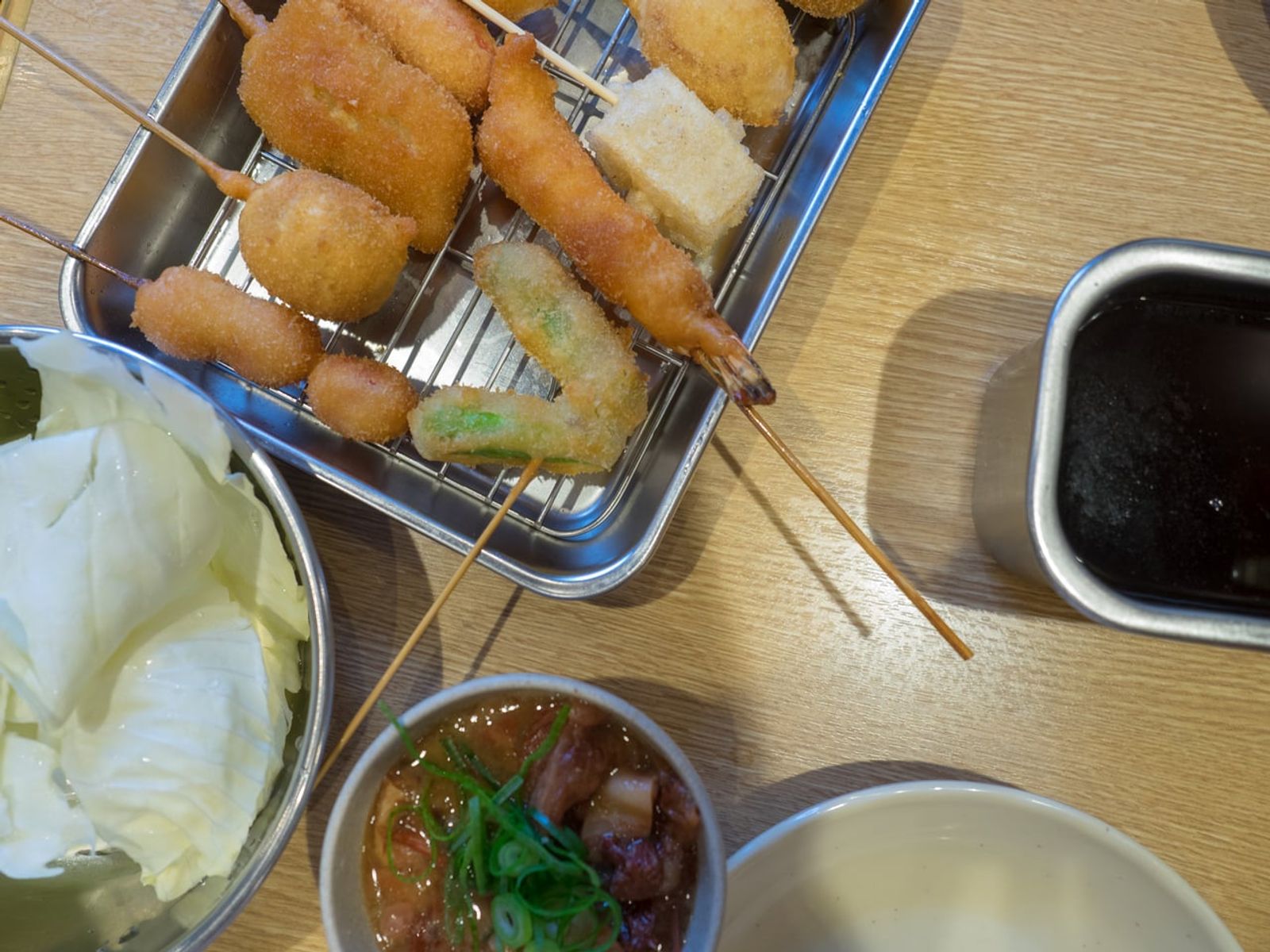
Kushikatsu in Shinsekai with cabbage, a sauce tub and doteyaki · Photo: Ajay Suresh from New York, NY, USA / CC BY 2.0 (Wikimedia Commons)
 JapanOsaka
Osaka Kushikatsu: Shinsekai's Fried Skewers and the 'No Double-Dipping' Rule
Walk the lanes of Shinsekai below Tsutenkaku Tower and you will see 'no double-dipping' signs everywhere. Here is how kushikatsu went from a cheap meal for laborers to an Osaka icon, and how to eat it without a misstep on your first visit.
What Kushikatsu Is: Bite-Sized Skewers, Battered and Fried
Kushikatsu (串カツ) is meat, seafood or vegetables cut into bite-sized pieces, threaded onto skewers, dipped in a flour-and-egg batter, coated in fine breadcrumbs and deep-fried. Japan's Ministry of Agriculture lists it as a local dish of Osaka Prefecture, eaten across Osaka City and the wider prefecture. The same name means slightly different things elsewhere. In the Kanto region it is usually cubes of pork alternating with onion or leek, fried like tonkatsu and served on a plate. Around Nagoya some places dip it in a Hatcho miso broth. The Osaka version is smaller and far more varied, from beef and shrimp to quail eggs, asparagus and cheese, which is why people in other regions sometimes call the Osaka style kushiage to tell it apart.
Shinsekai and the Workers' Meal: How It Began
The place most associated with Osaka kushikatsu is Shinsekai, the neighborhood around Tsutenkaku Tower. It grew up on land used for the Fifth National Industrial Exhibition in 1903, and took its name in 1912 when the first Tsutenkaku and the Luna Park amusement park opened. The Ministry of Agriculture cites the theory that kushikatsu was born in Shinsekai between the mid-1920s and the early Showa era, created as a cheap, filling meal that laborers working nearby could eat quickly. A widely told story credits a Shinsekai shop in 1929, but some argue similar skewers were already eaten in Tokyo's working-class districts in the late Meiji period, so accounts differ. At first, only beef skewers were called kushikatsu.
'No Double-Dipping' and the Free Cabbage
The most famous rule in an Osaka kushikatsu shop is nidozuke kinshi (二度漬け禁止): no double-dipping. Many shops put a stainless-steel tub of sauce on each table for everyone to share, so dunking a skewer again after biting it became the golden rule of hygiene. The sauce is usually a thin Worcestershire-style base blended with soy sauce or vinegar. If you want more sauce after the first bite, use the raw cabbage that comes with your order. Scooping sauce with a cabbage leaf and pouring it over your skewer is perfectly fine. The cabbage also cuts the richness of the fried food, and many shops let you eat as much as you like for free. Some newer, more creative shops serve salt, tartar sauce and other dips in individual dishes, and the rule may not apply there.
The Perfect Sidekick: Doteyaki
One dish almost always on a kushikatsu menu is doteyaki (どて焼き): beef tendon slowly simmered in miso and mirin. The name is said to come from the way miso is spread around the rim of an iron pan like a riverbank (dote, 土手), with the tendon cooked in the middle and stewed in the miso as it melts down. Konnyaku is often added too. The Ministry of Agriculture also lists doteyaki as an Osaka local dish, describing it as cheap, down-to-earth Osaka food served at many places around Shinsekai. Its sweet, salty, rich flavor makes it a classic with drinks. Alternating crisp kushikatsu with tender doteyaki is the Shinsekai way to eat.
Where to Go and How to Order
Shinsekai is the easiest place to start. Kushikatsu shops cluster along the streets south of Tsutenkaku and around Janjan Yokocho, a lane known as the first part of the area to revive after the war, earning the district the nickname 'kushikatsu town'. You can also find kushikatsu at izakaya and chain restaurants all over Osaka. You usually order by the skewer. On a first visit, try a few of the classics, such as beef (the original), shrimp, quail egg and a vegetable like lotus root or asparagus, then add more once you know what you like. Dip each skewer into the sauce tub once, all the way, and drop the finished sticks into the container on the table. With more overseas visitors, some shops now explain the sauce rule, so feel free to ask.