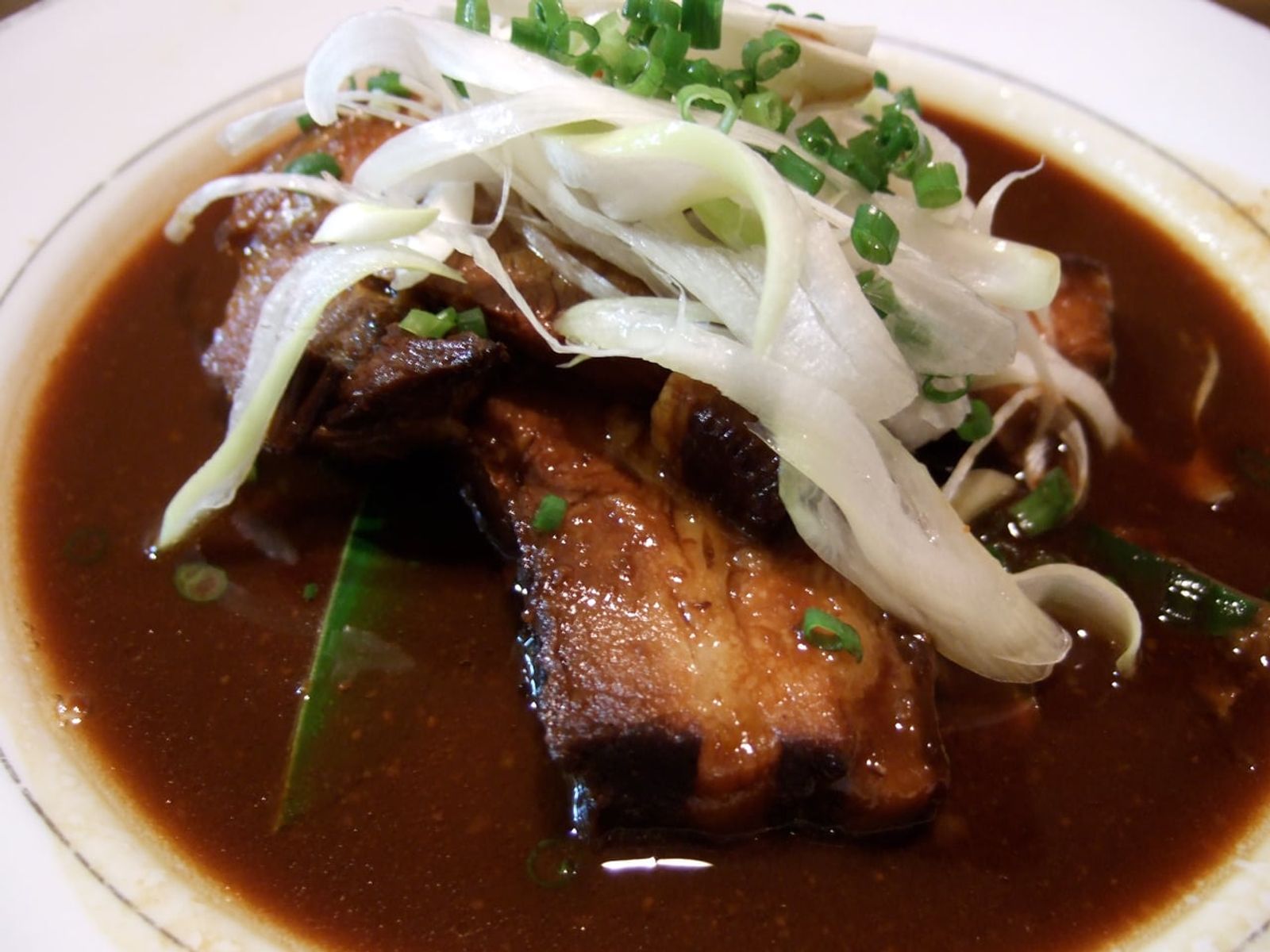
Okinawan rafute braised with the skin on · Photo: pelican from Tokyo, Japan / CC BY-SA 2.0 (Wikimedia Commons)
 JapanOkinawa
Rafute: The Star of Ryukyu Cuisine, Which 'Begins and Ends With Pork' — Pork Belly Simmered for Hours in Awamori
Rafute is skin-on pork belly braised until a chopstick slides right through. Here is how it grew from Ryukyu Kingdom pork culture and a preserved food for a hot island into a celebration dish, how it differs from mainland kakuni and how it is made.
A Cuisine That Begins and Ends With Pork
Okinawans say that Ryukyu cuisine 'begins and ends with pork', and the agriculture ministry's regional food archive uses the same phrase to introduce rafute. Pork culture developed during the Ryukyu Kingdom under the influence of exchange with China, and because the meat-avoidance customs long held on the mainland never took root in Okinawa, pork is used even at memorial rites. Rafute (ラフテー, also rafuti) is the flagship of that pork tradition. Large pieces of skin-on pork belly (sanmainiku) are simmered for a long time in awamori, soy sauce and sugar; a well-made rafute is so tender that a chopstick cuts through skin and fat alike. Along with Okinawa soba and champuru, it is one of the names you see most often on Okinawan menus.
From Preserved Food on a Hot Island to Celebration Dish
According to the agriculture ministry, rafute began as a strongly seasoned preserved food that let people keep meat longer in hot Okinawa. Before refrigerators it was a storage dish, and over time its flavor has become milder. Today rafute appears at celebrations, memorial rites and formal meals for guests. In fiscal 2021, Japan's Agency for Cultural Affairs recognized it as a 'Traditional 100-Year Food'. The applicant, the Motobu Town Tourism Association, linked rafute to Ryukyu royal cuisine while noting a worry: as store-bought versions become the norm, the home-made taste of this once-preserved food is fading. Because it takes so much effort, keeping each family's version alive has become a challenge.
How It Differs From Mainland Kakuni
Rafute looks a lot like kakuni, the braised pork of mainland Japan, but there are differences. The biggest is the alcohol: mainland kakuni usually uses sake or mirin, while rafute uses plenty of awamori, Okinawa's distilled spirit. Some cooks also sweeten it with Okinawan brown sugar (kokuto), which gives a darker color and deeper flavor. Keeping the skin is another hallmark. Because skin-on pork belly is used, long simmering turns the skin pleasantly sticky, a texture distinct from the meat. It is often said to share roots with China's Dongpo pork, but that is best treated as one theory. Either way, slowly braising big pieces of pork belly in alcohol and soy sauce clearly fits the food culture of a Ryukyu long in contact with China.
Six to Seven Hours: A Labor-Intensive Method
The recipe by a Ryukyu cuisine researcher published by the agriculture ministry shows why rafute takes so much work. First the skin of the pork belly is seared over an open flame and dipped briefly in boiling water. The whole slab is then simmered in water for about an hour and a half, skimming as it cooks, and left to cool in the liquid. The cooled meat is cut into four- to five-centimeter pieces and simmered gently for about 30 minutes with bonito dashi, awamori and sugar, skimming off foam and fat. Soy sauce goes in two additions, followed by about another hour of simmering. It is done when the skin can be cut with a chopstick; the ideal total is six to seven hours. Boiling first to render fat and cooling in the broth keep the meat moist and not greasy despite the long cooking.
Tasting Rafute in Okinawa
Rafute is eaten all over Okinawa, so you will find it easily at Okinawan restaurants and izakaya around Kokusai-dori and the markets in Naha. Menus may also spell it rafuti. Ordering it as a dish to go with awamori is the most Okinawan pairing of all. If you want to explore more pork dishes, look for soki (pork ribs) and pig's feet (ashitibichi), which often appear alongside rafute. As a souvenir, shelf-stable retort rafute is sold in supermarkets and at the airport and only needs reheating, a handy way to bring Okinawa home. The home-cooked character once passed down in families now survives as each restaurant's own version, so try it at two or three places during your trip and you will notice differences in sweetness and awamori aroma.