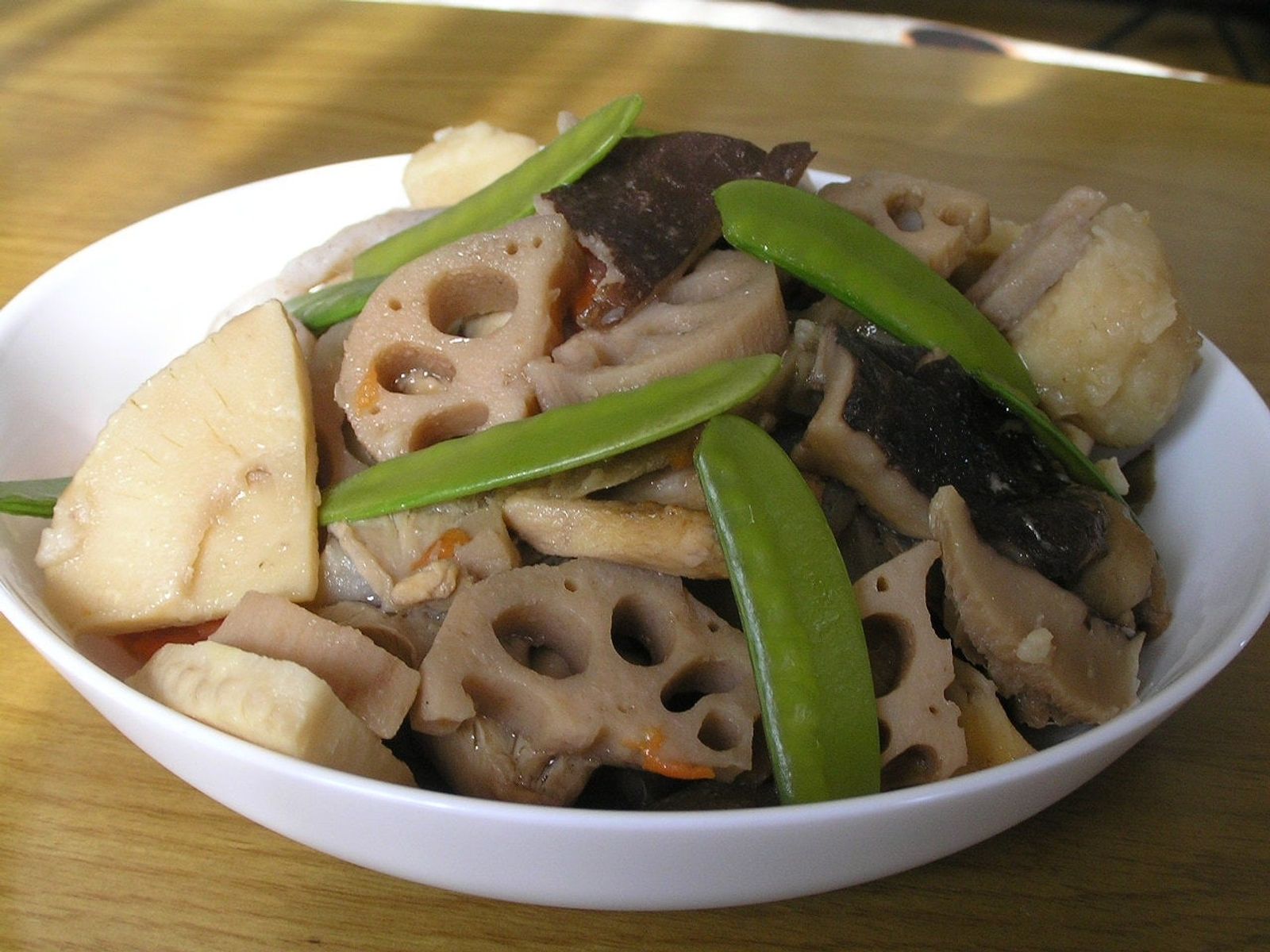
Gameni (chikuzen-ni) · Photo: 南無観自在 / CC BY-SA 4.0 (Wikimedia Commons)
 JapanFukuoka
Gameni (Chikuzen-ni): The Chicken and Vegetable Stew Behind Fukuoka's New Year and Festivals
Known across Japan as chikuzen-ni, this chicken and vegetable stew comes from Fukuoka, where locals call it gameni. Here are the theories behind the name, how it differs from chikuzen-ni, and its place at New Year and the Yamakasa festival.
A Staple of the Fukuoka Table
Gameni (がめ煮) is chicken and an assortment of vegetables stir-fried and then simmered in a sweet mix of soy sauce, sugar and mirin. Across Japan it is better known as chikuzen-ni (筑前煮), Chikuzen being the old provincial name for western Fukuoka Prefecture. In Fukuoka itself, many people still call it gameni. According to the farm ministry's regional food database, gameni appears at New Year, festivals, weddings and other celebrations, and on ordinary days as a side dish or with sake. It is so central that Fukuoka City's high consumption of chicken and burdock is said to be partly down to gameni. In 2007 it was chosen, along with mizutaki, for the national list of 100 local dishes of farming, mountain and fishing villages.
What Is "Game"? Three Theories Behind the Name
There is no single agreed origin for the name gameni. One theory traces it to the Hakata dialect word gamekurikomu, meaning to gather things together, which fits a dish that brings many ingredients into one pot. A second theory says it began during Toyotomi Hideyoshi's invasion of Korea in the late 16th century (the Bunroku campaign), when soldiers simmered soft-shelled turtle, then called dobugame, with whatever they had. The farm ministry mentions this theory too, noting that chicken has since replaced the turtle. A third says the name comes from kame (turtle), plentiful in Hakata Bay, turning "kame-ni" into gameni. Sources differ on which is right.
Are Gameni and Chikuzen-ni the Same Dish?
They can broadly be treated as the same dish, with a subtle difference. The farm ministry explains that gameni often uses bone-in chicken, while chikuzen-ni as it is known nationwide usually uses boneless meat. Simmering on the bone gives the sauce a deeper chicken flavour. The dish also goes by iridori ("stir-fried chicken") and chikuzen-daki. As the name iridori suggests, what sets it apart from ordinary nimono (simmered dishes) is that the ingredients are first stir-fried in oil before the seasonings go in. That step gives everything a glossy finish and helps the dish keep well, which makes it ideal for holiday meals prepared ahead.
Ingredients and How It Is Made
The basic ingredients are chicken, dried shiitake, konnyaku, burdock, lotus root, carrot, bamboo shoot and taro. In the farm ministry's recipe, the chicken is lightly stir-fried, then potato (or taro), carrot and shiitake are added and fried further before dashi and seasonings go in and everything simmers until tender. The konnyaku is scored decoratively, and green beans and shredded ginger finish the dish. Ingredients have varied by place and era. Japanese Wikipedia notes that chicken was once replaced by diced marlin, called haio in Hakata, or by rabbit or whale skin. Some areas leave out meat and use fried tofu for Buddhist observances, and on Shikanoshima island in Hakata Bay there is said to be a custom of always using an odd number of ingredients.
New Year, Yamakasa and How Visitors Can Try It
For Fukuoka people, gameni is an indispensable taste of the New Year osechi spread. The farm ministry also notes that it is served at celebrations and gatherings for the Hakata Gion Yamakasa festival in July, so it has long been a dish made in big pots and shared among many. Serving it threaded on skewers is mentioned as well. Because it is mainly home cooking, it is not something tourists usually seek out, but you can find it at Japanese restaurants and izakaya that serve local dishes, as a side or part of a set meal. If you see がめ煮 on a menu, that is the dish. Sweet and savoury, it goes well with rice or sake, and since it is neither spicy nor raw, it is a taste of Fukuoka anyone can enjoy.