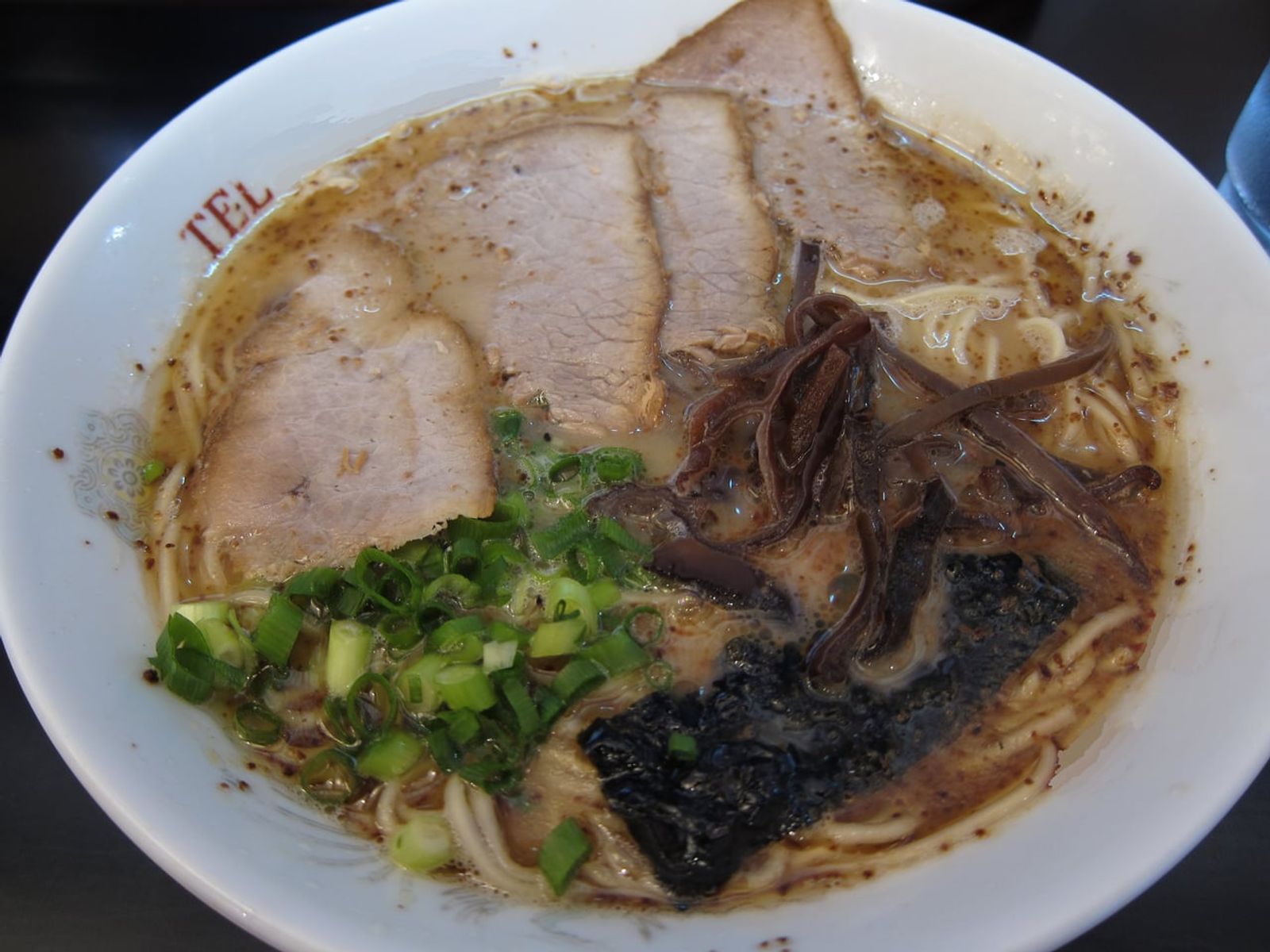
Kumamoto ramen with black garlic oil and wood ear mushroom · Photo: 皇翔 / CC0 (Wikimedia Commons)
 JapanKumamoto
Kumamoto Ramen: Kyushu Tonkotsu With a Toasted Garlic Twist
Kumamoto ramen is Kyushu tonkotsu, but it is clearly different from Hakata's. Here is how it arrived via Kurume and Tamana, and what defines it: garlic chips and black garlic oil, thicker noodles and a broth that adds chicken bones.
From Kurume via Tamana to Kumamoto
Kyushu's tonkotsu (pork bone) ramen is said to have spread from Kurume in Fukuoka Prefecture. According to Japanese Wikipedia, Kumamoto ramen arrived from Kurume by way of Tamana in northern Kumamoto Prefecture. A ramen shop that opened in 1952 in front of Takase Station (now JR Tamana Station) became popular, and people impressed by its flavour went on to open ramen shops in Kumamoto City. What prompted them is an interesting story. They had been in real estate and used-car sales, and when the great Shirakawa flood of 1953 wiped out their businesses, they made a fresh start with ramen. Shops opened one after another in Kumamoto City from 1953 to around 1955, and Kumamoto ramen as we know it took shape. Some of those shops later expanded to the Kanto region and even into China.
Garlic Takes Centre Stage
The first thing you notice in a spoonful of Kumamoto ramen is the toasty aroma of garlic. Its hallmark is fried garlic: thinly sliced garlic chips or crispy fried garlic, plus mayu (マー油), an aromatic oil made by frying garlic in oil until it turns black. Dark oil floating on the broth is almost a symbol of Kumamoto ramen. According to Japanese Wikipedia, the technique of adding garlic to ramen is said to have been devised by a cook at one of Kumamoto's early ramen shops. The garlic oil rounds out and mellows the flavour, giving quite a different impression from Hakata ramen, where the strong pork bone taste comes first. If you love garlic, that is reason enough to have a bowl in Kumamoto.
The Broth and the Noodles
The broth is based on pork bones, and many shops also add chicken bones, so even though it is a white tonkotsu broth, it tastes a little gentler and cleaner. Japanese Wikipedia also says the broth is used up each day rather than topped up and carried over (this can vary from shop to shop). The noodles are medium-thick, straight and low in water content, boiled slightly firm. They are clearly thicker than Hakata's very thin noodles and hold the garlic-infused broth well. Typical toppings are a Taiwanese-style seasoned egg, wood ear mushroom (kikurage), chashu, menma (seasoned bamboo shoots), chopped green onion, bean sprouts and nori. Crunchy strips of wood ear mushroom are especially common.
How It Differs From Hakata and Kurume Ramen
Comparing tonkotsu ramen from different areas is one of the fun parts of a Kyushu trip. Summarising Japanese Wikipedia, Kumamoto ramen differs in three ways. First, its noodles are thicker than Hakata or Tamana ramen. Second, chicken bones in the broth and the garlic oil make it mellower. Third, while Kurume and Tamana ramen keep topping up their broth to build richness, Kumamoto ramen tends to use it up each day. Whether a shop offers kaedama, the extra noodle refill familiar from Hakata, varies from place to place, so check the menu. In Kumamoto you can taste how Kyushu ramen grew from the same roots while each area added its own colour.
Tips for Enjoying It in Kumamoto
You can find Kumamoto ramen all over Kumamoto City. There are many shops around Kumamoto Station and in the central shopping district, making it easy to stop in before or after visiting Kumamoto Castle. Some shops feature a black broth with plenty of mayu, others pile on garlic chips, so each has its own character. The garlic is strong, so if you are worried about your next plans, dinner may suit better than lunch. Japanese Wikipedia notes that depending on the shop, toppings can include braised pork belly (kakuni), cabbage, pickled takana greens, red pickled ginger or raw garlic. Try adding a little of the takana or garlic from the table as you go and enjoy how the flavour changes. Pair it with Kumamoto specialities such as basashi or karashi renkon for a fuller food trip.