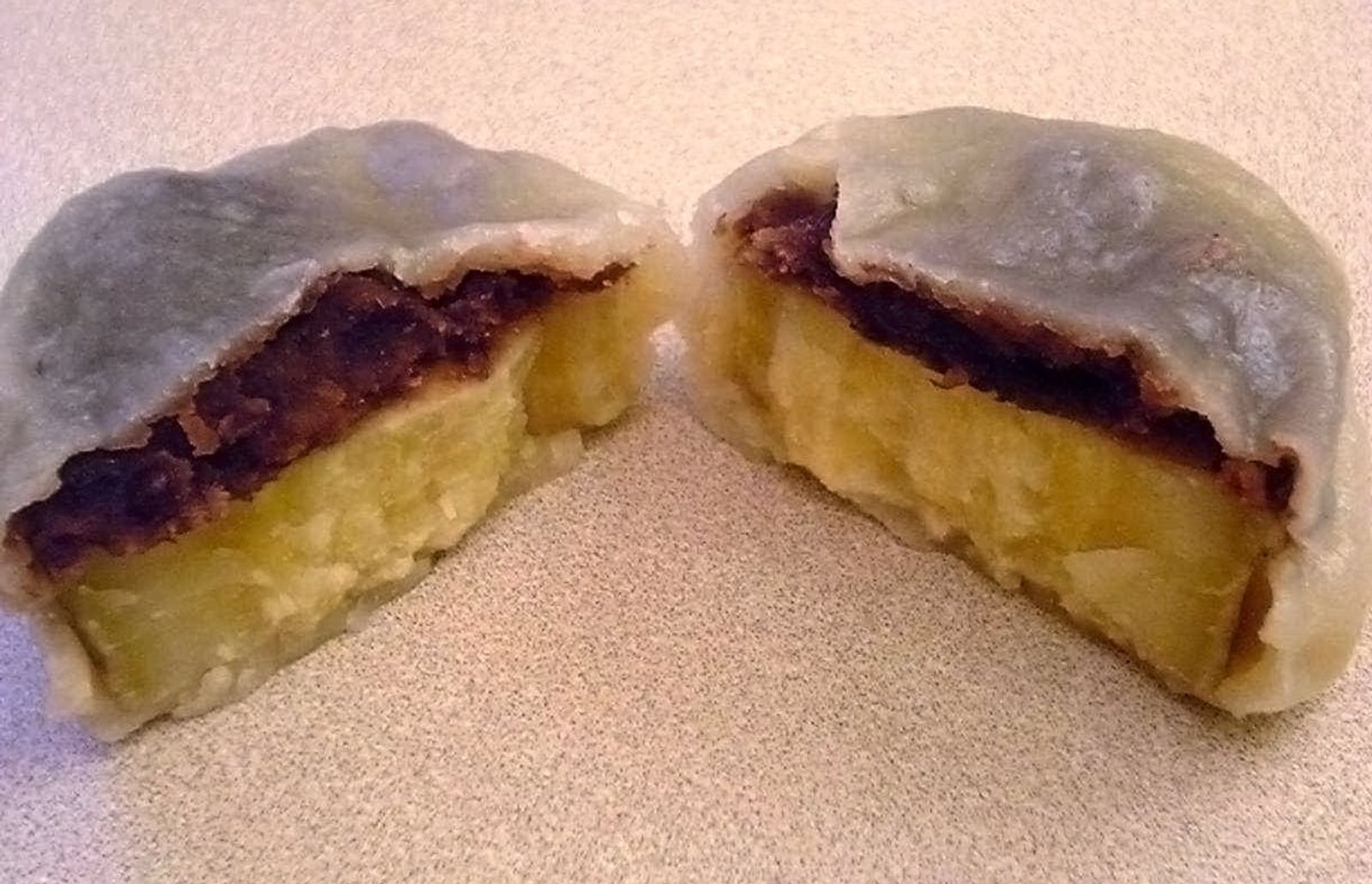
Ikinari dango · Photo: Hykw-a4 at Japanese Wikipedia / CC BY-SA 3.0 (Wikimedia Commons)
 JapanKumamoto
Ikinari Dango: Kumamoto's Steamed Sweet Potato and Red Bean Snack
Thick slices of sweet potato and red bean paste wrapped in a thin dough and steamed, ikinari dango is a favourite Kumamoto snack. Here is what "ikinari" means and how a farmhouse treat became a popular souvenir.
What Does "Ikinari" Mean?
Ikinari dango (いきなり団子) is a Kumamoto local sweet: rounds of sweet potato and red bean paste wrapped in wheat dough and steamed. In standard Japanese ikinari means "suddenly," but according to Japan's farm ministry, in Kumamoto dialect it means "simple, quick, right away," and the name comes from how fast it is to make, so you can serve it straight away when guests drop in unexpectedly. Japanese Wikipedia gives other theories too: that it comes from the method of wrapping raw sweet potato in dough "just like that" and steaming it, or from a local expression calling an untidy person "ikinari," which shifted to mean "rough and ready." Whichever is right, all agree it is an unfussy snack that is easy to make.
Sweet Potatoes Raised on Volcanic Soil
The roots of ikinari dango lie in Kumamoto's land. According to the farm ministry, the foothills of Mount Aso were well suited to sweet potatoes thanks to volcanic ash, and the snack began as something farm families on the Kikuchi and Kumamoto plains made to eat between bouts of the autumn sweet potato harvest. Japanese Wikipedia also mentions the Ozu area. When rice was precious, the dough was made from wheat flour alone. Ikinari dango was originally a simple, filling snack centred on the taste of sweet potato. Japanese Wikipedia notes that, unusually for a sweet, it has been passed down mainly through ordinary home kitchens rather than confectioners. It is a homely taste that families steamed every autumn in sweet potato season.
How It Is Made, and the Arrival of Red Bean Paste
As the name suggests, it is simple to make. Sweet potato is cut into thick rounds, topped with red bean paste and wrapped in a dough of wheat flour, dango flour, sugar and salt, then steamed. The dough is thin, so the potato and bean paste show through after steaming, and one bite gives you fluffy sweet potato, sweet bean paste and chewy dough all at once. At first only sweet potato went inside, but according to the farm ministry, red bean paste began to be added a few decades ago and is now the norm; Japanese Wikipedia dates this to around the Showa era. The ministry notes that its gentle sweetness makes it a good tea-time sweet or children's snack. It is often made in local cooking classes and sometimes appears as a school lunch dessert.
A Growing Range of Flavours
Ikinari dango is still evolving. According to the farm ministry, the range has recently grown to include dough mixed with mugwort or brown sugar, and fillings using purple sweet potato, chestnut or walnut. Some shops sell white, green mugwort and brown sugar versions side by side. With better preservation, vacuum-packed and frozen versions are also on sale. Japanese Wikipedia mentions "hiyashi ikinari dango," frozen ones eaten half-thawed. In the neighbouring Chikugo area of Fukuoka Prefecture there is a nearly identical "ikinari manju," sold as a souvenir in places like Omuta. The simple idea of steaming sweet potato and bean paste in dough is clearly loved across Kyushu.
How to Enjoy It and Where to Buy It
Ikinari dango is best eaten freshly steamed and warm, and the farm ministry also says that is the basic way to enjoy it. The dough firms up over time, so if you buy some as a souvenir, warm it briefly in a microwave or steamer to bring back the soft chewiness. Today it is sold at specialist shops, Japanese confectioners and street stalls, so it is easy to find in central Kumamoto, at tourist spots and at station and airport souvenir shops. It is known nationwide as a Kumamoto souvenir and is just the right size to buy and eat while walking around Kumamoto Castle or Aso. With a thick slice of sweet potato inside, it is more filling than it looks and works as a light lunch.