Hitomoji no Guruguru
 JapanKumamoto
Hitomoji no Guruguru: Kumamoto's Rolled Green Onion Snack Born From a Frugality Order
Blanched green onion wound around its own white base and eaten with sweet vinegared miso: hitomoji no guruguru. Here is the story of its birth under an Edo-period frugality order, what the name means, how it is made and why it signals spring.
A Plate of Neatly Wound Green Onions
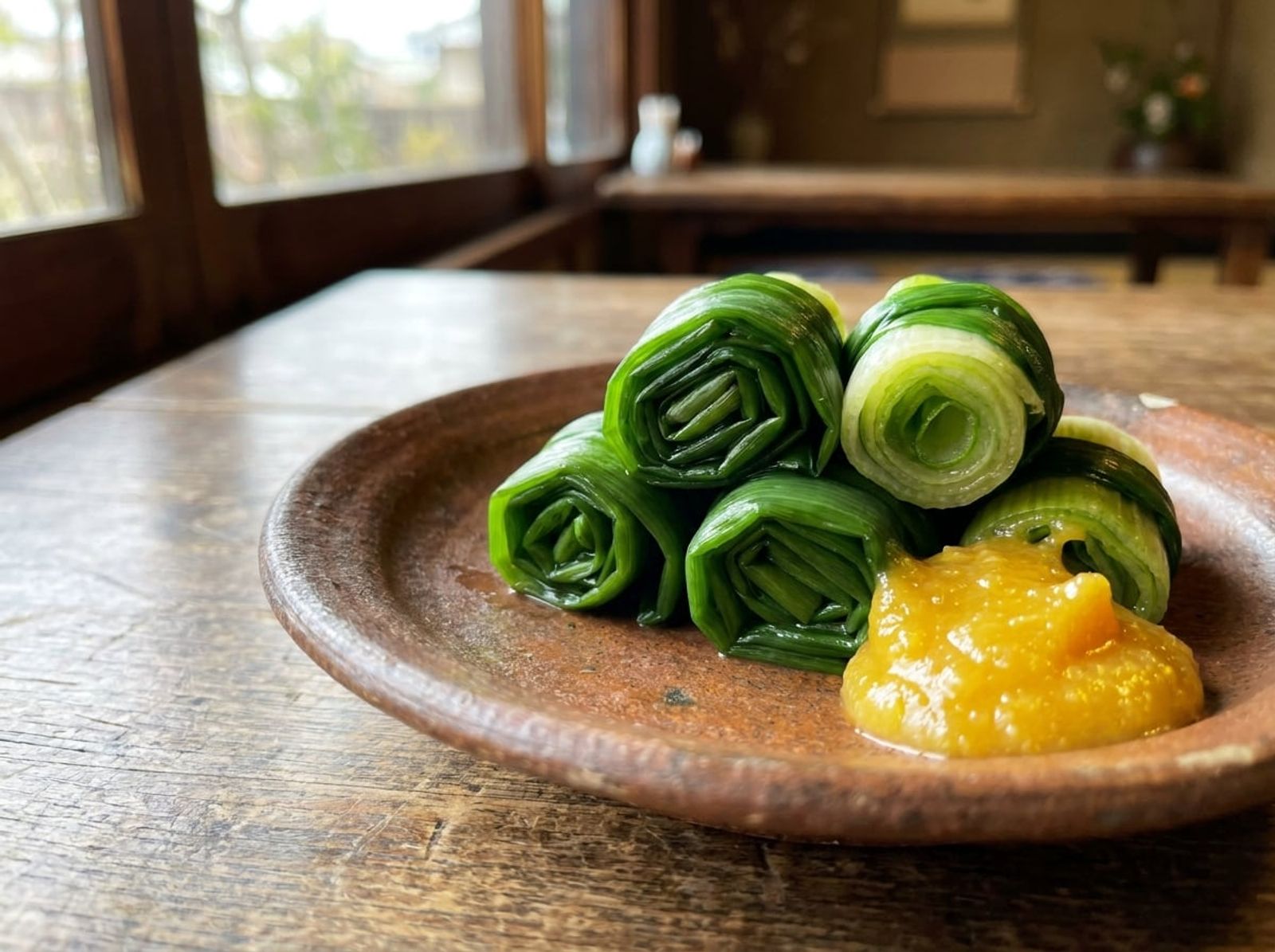
Hitomoji no guruguru (一文字のぐるぐる) is a Kumamoto local dish: lightly blanched green onion whose green tops are wound around its white base, eaten dipped in sweet vinegared miso. It is a humble drinking snack, and the neatly wound little bundles catch the eye of anyone seeing them for the first time. According to Japan's farm ministry, hitomoji (一文字) is another name for wakegi (分葱), a vegetable similar to green onion but thinner and softer, which turns sweet when blanched. In Kumamoto the dish is made at home and also served at Japanese restaurants and izakaya as a tsukidashi (starter) or with drinks. It is not showy, but it is a taste that has long been part of everyday life in Kumamoto.
Born When the Domain Was Short of Money
This dish is tied to a story about money in Edo-period Kumamoto, then the Higo domain. According to the farm ministry, under Hosokawa Shigekata, the sixth lord of Higo, the domain's finances were in such poor shape that frugality orders were issued, and hitomoji no guruguru is said to have been devised then as a "cheap and tasty snack to go with sake." Hosokawa Shigekata is known as a lord who pushed through financial reforms in the mid-18th century. Even when luxury had to be cut back, people did not give up the pleasure of a drink, and they turned easy-to-grow green onions into a careful little dish by winding them by hand. It reflects ordinary people's ingenuity in making something delicious with effort and ideas rather than expensive ingredients.
What "Hitomoji" and "Guruguru" Mean
There are two theories about the first part of the name, hitomoji (一文字). According to the farm ministry, one is that wakegi planted in the field looks like the kanji 人 ("person"). The other is that it comes from hitomoji-gusa (一文字草), a word court ladies of old used for green onions. The second part, guruguru (ぐるぐる), is a Japanese word for something winding round and round, and comes from the way the green leaves are wrapped around the white base. So hitomoji no guruguru means something like "wakegi wound round and round." It is a friendly name that describes the dish just as it looks, and once you see it on a menu, it sticks in your memory.
How It Is Made: Blanch, Squeeze, Wind
The farm ministry's recipe is simple but takes care. Trim the roots of the wakegi, wash it and lower it, base first, into salted boiling water, blanching just enough to leave a little firmness. Cool it in cold water and squeeze it dry, then wind the green leaves around the white base as a core, sealing the end with the sticky sap that comes from the wakegi itself. The ministry advises winding each bundle to the same size so they look neat. The vinegared miso served with it is made from white miso mixed with sugar, vinegar and mirin or akazake, Kumamoto's traditional red sake. The sweet-sour miso brings out the onion's sweetness and gentle aroma, making a light dish that still calls for a drink.
A Taste of Spring, and Where to Try It
Wakegi is at its best in early spring, when it grows sweeter after the cold winter. According to the farm ministry, hitomoji no guruguru used to appear on the table for Hinamatsuri, the Girls' Day festival in March, alongside konnyaku sashimi and simmered shellfish, and many people still feel spring has arrived when they see it. These days growers have improved varieties and adjusted growing seasons so wakegi is shipped all year, which means you can try the dish in any season. Look for it on the menus of Japanese restaurants and izakaya in Kumamoto that serve local dishes. Among bold specialities like basashi and karashi renkon, it plays a supporting role that refreshes the palate. With some local sake on a Kumamoto trip, it gives you a feel for the unpretentious drinking culture of the people who live there.