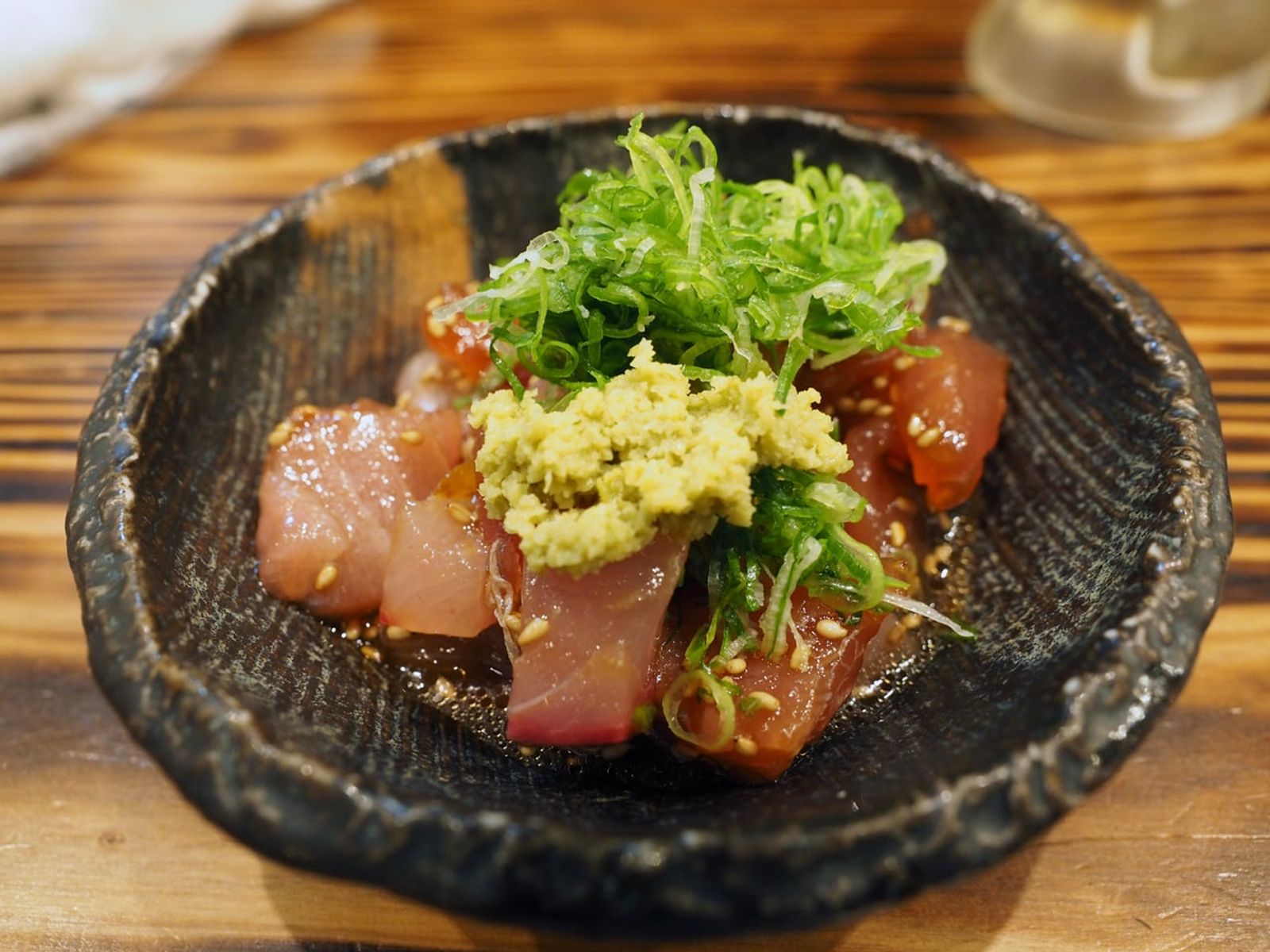
Ryukyu, a local Oita dish · Photo: 大分帰省中 / CC BY-SA 4.0 (Wikimedia Commons)
 JapanBeppu
Oita's Ryukyu: The Fishermen's Marinated Sashimi With an Okinawan Name
If you see 'ryukyu' on an izakaya menu in Beppu or Oita, it is not an Okinawan dish but a local Oita one: sashimi marinated in soy sauce, ginger and sesame. Here is where the name may come from, how a fishermen's meal became a rice bowl, and how to eat it.
What Ryukyu Is
Ryukyu is an Oita Prefecture dish of seasonal sashimi such as yellowtail, horse mackerel or mackerel, marinated in a sauce of soy sauce, sake, mirin, ginger and sesame. It is listed as a representative Oita dish in the Ministry of Agriculture's 'Our Local Cuisines' collection. The fish changes with the seasons, so it can be eaten all year, and horse mackerel, young yellowtail (hamachi) or sea bream can stand in for yellowtail. Oita faces the Seto Inland Sea and the Bungo Channel and has plenty of seafood. Beppu sits on Beppu Bay, and ryukyu turns up often in its izakaya and restaurants. The name makes it sound Okinawan, which easily confuses visitors.
Why 'Ryukyu'? Two Theories
Nobody knows for sure where the name comes from, and two main theories are told. One says Oita fishermen learned the recipe from fishermen of Okinawa, the old Ryukyu Kingdom, and brought it home, passed on among people who travelled the seas. The other says it grew out of rikyu-ae, the Japanese term for dishes dressed with sesame, named after the tea master Sen no Rikyu. Because ryukyu sauce is full of sesame, 'rikyu' may have shifted to 'ryukyu'. The Ministry of Agriculture lists both theories side by side, so neither has been settled as the true one.
A Fishermen's Meal and a Way to Keep Fish
Ryukyu began as a working meal that fishermen ate on board or at home, and as a way to make the catch last. According to the Ministry of Agriculture it started in southern coastal communities and spread across the prefecture. Marinating kept the fish from spoiling quickly and meant leftover sashimi could be eaten at the next meal. That is why households still often make it from off-cuts or leftover sashimi, while many restaurants prepare it from fresh fish on purpose. In mountain areas some families first cured the fish in vinegar before eating it, so the dish carries the know-how of taking fish far from the sea.
How to Eat It: On Rice, Then With Tea Poured Over
The basic way is on top of freshly cooked hot rice. Restaurants in tourist areas often serve it as ryukyu-don, a bowl of rice piled with ryukyu, and each place adds its own touch in choice of fish and garnish. Myoga ginger, shiso leaves and wasabi are common additions. The other pleasure is ochazuke. Eat about half, then pour hot tea or dashi over the rest: the sauce melts into the broth and the fish turns lightly cooked, giving a different taste. It also works on its own as a snack with drinks. Some families even add konnyaku, whose texture is a little like fish, to stretch it, so every household's version is slightly different.
Tips for Trying It in Beppu
You will find ryukyu at izakaya and set-meal restaurants around Beppu Station and in the downtown shopping streets. At lunch people usually order it as a rice bowl or set meal, at dinner as a side dish with drinks. Menus often write it in hiragana as りゅうきゅう rather than 琉球, so keep both in mind. The fish depends on what came in that day, so ask the staff. Yellowtail and mackerel are richer, horse mackerel lighter. If you want to finish with ochazuke, ask in advance whether they bring tea or dashi on the side. Oita City also actively promotes ryukyu as a local dish, so it is easy to find in central Oita too.