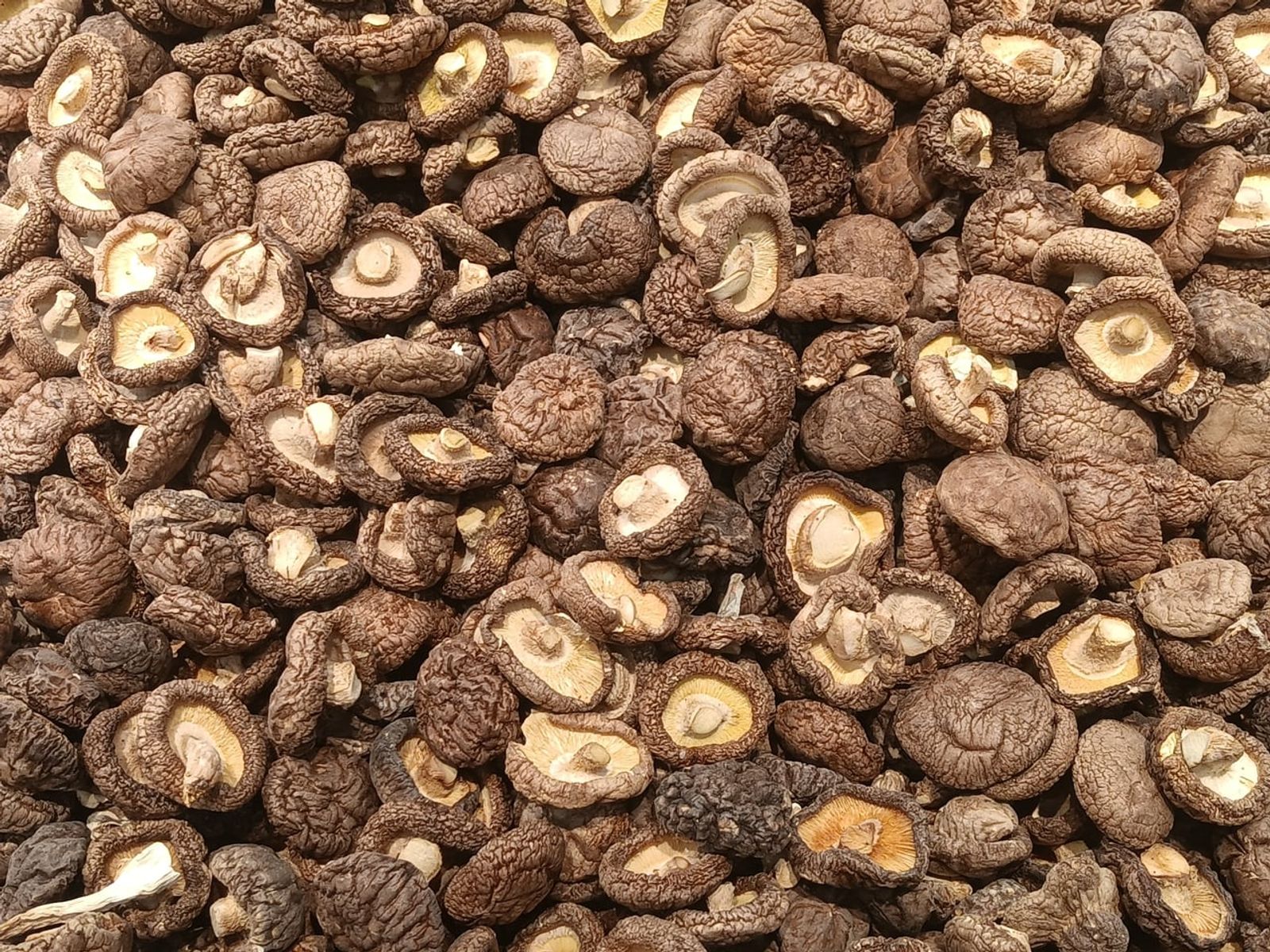
Dried shiitake mushrooms · Photo: François Nguyen / CC BY 2.0 (Wikimedia Commons)
 JapanYufuin
Dried Shiitake of Oita, Home of Yufuin: Log-Grown Mushrooms From Japan's Biggest Producer
In the mountain villages of Oita, the prefecture that is home to Yufuin, shiitake are grown on sawtooth oak logs and then dried. Oita is Japan's number one producer of dried shiitake. Here is the history that began in the Edo period, how log cultivation works, and how to choose and use donko mushrooms.
Why Oita Is Dried Shiitake Country
Oita is Japan's largest producer of dried shiitake, hoshi-shiitake. Prefectural materials describe it as number one nationally with a 41% share, while a Ministry of Agriculture magazine says it accounts for half of the country's output. The figures vary by year, but roughly 40 to 50 percent of Japan's dried shiitake comes from Oita. It is known for quality too: at the national dried shiitake competition held since 1953, Oita has taken the team title dozens of times. The mountainous land, with wide forests of sawtooth oak (kunugi), suits log cultivation well, and in a prefecture as mountainous as the hills around Yufuin, mushrooms have long been grown in mountain villages throughout.
Edo-Period Natame Cultivation and the Legend of Genbei
According to the Ministry of Agriculture, shiitake cultivation in Oita began in the early Edo period, in the Kanbun era (1661-1673). At first growers used the natame method: cutting notches into logs of broadleaf trees with a hatchet (nata) and waiting for spores to settle naturally. Tradition credits the idea to a charcoal maker named Genbei, who noticed shiitake sprouting on leftover wood from his kiln and thought of cutting notches. Sources disagree on whether he came from today's Ume in Saiki or from Tsukumi, so it is best treated as a legend. Since success depended on luck, stable production only became possible after spawn-culture techniques were developed in the early Showa era.
Two Years on a Sawtooth Oak Log
Most of Oita's dried shiitake grow on sawtooth oak (kunugi) logs. The trees are felled when the leaves turn in autumn and left to dry with their leaves on, then spawn is driven into the logs. These hodagi logs spend about two years in the forest while the mycelium spreads, and are then moved to a hodaba, a shady spot where mushrooms sprout. Oita Prefecture describes the resting period as about a year and a half, and Bungo-Ono City says it takes a little over two years from felling to harvest. After three to five years the logs yield less and are left in the mountains to return to the soil. Harvested mushrooms are dried in drying machines and then sorted. Because the work is slow and labour-intensive, ageing growers and a shortage of successors are seen as major challenges.
Donko and How to Choose Good Dried Shiitake
The most prized dried shiitake are donko. They grow slowly in the cold of winter and are picked before the caps fully open, giving thick flesh and excellent flavour and texture. Thinner mushrooms with wide-open caps are called koshin in Japan and are handy sliced for stir-fries and simmered dishes. According to a Ministry of Agriculture magazine, good dried shiitake have thick flesh and gills of a bright golden yellow. Farm stands and souvenir shops in Oita often sort them by size and shape into graded bags, so look at the colour under the cap and the thickness. Being dried, they are light and keep well, which makes them a good travel gift.
Rehydrating It and Its Place on Oita's Table
Dried shiitake are soaked in water and slowly rehydrated. Many cooks say a long soak in cold water softens them more evenly than a quick soak in hot water. The soaking liquid is full of mushroom flavour, and in Japanese homes it is never thrown away but used for broth and simmered dishes; recipes for regional dishes across Japan, such as Kagoshima's keihan, tell you to use it as stock. In Oita, dried shiitake turn up often in everyday cooking, from simmered nishime to sushi toppings and soups. You can also meet them in local-style dishes served at ryokan and restaurants in Yufuin, so look out for their deep aroma and chewy bite. Comparing them with the fresh shiitake sold at farm stands is another pleasure of travelling in the mountains.