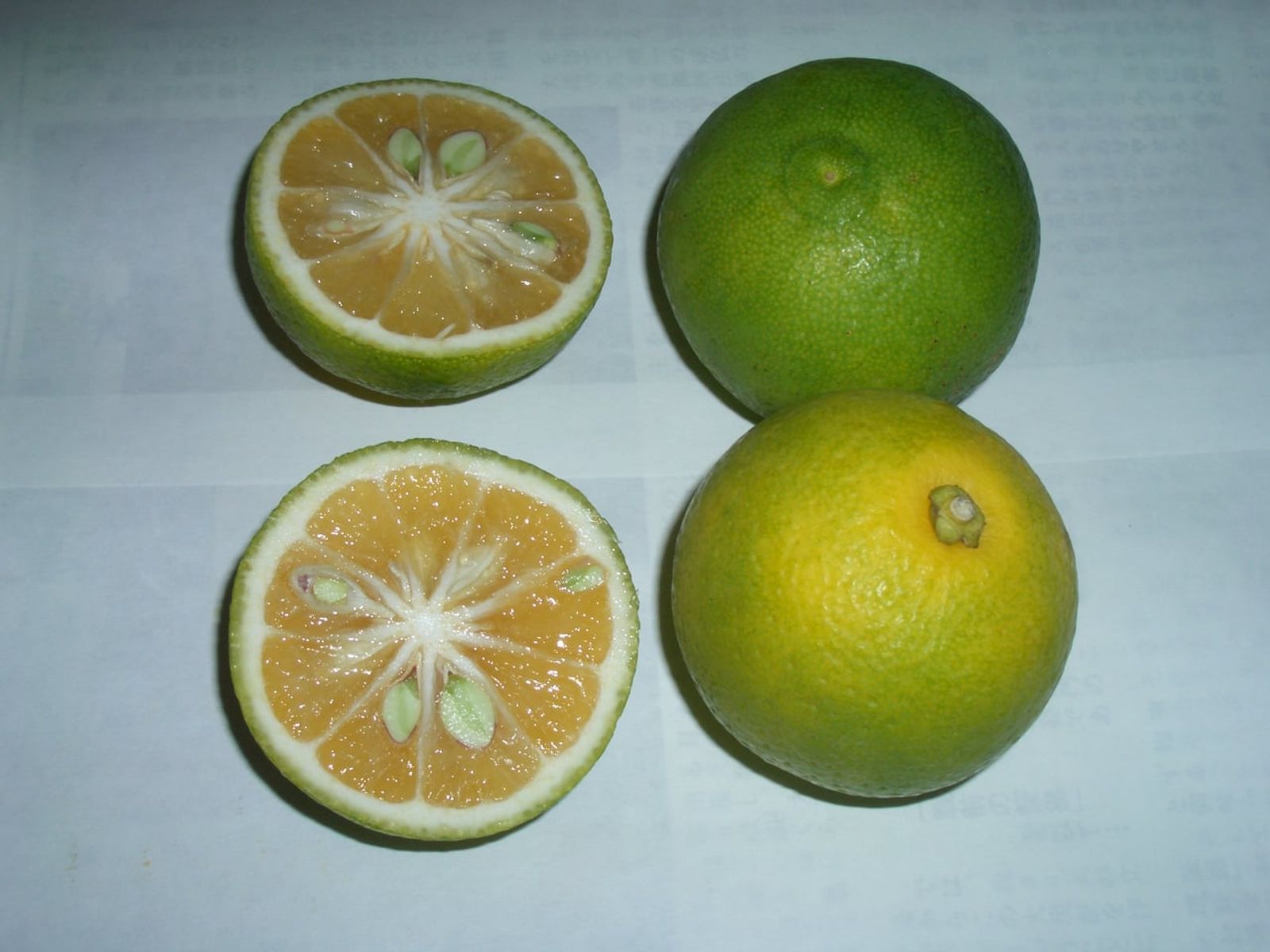
Kabosu, whole and cut · Photo: B.K. Bullock / Public domain (Wikimedia Commons)
 JapanYufuin
Kabosu of Oita, Home of Yufuin: The Green Citrus Oita Grows for Almost All of Japan
On Oita tables a wedge of green citrus gets squeezed over sashimi, grilled fish, miso soup and even shochu. Here is the story of kabosu, which Oita grows for nearly all of Japan, when it is in season, how locals use it and where you will meet it in Yufuin.
What Kabosu Is
Kabosu is a 'fragrant sour citrus' like yuzu or sudachi: rather than eating it, you squeeze the juice over food for aroma and acidity. It is a little smaller than a tennis ball and is picked and used while green. It turns yellow as it ripens, but the fragrance is best when green, so it is mostly sold that way. Kabosu is Oita's signature product. A Ministry of Agriculture overview of the prefecture says Oita grows more than 90 percent of the national harvest, the most in Japan, and 2018 figures put Oita's share at 5,400 of 5,460 tonnes. In other words, almost every kabosu you see in Japan comes from Oita.
A Legend From Usuki and the Mystery of the Name
A story from Usuki in Oita is the best-known account of how kabosu growing began: in the Edo period a doctor named Sogen brought saplings back from Kyoto and planted them. Usuki once had a tree said to be 200 years old, and trees of around 100 years still survive. DNA research suggests it is a Japanese variety with yuzu as one parent. The origin of the name is unclear. It only appears in writing after World War II. Some link it to the word kabusu found in Edo-period texts, but many argue that word referred to a different citrus, the daidai, so there is no settled answer.
Season: Greenhouse, Open Field and Storage, All Year
By splitting cultivation methods, growers ship kabosu almost all year. Greenhouse fruit comes out from March to July, open-field fruit from August to October, and stored fruit from mid-October to February. Late summer into autumn, when fragrant, juicy open-field kabosu arrive, is considered the true season. The main growing areas, including Usuki, Taketa, Bungo-Ono and Kunisaki, are spread across the prefecture. Harvests alternate between heavy and light years, so shipments can vary a lot. Travel in Oita in autumn and you will see farm stands piled with nets and bags full of green kabosu.
Using It the Oita Way: Squeeze It on Anything
Kabosu juice is used as a seasoning for sashimi and grilled fish, in ponzu and in vinegared salads. Oita goes further, adding a squeeze to miso soup, noodles and shochu for fragrance. On rich, oily food it leaves a clean finish, so it goes well with Oita's chicken dishes and fried food. It is even used in fish farming: there are 'kabosu yellowtail' and 'kabosu flounder' raised on feed mixed with kabosu, which is said to reduce discolouration and fishy smell in the flesh. To squeeze one, cut it in half across the middle and press with the cut side facing down so fewer seeds fall out. There are plenty of juice drinks and sweets too, which make easy gifts.
Meeting Kabosu on a Yufuin Trip
At ryokan and restaurants in Oita's hot-spring towns, Yufuin included, a wedge of kabosu often comes with sashimi or grilled dishes. Use it like lemon, but its scent is softer and its sourness rounder, so try a little first. Visit from late summer into autumn, when open-field kabosu are out, to taste it at its most fragrant. In souvenir shops along Yufuin's streets, at farm stands around Oita and in station and airport shops you will easily find not only fresh fruit but also juice, ponzu, drinks and sweets. 'Oita Kabosu' is also registered as a regional collective trademark. Oita's kabosu-shaped mascot, Kabotan, turns up everywhere, so spotting it on products is part of the fun.