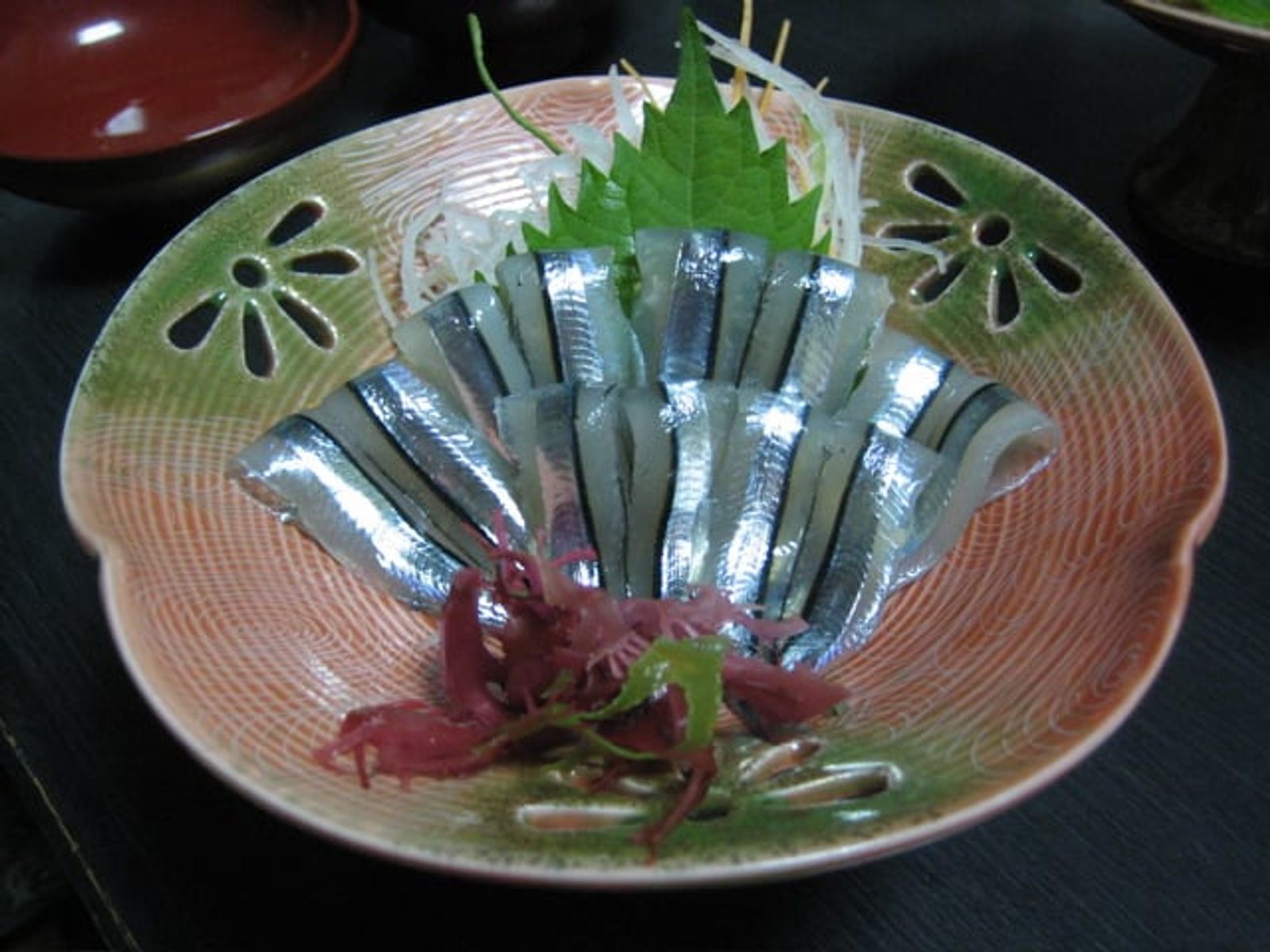
Kibinago sashimi in Kagoshima · Photo: naotakem from Kagoshima / CC BY 2.0 (Wikimedia Commons)
 JapanKagoshima
Kagoshima Kibinago Sashimi: Opened by Hand, Arranged Like a Chrysanthemum, Dipped in Vinegar Miso
Kibinago, a finger-sized fish with a silver stripe, is a fixture on Kagoshima tables. Here is everything about the Kagoshima way of eating it as sashimi: opened by hand instead of a knife, arranged in a round chrysanthemum pattern and dipped not in soy sauce but in vinegar miso.
What Kind of Fish Kibinago Is
Kibinago is a small fish of the herring family, about 10 cm long, with a bright silver band along its body. The name is said to come from that stripe: in the dialects of southern Kyushu, including Kagoshima, a sash or belt is kibi and a small fish is nago. In English it is known as the silver-stripe round herring. Kagoshima Prefecture is surrounded by rich fishing grounds in Kagoshima Bay, the East China Sea and the Pacific, and kibinago is indispensable to its local cooking. The Ministry of Agriculture's 'Our Local Cuisines' lists kibinago sashimi as a Kagoshima dish eaten across the whole prefecture, and the prefecture's tourism site counts it among Kagoshima's signature seafood.
Why You Can Only Really Eat It Near Where It Is Caught
The main source of kibinago is Koshikijima, an island group in the East China Sea west of mainland Kagoshima, which according to the Ministry of Agriculture lands more than 20 percent of Japan's catch. It is also caught around Tanegashima and throughout the prefecture. Kibinago has delicate flesh and loses its freshness very fast. That is why it is rarely shipped far from where it is caught, and eating it as sashimi is something only places with fresh supply can offer. Kagoshima's tourism site urges you to try it while it is just caught. That makes it a true 'taste of the source' worth seeking out in Kagoshima.
By Hand Instead of a Knife: Tebiraki and the Chrysanthemum Arrangement
Kibinago sashimi is defined by tebiraki, opening the fish by hand instead of with a knife. You snap off the head, push a finger into the belly to remove the innards and open the fish, then break off the backbone near the tail. Remove the dorsal fin, rinse quickly in salted water and pat dry. The flesh is so soft that fingers part it more cleanly than a blade. The opened fillets are folded in half or rolled and laid out in a circle from the centre of the plate outward. Because the result looks like a large chrysanthemum, it is called kikka-zukuri. The silver stripes shine like petals, making it a showy dish that Kagoshima families often serve to guests.
Vinegar Miso, Not Soy Sauce
In Kagoshima kibinago sashimi is normally eaten not with soy sauce but with vinegar miso (sumiso). The prefecture's tourism site describes a vinegar miso made with slightly sweet miso and mustard, while Kagoshima City's local recipe mixes white miso, vinegar, dashi, sugar and Japanese mustard. Some homes use barley miso, as in the Ministry of Agriculture's recipe. To eat it, wrap herbs such as myoga ginger, spring onion, radish sprouts or shiso in a piece of fish and dab on a little vinegar miso. The sweet-sour miso cuts neatly through the fish's rich, savoury oils. It is also eaten with ginger soy sauce, or tossed with shredded daikon in vinegar miso to make misonamasu.
Season, Other Dishes and Where to Eat It
Kibinago is landed all year, so you can eat it any time. Kagoshima's tourism site names spring to early summer, the spawning season, as its peak and calls the firm winter fish a treat as well, while the Ministry of Agriculture notes roe-filled fish in spring and fatter, firmer fish in autumn. The emphasis differs a little between sources, so think of each season as offering its own taste. Besides sashimi it is salt-grilled, fried as karaage or tempura, or used in clear soup, and kibinago from Koshikijima even goes into the broth of a local ramen in Satsumasendai. Izakaya and local-food restaurants in Kagoshima City readily serve chrysanthemum-style sashimi, and supermarkets sell sashimi packs with vinegar miso included, handy for a quick taste back at your hotel.