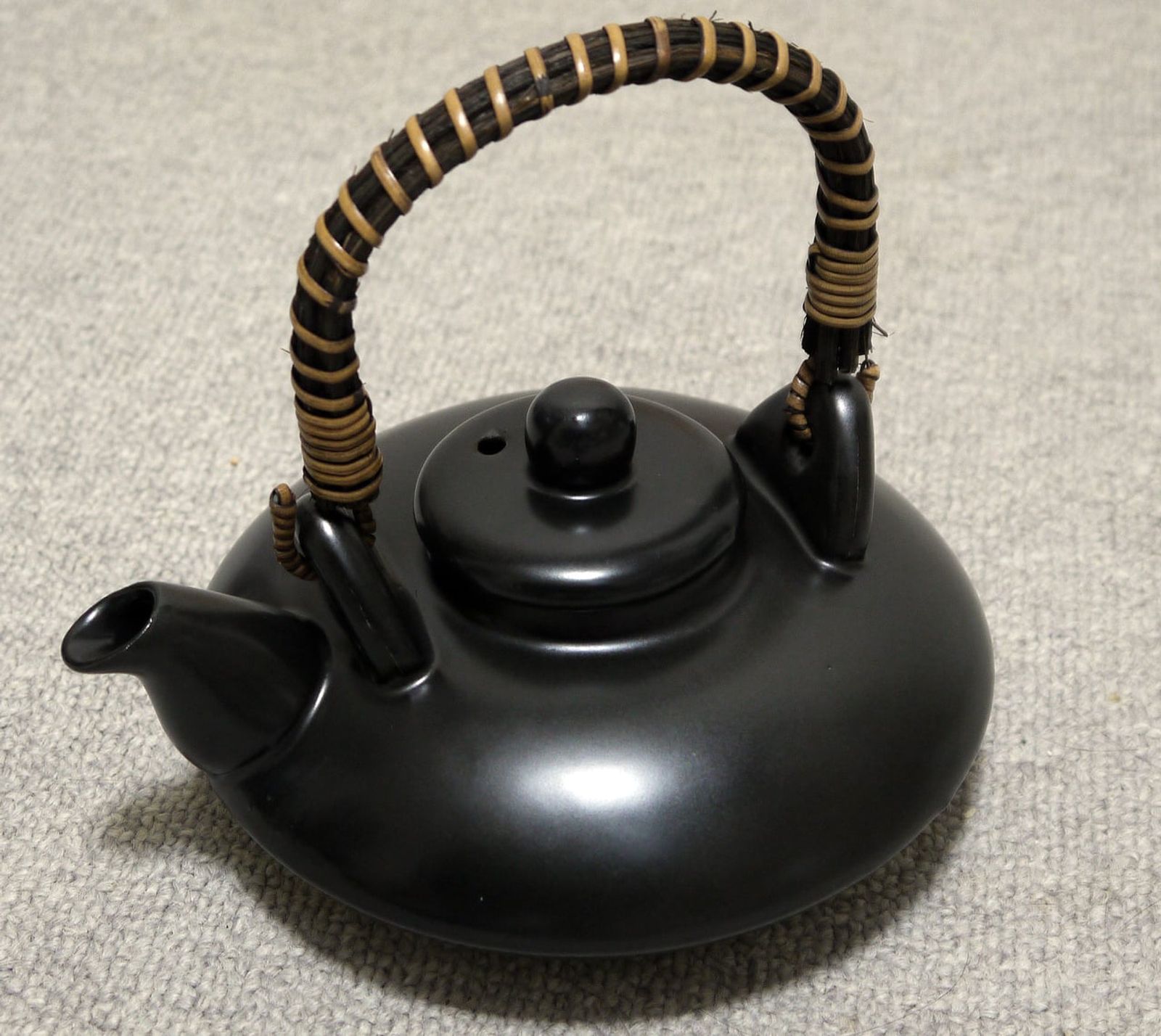
A kurojoka, the black clay pot for warming shochu · Photo: DryPot / CC BY-SA 3.0 (Wikimedia Commons)
 JapanKagoshima
Satsuma Sweet Potato Shochu: From a 1559 Graffito to Hot-Water Mixes, Kagoshima's Evening Drink
In Kagoshima, 'a drink' usually means sweet potato shochu. Here is the shrine graffiti that holds Japan's oldest written use of the word shochu, the rules behind the 'Satsuma' geographical indication, how it is made, and the local way of drinking it with hot water at the end of the day.
What Satsuma Shochu Is: The 'Satsuma' Geographical Indication
Shochu is a Japanese distilled spirit, and honkaku shochu is the kind distilled only once to keep the aroma of its ingredients. Western Kagoshima was once Satsuma Province, and the area is so tied to sweet potatoes that the Japanese word for them is satsuma-imo. Satsuma shochu is made from those potatoes. 'Satsuma' is a geographical indication designated by the National Tax Agency in 2005. Under its rules, only sweet potatoes harvested in Kagoshima Prefecture (excluding Amami City and Oshima District) may be used, the koji must be made from rice or Kagoshima sweet potatoes, and the water must be drawn within the prefecture. Fermentation, single distillation, storage and bottling must all happen inside the prefecture. The Amami islands, home of brown-sugar shochu, are outside the area.
A Graffito From 1559: The Oldest Written 'Shochu'
The main hall of Koriyama Hachiman Shrine in Isa, Kagoshima, is a nationally designated Important Cultural Property. During dismantling repairs in 1954, a wooden board inscribed in ink by carpenters was found there, dated the second year of Eiroku, 1559. It grumbles that the priest in charge was so stingy he never once offered them shochu. The board is now a prefectural cultural property and is not shown to the public, to protect it. The graffito is known as the oldest record of the word 焼酎 (shochu) in Japan, showing that people in the area were drinking it in the 16th century. Back then, though, it was not made from sweet potatoes. According to the National Tax Agency, sweet potatoes arrived from Ryukyu in the 17th century and were first grown in Satsuma, hence the name satsuma-imo. Tradition also says that in 1705 Maeda Riemon, a sailor from Yamagawa (now part of Ibusuki), brought sweet potatoes back from Ryukyu, helping them spread across Satsuma.
How Sweet Potatoes Become Shochu
Much of Kagoshima is covered by shirasu, plateaus of volcanic ash that drain well and have a low water table, land better suited to sweet potatoes than to rice. The National Tax Agency notes that sweet potatoes have been widely grown here since the Edo period and that Kagoshima is now Japan's biggest producer. As a distiller explained in a government magazine, steamed rice is first mixed with koji spores and turned into koji over about two days. Water and yeast are added for a first fermentation of about six days, then steamed, crushed sweet potato and water go in for a second fermentation of about two weeks. Distilling this mash just once gives honkaku shochu that keeps the potato's aroma. Freshness of the potatoes affects the flavour so much that some distilleries sit right among the fields. The craft was refined by master brewers (toji) from Kurose and Ata in today's Minamisatsuma.
Drinking It the Local Way: Oyuwari, Kurojoka and Dareyame
Kagoshima has dareyame, the custom of an evening drink of shochu to shake off the day's fatigue; in the local dialect dare means tiredness and yameru means to stop. Distillers most often recommend oyuwari, shochu with hot water: pour the hot water into the cup first and then add the shochu, and the aroma and sweetness bloom. The black clay pot used to warm shochu, the kurojoka, is another Kagoshima symbol. Some izakaya also serve maewari, shochu mixed with water in advance and rested for a few days to a week so the flavours meld, then warmed in a kurojoka. If you prefer it cold, mizuwari (with water) or on the rocks works well too.
Where to Drink and Buy: More Than 100 Distilleries
Kagoshima Prefecture is said to have more than 100 shochu distilleries. Many izakaya in the city stock dozens of sweet potato shochu, so if the list is overwhelming, ask for osusume no imojochu, their recommended potato shochu. It goes especially well with local dishes such as braised pork kakuni and satsuma-age fish cakes. Some distilleries offer tours and tastings, and a few have English guidance. Shochu is usually 20 to 25 percent alcohol, stronger than sake, so take it slowly. In December 2024, Japan's traditional knowledge and skills of sake-making with koji mould, which covers sake, shochu, awamori and more, was added to UNESCO's Intangible Cultural Heritage list. When buying a bottle as a gift, check the label for 薩摩焼酎: it tells you it was made in the prefecture from Kagoshima sweet potatoes.