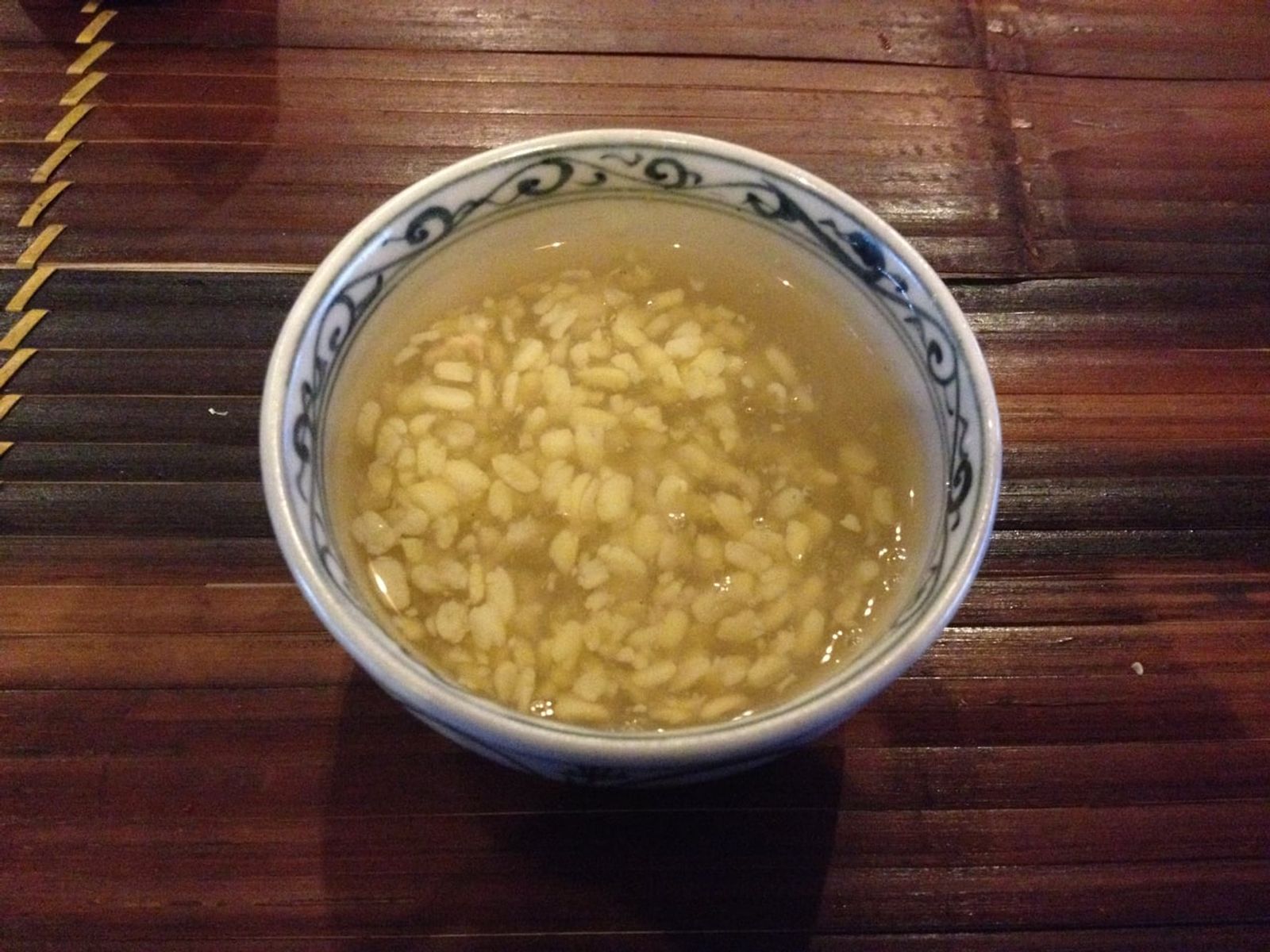
Mung bean chè (chè đậu xanh) · Photo: Hoangkid / CC BY-SA 4.0 (Wikimedia Commons)
 Vietnam
An Introduction to Chè: Vietnam's World of Beans, Coconut and Sweet Soups
Chè is not one dessert but a word covering dozens of sweet dishes made from beans, glutinous rice, fruit, jelly and coconut cream. From warm, porridge-like bowls to glasses packed with ice, here are the main types, how to eat them and their place in festivals.
Chè Is Not Just One Dessert
If you see a glass or bowl layered with beans, jelly and coconut cream at a Vietnamese street stall or market, it is almost certainly chè. Chè is not the name of a single dessert but a very broad word for sweet drinks, puddings and desserts. So something thick like a sweet bean porridge, something you drink with ice, and dumplings floating in syrup can all be chè. Chè can be eaten hot, warm or cold. It may come in a bowl to be eaten with a spoon, or in a glass mixed with ice and half drunk, half eaten. Most are based on beans or glutinous rice cooked in water and sweetened with sugar, and in the South they are often finished with a generous spoonful of coconut cream. Portions are small and cheap, making chè a perfect afternoon snack.
What Goes In: Beans, Glutinous Rice and Tropical Ingredients
Beans are the foundation of chè. Hulled mung beans, black-eyed peas, kidney beans and red azuki beans are common, joined by tapioca pearls, agar jelly, fruit and coconut cream. Depending on the type, lotus seeds, taro, cassava or pandan leaves may also go in. Pandan is a tropical plant with a sweet, vanilla-like scent, used to give chè a gentle green tint and aroma. Glutinous rice matters too. It may be simmered with beans into a porridge, or its flour shaped into dumplings that float in syrup. Sugar provides most of the sweetness, and ginger-infused syrup is a favourite for warm chè. Southern chè, topped with rich coconut cream, tends to taste especially creamy. The ingredients are humble, but the combinations are endless.
Chè Worth Knowing
The most eye-catching is chè ba màu, "three-colour chè", usually layered with green mung beans, white black-eyed peas and red azuki beans and topped with ice and coconut cream. Chè đậu xanh, mung beans simply simmered, is the most basic chè, while chè thập cẩm, many ingredients gathered in one glass, is counted among the most popular in Vietnam. There are plenty of warm ones too. Chè trôi nước is glutinous rice dumplings filled with mung bean paste, served in a warm ginger syrup, and chè chuối is banana and tapioca simmered in coconut milk, traditionally served warm. Chè bà ba combines taro, cassava and red-skinned sweet potato, and chè bưởi is made with slivers of pomelo rind.
Chè and Festivals: Bánh Trôi and Bánh Chay for Cold Food Day
Chè and glutinous rice dumplings are also festival food. The third day of the third lunar month is Tết Hàn thực, "Cold Food Day", when families, especially in the North, make the dumplings bánh trôi and bánh chay and place them on the ancestral altar. Bánh trôi are small glutinous rice balls with a lump of brown sugar inside, while bánh chay are dumplings filled with mung bean paste and served in syrup. Vietnamese media explain that the festival came from China but took on a Vietnamese character. The 18th-century scholar Lê Quý Đôn wrote that "our custom values bánh trôi above all, made every year on the third day of the third month", and one researcher believes the custom arrived under the Lê dynasty and spread widely between the 16th and 18th centuries. In the North, chè con ong, made with glutinous rice and ginger, is also cooked as an offering to the ancestors at Tết.
Tips for Eating Chè as a Traveller
Chè is easy to find at specialist stalls and dessert shops in markets. Where the ingredients sit in big bowls on display, point at what you want and ask for it mixed in one glass. With a glass of chè, stir it all the way to the bottom so the ice, beans and coconut cream blend evenly; that is the best way to enjoy it. On a hot afternoon iced chè hits the spot, while on rainy days or in the cool northern winter a warm chè in ginger syrup is ideal. It can be very sweet, so start with small cups and share a few kinds. If you are wary of ice, choose a warm chè or a busy shop with fast turnover. There are so many local varieties that asking what people in each new city like to eat is part of the fun of travelling.