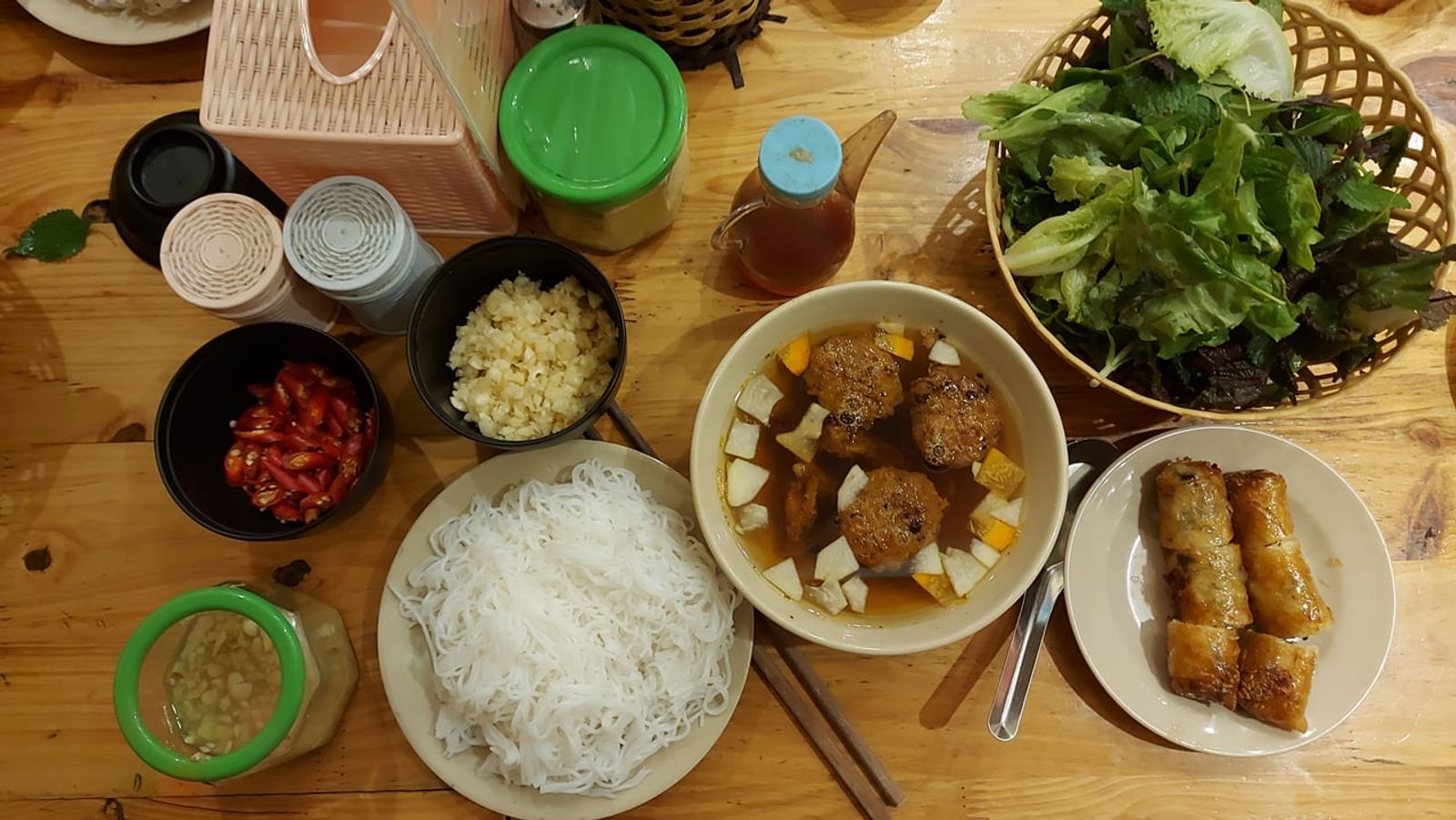
A bún chả spread with noodles, herbs, spring rolls and sauce · Photo: Weetjesman / CC BY-SA 4.0 (Wikimedia Commons)
 VietnamHanoi
Hanoi Bún Chả: Charcoal Smoke, Warm Dipping Sauce and the Lunch Writers Loved
When charcoal smoke drifts through a Hanoi alley around noon, the bún chả stalls are open for business. Here is the dish from a 1943 literary account to its two kinds of grilled pork, its generous warm dipping sauce and a 2016 meal that made world headlines.
The Smoke That Means Lunch
Bún chả is pork grilled over charcoal, eaten with thin rice noodles (bún) and a sweet-and-sour sauce. It is a signature dish of northern Vietnam and above all of Hanoi. The meat is grilled on small braziers out front, so you can often find a stall just by following the smoke. It was traditionally a lunch dish, and midday is still the busiest time, although more shops now sell it from morning to evening. Local media note that in the old days it was sold by vendors who carried it through the streets in handwoven bamboo baskets. The writer Thạch Lam called bún chả the most important and characteristic dish of Hanoi.
Bún Chả in Vietnamese Literature
No one knows exactly when or by whom bún chả was first made. One story credits a Hanoi grill master in the late 19th or early 20th century, but there is no firm record. What survives instead is literature. In his 1943 essay collection Hà Nội băm sáu phố phường (Hanoi's 36 Streets), writer Thạch Lam tells the comic tale of a country scholar who catches the smell of grilling pork and recites a verse: "Thăng Long's treasure for a thousand years: is this bún chả?" Food writer Vũ Bằng, who chronicled the city's cooking in Miếng ngon Hà Nội, praised its sauce as never too sharp and never flat. Bún chả has been a point of local pride for a long time.
Two Kinds of Pork: Patties and Slices
In Hanoi, chả means meat grilled over charcoal, and a bowl of bún chả usually holds two kinds. Chả viên are small patties of finely minced pork shoulder with a little fat. Chả miếng are thin slices of belly or other fatty cuts, marinated and grilled. Cooks favour cuts with lean meat, fat and skin together so the slices do not shrivel on the grill, and they chop the patty meat by hand because machine-ground pork turns dry. The seasoning is simple: fish sauce, sugar, pepper, spring onion and shallot. The meat used to be clamped between split bamboo for grilling; today most cooks use wire racks, and some wrap the patties in banana leaf or caul fat first. You can ask for either kind on its own or a mix of both.
The Warm Sauce and How to Eat It
Many Hanoians say the sauce matters most. Nước chấm is fish sauce thinned with vinegar, sugar and water, poured generously into a large bowl, and the grilled pork arrives soaking in it. Traditional cooks prefer mild rice vinegar to lime, and float pickled green papaya and carrot, garlic and chilli on top. In old Hanoi a drop of cà cuống, an essence from the giant water bug, was sometimes added. Eating it is easy. Use your chopsticks to pick up a little noodle and some herbs such as lettuce, perilla, coriander and Láng basil, dip them in the sauce bowl, and eat them with the pork. Vũ Bằng wrote that basil from Láng village is what brings bún chả to life. The sauce is for dipping, not drinking like soup.
The 2016 Meal and Ordering Tips
Bún chả went global in May 2016, when then US President Barack Obama, visiting Vietnam, sat on a plastic stool at a bún chả eatery in central Hanoi with chef Anthony Bourdain. Photos of the meal ran around the world, and the combination they ordered, with a fried seafood spring roll and a bottle of Hanoi beer, is still popular with travellers. It is usually ordered by the portion, often with crispy fried spring rolls called nem on the side. It can look like the southern dish bún thịt nướng, but in Hanoi the meat comes soaking in warm sauce and you dip the noodles and herbs separately. Do as locals do and go around lunchtime.