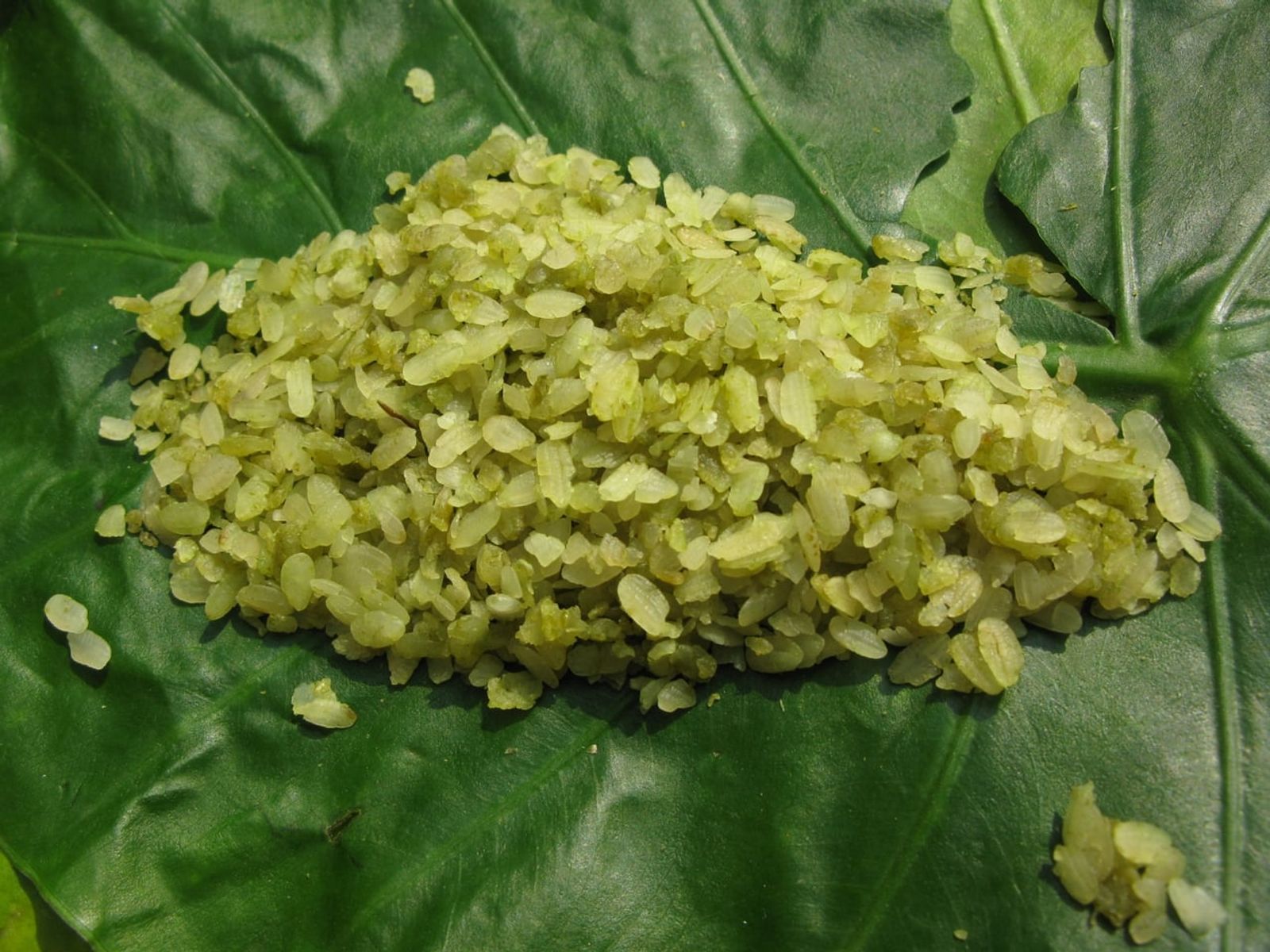
Cốm on a leaf · Photo: Bình Giang / Public domain (Wikimedia Commons)
 VietnamHanoi
Cốm: Hanoi's Autumn, Wrapped in a Lotus Leaf
When autumn comes, little green parcels wrapped in lotus leaves appear on Hanoi's streets. Cốm, young sticky rice that is roasted and pounded flat, is what Hanoians call the taste of autumn. Here is how it is made, how to eat it and the sweets made from it.
The Green Rice That Means Autumn
Cốm is young sticky rice that is roasted and then pounded flat. Its green colour is not dye but the natural colour of immature grains still full of milky juice. It is gently sweet and nutty, with a pleasantly chewy bite. Cốm is made across the Red River Delta, but for Hanoians in particular it is the signal that autumn has arrived; local media describe it as one of the capital's defining autumn flavours. The most famous source is Vòng village, 5 to 6 km from central Hanoi and now absorbed into the city around Cầu Giấy. Writer Thạch Lam described Vòng village cốm in his book Hanoi's 36 Streets.
Roast, Pound, Sift
Northern cốm is made from sticky rice harvested before it is fully ripe, while the grains still hold milky juice. A Hanoi government publication explains that it is cut when the rice is neither too ripe nor too green. The grains are roasted over a low flame for about 30 minutes, stirred constantly. They are then pounded in a mortar and sifted to remove husk and bran, and the cycle is repeated several times, about seven on average. In Vòng village makers reportedly pause around the fifth round to sort the cốm by grade. Local media say Vòng villagers start the day around 5 a.m., picking the dew-covered young rice.
Two Layers of Leaves and a Straw Tie
Even the way cốm is sold is distinctive. It is first wrapped in lá ráy, a large taro-like leaf that keeps it moist and green, then wrapped again in a lotus leaf that lends a faint floral scent, and tied with a strand of green rice straw. The lotus-leaf parcel itself has become a symbol of autumn in Hanoi. The main season runs roughly from the middle of the seventh lunar month to the end of the ninth, which is about late September to early November. There is also an early crop in the fourth and fifth lunar months, but autumn cốm is the one Hanoians wait for. A Hanoi government publication says the finest cốm is made in mid-autumn, when the rice is at its best.
What Is Made From Cốm
Besides being eaten as it is, cốm goes into many dishes. The best known is bánh cốm, a soft cake of cốm wrapped around a mung bean filling, which is an indispensable gift at Hanoi engagement ceremonies (lễ ăn hỏi). A Hanoi government publication also calls it a must at the city's weddings. There is also chả cốm, lean pork pounded with cốm, shaped, steamed and then fried; xôi cốm, steamed cốm mixed with mashed lotus seeds and sugar; and chè cốm, a sweet soup thickened with starch and scented with pomelo flower water. The food writer Vũ Bằng, though, reportedly disapproved of chả cốm, feeling that cốm's delicate flavour clashes with meat.
How Hanoians Eat It
The most basic way to eat fresh cốm is to pinch a little with your fingers and eat it plain. The traditional pairing is ripe banana or soft ripe persimmon; the sweetness of the banana goes beautifully with the nutty rice. A Hanoi government publication describes cốm as something to savour slowly on a cool day. In autumn you may see women from Vòng village selling cốm they made themselves, and lotus-leaf parcels are easy to find at markets and street stalls around the Old Quarter. The same Hanoi publication calls cốm a thoughtful gift. Besides Vòng, several villages around Hanoi, including Mễ Trì, also make cốm.