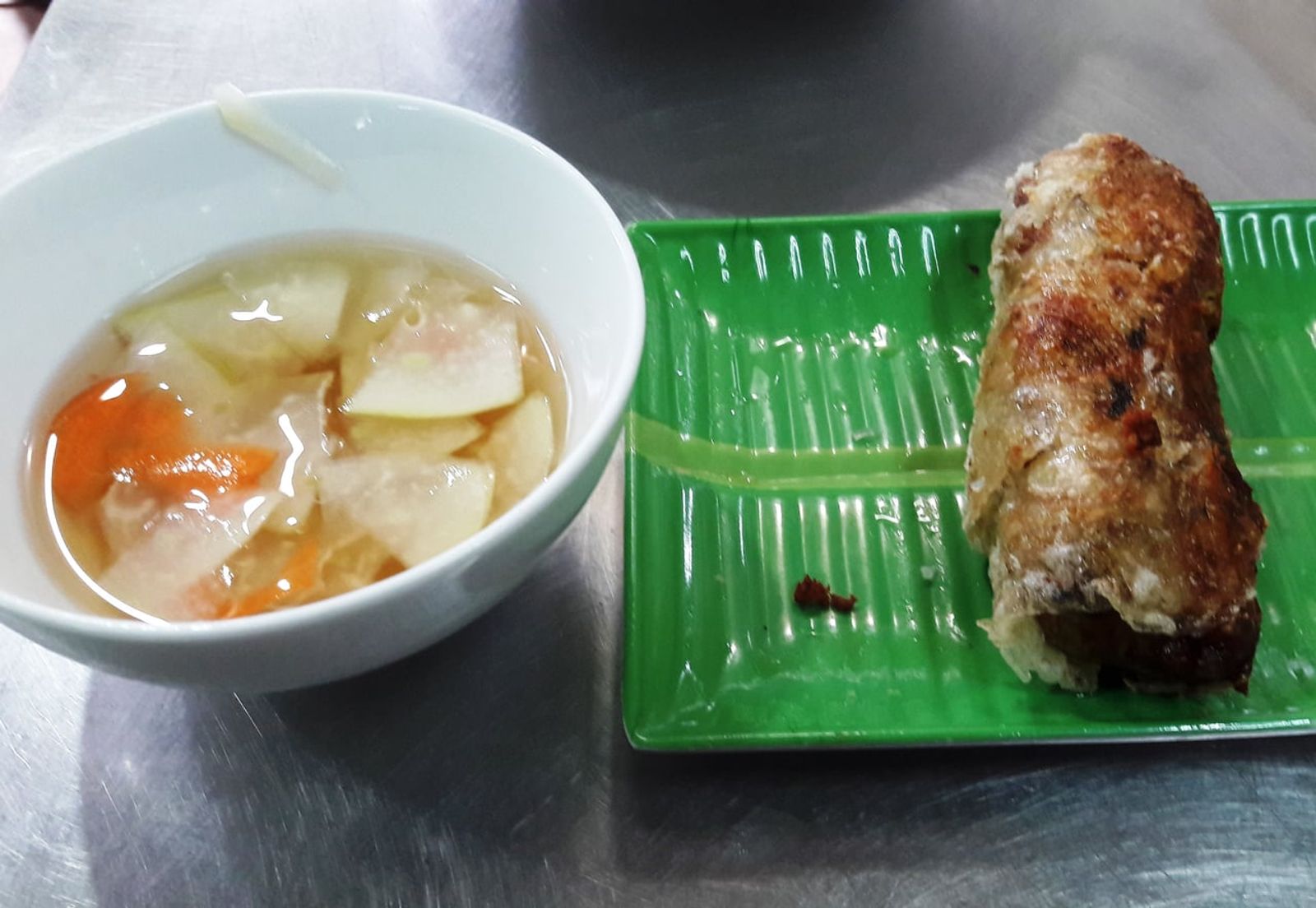
Hai Phong-style nem cua bể with dipping sauce · Photo: Phương Huy / CC BY-SA 4.0 (Wikimedia Commons)
 VietnamHai Phong
Nem Cua Bể: Hai Phong's Square Sea-Crab Spring Rolls
Fried spring rolls are eaten all over Vietnam, but in Hai Phong they are square rather than long. Here is nem cua bể, the sea-crab roll once saved for special days: its shape, filling, frying and how to eat it.
Why Square?
Fried spring rolls are called nem or chả nem in northern Vietnam and chả giò in the south, and they are usually rolled long and thin like fingers. Hai Phong's nem cua bể, however, is folded into a square, like the bánh chưng rice cake eaten at Lunar New Year, which is why it is also nicknamed nem vuông, the square nem. Folding a square takes skill and a rice paper that is soft yet tough enough not to tear. Cua bể means sea crab, and locals rank this roll alongside bánh đa cua as one of the dishes that best represent their city.
Sea Crab, Shrimp and the Filling
The heart of nem cua bể is sea crab meat. Crabs come from Hai Phong's coast at Đồ Sơn, the island district of Cát Hải and far-off Bạch Long Vĩ island; roe-filled crabs are steamed and picked. The meat is mixed with peeled raw shrimp, minced pork with a little fat, glass noodles or rice vermicelli, bean sprouts, wood ear and shiitake mushrooms, carrot and shallot, and bound with egg. Some places add squid, dried shrimp or taro, but the traditional Hai Phong version reportedly uses only fresh shrimp and sea crab. Too much pork makes the roll greasy, so the balance between crab and meat is said to decide its quality.
The Wrapper and the Frying
The rice paper for nem is called bánh đa nem. Traditional cooks prefer wide white sheets made from rice flour because they fry up crisper. The area around Dư Hàng Kênh, near central Hai Phong, is known as a major producer. The sheet is dampened briefly to soften it, the filling goes on, and the paper is folded into a square. Some recipes brush the sheets with a little beer instead of water to keep them pliable. The rolls are deep-fried until golden and lifted out before they burn. Local sources say they are best eaten within five to ten minutes of frying, so a place that fries them to order is your best bet.
From Special-Occasion Dish to City Pride
Structurally, nem cua bể is the same as the chả nem of other northern places such as Hanoi and Nam Định; the sea crab is what makes the difference. In the 1990s much of the sea-crab catch was exported or sold to big restaurants, so ordinary families found it expensive and hard to get, and many made their nem without it. Until the late 1990s nem cua bể was considered a costly, labour-intensive dish for special occasions. Today you can find it beyond Hai Phong, in Hanoi and Ho Chi Minh City, but locals say they still seek out the hometown style. A local newspaper has also noted that in Hai Phong it is often eaten with fish sauce made on Cát Hải island.
How and Where to Eat It
Nem cua bể usually comes with rice vermicelli, fresh herbs such as lettuce, and a sweet-and-sour fish sauce dip. The dip is fish sauce, vinegar, water, sugar, garlic, chilli and lime, with thin slices of pickled green papaya, carrot or kohlrabi floating in it. Dip a bite of nem together with some noodles and herbs, and eat them in one bite. It is mostly a lunchtime food, and in Hai Phong people often add a piece or two as a side to other dishes such as bún chả or bánh đa cua. You can easily find it in the food lanes of city markets and at seafood restaurants. Nem that has been sitting goes soggy, so choose a place that fries to order and eat it as soon as it arrives.