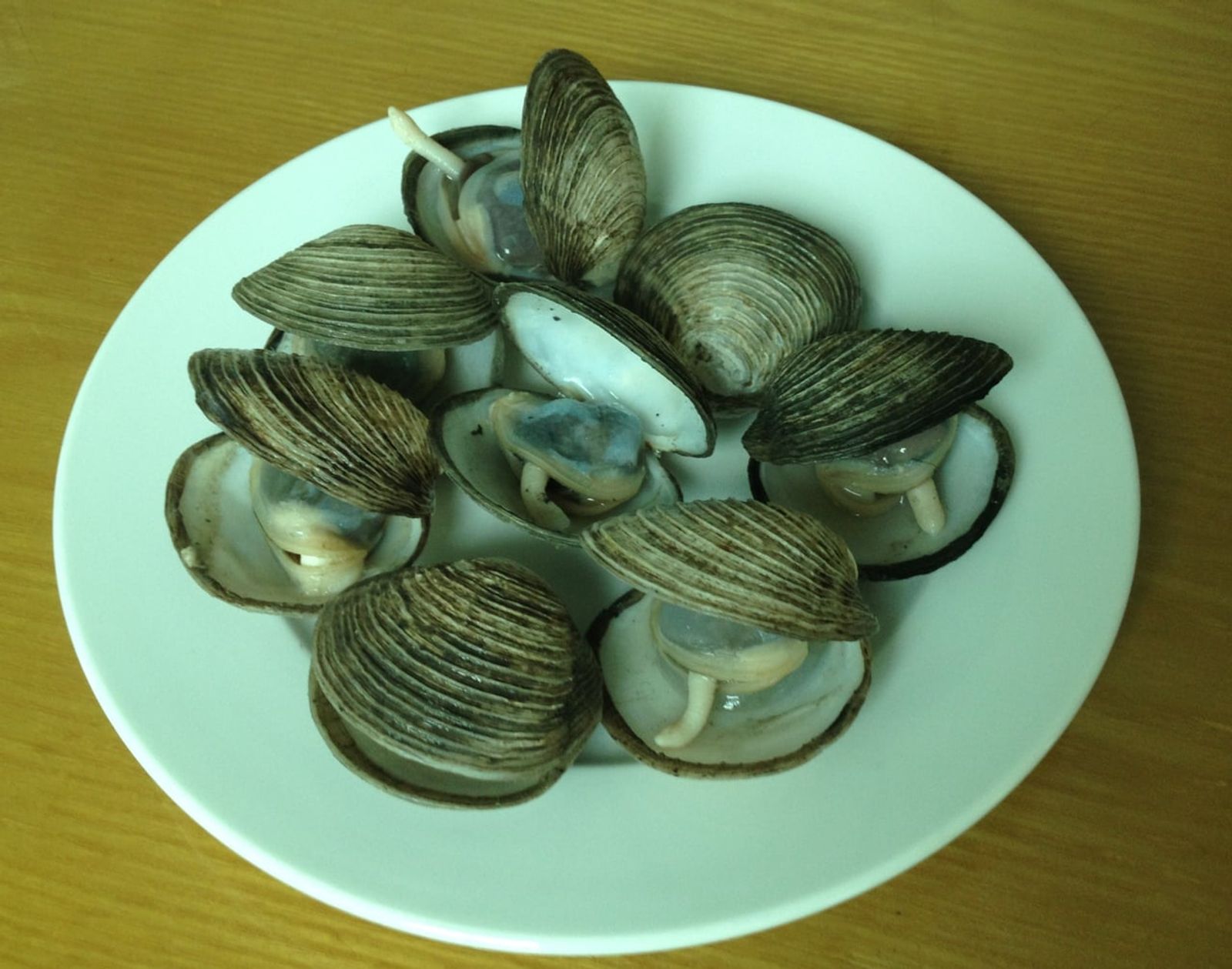
Cooked ngán clams, Hạ Long Bay · Photo: Hoangkid / CC BY-SA 4.0 (Wikimedia Commons)
 Vietnam
Ngán: Quảng Ninh's Prized Clam From the Mud of the Bạch Đằng Estuary
On seafood menus in Hạ Long you will see an unfamiliar shellfish called ngán. Here is where this thick-fleshed clam, a little bigger than an ordinary clam, lives, when it is in season, how it is cooked, and what to know when ordering.
A Clam a Little Bigger Than Most
Ngán is a bivalve that lives in the salty and brackish waters of the Quảng Ninh coast, where river meets sea. Its scientific name is given as Austriella corrugata. Vietnamese Wikipedia describes it as slightly larger than an ordinary clam (ngao), with a rough, sandy, greyish-white shell; the Hạ Long Bay management site describes a grey or blackish shell patterned like waves. The meat is thick and juicy with a delicate sweetness. The management site presents ngán as a quintessential specialty of the Quảng Ninh coast. You will see it on menus at seafood restaurants in and around Hạ Long; unfamiliar to most visitors, it is one of the most prized shellfish in Quảng Ninh.
Where It Lives
Ngán buries itself deep in mud or sand and pushes up a long siphon to breathe and feed, retreating quickly underground at the slightest disturbance. According to Vietnamese Wikipedia, the large edible ngán is found in Vietnam only around the mouth of the Bạch Đằng River between Quảng Ninh and Hai Phong, which is why it counts as a Quảng Ninh specialty. Quảng Ninh's provincial newspaper, however, notes that ngán is found in several sea areas but that Quảng Ninh's are especially fragrant and sweet, and tourism sources also mention Vân Đồn and Quan Lạn island. The same source says ngán was once plentiful and cheaper than blood cockles (sò huyết) but has become a rare, expensive delicacy. Prices vary a lot with size and season, so check the price per weight before you order.
When Is It in Season?
Sources disagree on ngán's season. Vietnamese Wikipedia and several tourism sources say it is caught most in summer and autumn, and that in cold winters it burrows deeper and becomes hard to harvest. Quảng Ninh's provincial newspaper, citing local people, says it is harvested from about the third to the end of the tenth lunar month, when the meat is plumpest and sweetest. The Hạ Long Bay management site, on the other hand, lists ngán among winter specialties in its seasonal seafood guide, while also recommending grilled ngán in its summer section. The practical takeaway is that you can find it on menus year-round, but supply and price change with the season. Whenever you visit, it remains one of the stars of the Quảng Ninh seafood table.
Steamed, Grilled or in Congee
Ngán is cooked in many ways. The dishes the Hạ Long Bay management site lists are steamed ngán, grilled ngán, ngán soup, ngán congee and stir-fried noodles with ngán. In restaurants you will often see it steamed with lemongrass and chilli, or grilled over charcoal topped with spring-onion oil (mỡ hành). Vietnamese Wikipedia adds blanched ngán, salad (gỏi), congee and rice noodle soup. Cleaning matters before cooking. Vietnamese Wikipedia explains that the mud is rinsed off and the clams are soaked for two to three hours in rice-washing water or lukewarm water so they spit out their sand. Ngán congee, sweet with the flavour of the clams, is often recommended as a warming bowl.
Tips for Ordering
Local media list the ngán dishes most often served in Quảng Ninh restaurants as steamed ngán, grilled ngán, ngán porridge, ngán salad and stir-fried noodles with ngán, and say the porridge is the favourite. If it is your first time, steamed ngán or porridge, which let the clam's sweetness come through, are safe choices. In a group, try ordering steamed and grilled ngán together to compare. Shellfish should always be cooked thoroughly. Ngán is usually priced by weight, so confirm both the weight and the price when you order. Many seafood restaurants near the markets and fishing ports of Hạ Long and Vân Đồn will cook ngán for you right after you choose it.