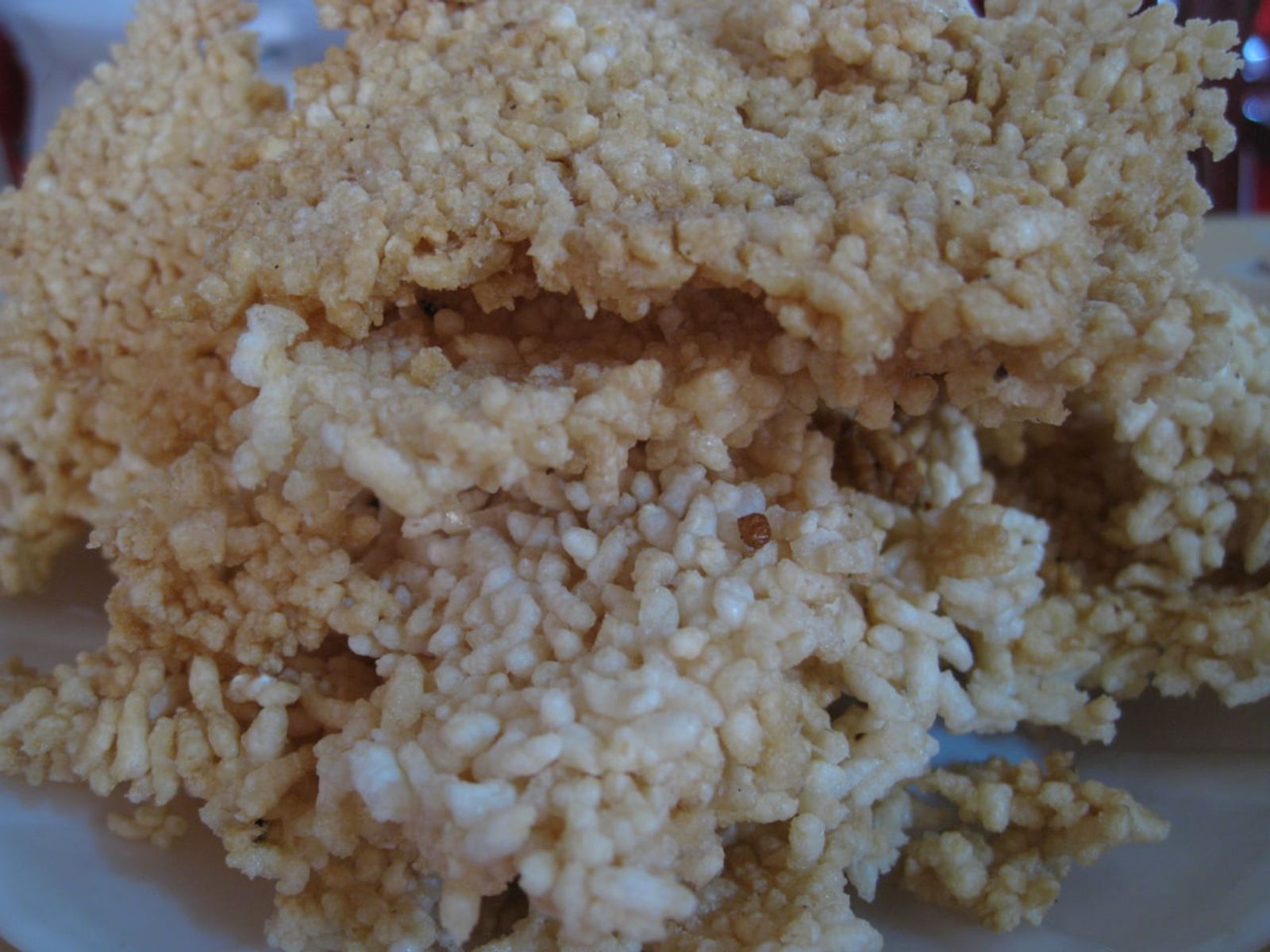
Dried Ninh Bình cơm cháy · Photo: Nguyễn Thanh Quang / CC BY-SA 3.0 (Wikimedia Commons)
 Vietnam
Ninh Bình Cơm Cháy: How Crispy Pot-Bottom Rice Became the Old Capital's Signature
Order cơm cháy in Ninh Bình and you get deep-fried rice crust with a sauce of pork heart, kidney and vegetables poured over it. Here is the folk origin story, the traditional method and how it is eaten Ninh Bình style.
Pot-Bottom Crust, Old-Capital Specialty
Cơm cháy is the hard, crisp layer of rice that forms on the bottom of the pot. It is eaten all over Vietnam, but Vietnamese Wikipedia links it especially closely with Ninh Bình, home of Hoa Lư, the 10th-century capital. Wikipedia credits the rice farming of the Red River Delta for its development. The region grows fine varieties such as the fragrant tám Hải Hậu and fragrant sticky rice (nếp hương), so even the crust keeps the aroma of good rice. Like Korean nurungji or Japanese okoge, it began as a by-product of cooking rice. In Ninh Bình, however, it became a dish in its own right: made on purpose, dried, fried and topped with a sauce.
The Folk Origin Story
There is a well-known folk story about how Ninh Bình cơm cháy began. Vietnamese Wikipedia tells it like this. In the late 19th century, during French colonial rule, a young man from Ninh Bình named Đinh Hoàng Thăng worked at a large Chinese restaurant in Hanoi. He fell for the owner's daughter but could not win her, so he went home and opened a restaurant specialising in cơm cháy. When it became famous, his former employer invited him back to open more restaurants and finally gave him his daughter's hand. Wikipedia presents this as a folk account rather than verified history. Even so, the story gave cơm cháy its image as a dish built by Ninh Bình people, and it still appears in many introductions to the dish.
The Traditional Way: Charcoal, Cast Iron and Sunshine
The traditional method described by Vietnamese Wikipedia takes real effort. Fragrant sticky rice or round, translucent rice is cooked in a cast-iron pot over charcoal, with the heat kept even so the crust forms evenly across the whole base. The crust is then sun-dried for two or three days; Wikipedia says it needs "two or three suns" to be right. Dried crust is stored somewhere cool and dry and fried just before eating, because if it is fried and left overnight it turns stale and smells of oil. Good cơm cháy is said to be pale gold with even grains, crisp yet slightly chewy, with a toasty aroma like cốm, young green rice. Packaged versions today are made by pressing sticky rice thinly in a pan, cutting it into squares, drying and then frying.
Ninh Bình Style: With a Heart-and-Kidney Sauce
The heart of Ninh Bình–style cơm cháy is the sauce. According to Vietnamese Wikipedia, pork heart and kidney are stir-fried with onion, straw mushrooms, carrot and tomato, and the sauce is made with broth from simmered goat meat. It is spooned over freshly fried crust, or the crust is dipped in it, and served with goat or beef. As the goat broth suggests, Ninh Bình cơm cháy is always paired with the region's other famous dish, mountain goat. Wikipedia explains that as tourism grew, goat restaurants served cơm cháy alongside, and the two spread together. Hải Phòng, meanwhile, has a "seafood cơm cháy" with a red sauce of fresh shrimp, crab and squid, which Wikipedia treats as a separate dish built on the Ninh Bình base.
Where to Eat It and What to Take Home
Cơm cháy is easy to find in Ninh Bình. Vietnamese Wikipedia notes it is sold widely along National Route 1, around Hoa Lư, Tam Điệp and Tam Chúc, and at tourist sites across the province. A plate of it with goat dishes after a boat tour is a common combination. In 2012 the Asia Book of Records recognised Ninh Bình cơm cháy as one of ten Vietnamese specialties. A 2016 figure put production at about 400 tonnes a year from some 250 businesses and workshops in the province. As a souvenir, packaged cơm cháy topped with meat floss (chà bông) and fried shallots is popular. It is a different snack from the hot, sauced restaurant version, so try both and enjoy the contrast.