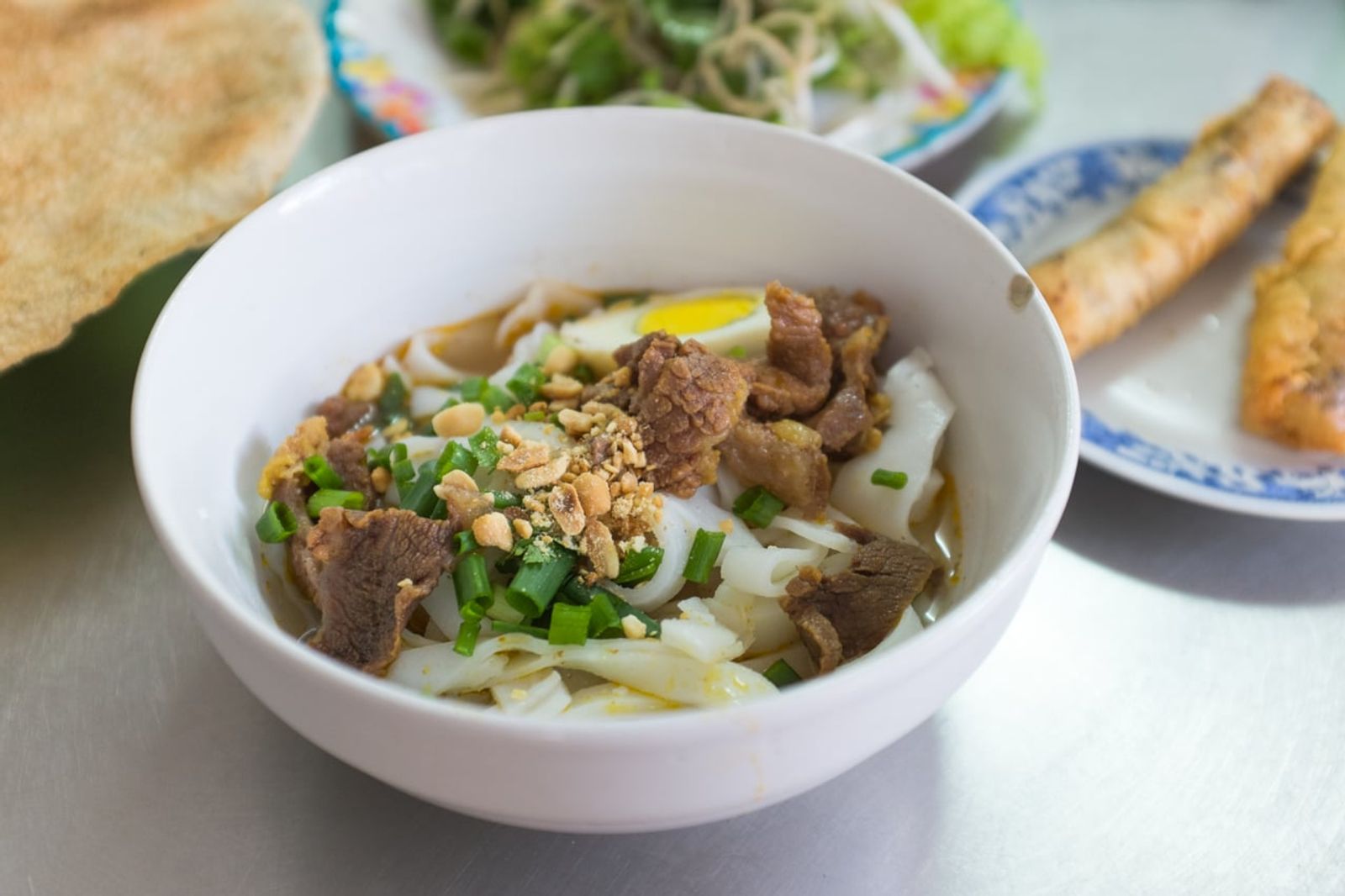
Beef mì Quảng with a sesame rice cracker in Da Nang · Photo: Christopher Crouzet / CC BY-SA 4.0 (Wikimedia Commons)
 VietnamDa Nang
Mì Quảng Explained: The Central Coast Noodle That Barely Has Any Broth
The first bowl locals push on you in Da Nang is not phở but mì Quảng: wide yellow noodles, a small pour of rich broth and a crunchy sesame rice cracker on the side. Here is where this nationally listed heritage noodle comes from and how to eat it.
"The Noodle of Quảng"
Mì Quảng simply means "noodles of Quảng", the old Quảng Nam region around Da Nang and Hội An. People here have such a strong local identity that they call their homeland xứ Quảng, "Quảng country". Since the July 2025 administrative merger folded Quảng Nam Province into Da Nang City, mì Quảng has quite literally become Da Nang's own noodle. In August 2024 Vietnam's Ministry of Culture, Sports and Tourism added the folk knowledge of mì Quảng in Quảng Nam to the national list of intangible cultural heritage. Hanoi phở and Nam Định phở were listed in the same category around the same time, so mì Quảng now officially stands beside phở as one of the country's signature noodles.
How the Wide Yellow Noodles Are Made
Mì Quảng noodles are made by grinding soaked rice into a fine batter, steaming it in thin sheets and then cutting the sheets into strips with a knife. Unlike round bún, which is pressed through a mould, these are cut from flat sheets, so they come out wide, flat and noticeably thicker than rice noodles elsewhere, staying chewy even in a hot bowl. Some are left rice-white, but many are tinted yellow with gardenia fruit (dành dành) or turmeric, which is why visitors remember mì Quảng as "the yellow noodle". Some workshops still spread the batter (tráng mì) and cut the strands (xắt sợi) by hand, and at mì Quảng events in Da Nang these steps are demonstrated for visitors to try, with calls to make the noodle a signature culinary experience of the city.
Not a Soup: The Concentrated Broth Called Nước Nhưn
Many first-timers look at their bowl and wonder where the soup went. Mì Quảng uses a long-simmered stock, often from pork bones, that is reduced until rich, and only enough of it is poured in to coat and moisten the noodles rather than drown them. Locals call this concentrated broth nước nhân (in some places nước nhưn). Toppings vary from kitchen to kitchen. The classic is mì Quảng tôm thịt with shrimp and pork, but chicken, snakehead fish (cá lóc), beef, frog and crab are all common, often with a quail egg or a boiled egg. Since the broth's colour and seasoning change with the topping, two bowls of mì Quảng from two different stalls can taste surprisingly different.
Sesame Crackers and Fresh Greens: How to Eat It
Mì Quảng's constant companion is a grilled rice cracker studded with sesame (bánh tráng mè). Break it over the bowl with your hands for crunch and nutty aroma; roasted peanuts are a standard topping too. The other essential is the plate of fresh greens: lettuce, basil, bean sprouts, coriander-type herbs, rau răm and thinly sliced banana blossom. Locals add a generous handful straight into the bowl. Squeeze in lime, add chilli to taste, then lift and fold everything with your chopsticks so the noodles, toppings and greens are coated in that small pool of broth. Asking for a little more broth is not rude, but mì Quảng tastes best once you think of it as something closer to a dressed noodle than a soup.
Where and When to Eat It
In Da Nang, mì Quảng is an everyday one-bowl meal eaten from breakfast through lunch. You will find it in alley eateries around central Hải Châu and at stalls near the markets, often in shops with "Mì Quảng" painted large on the sign. Travel guides commonly quote around 30,000–50,000 VND a bowl, though it depends on the topping. To order, just add the topping: tôm thịt for shrimp and pork, gà for chicken, cá lóc for snakehead fish and bò for beef. Head out to Hội An or the villages of the former Quảng Nam area and you can find places that still make their own noodles, which makes for a fun comparison with the city bowls.