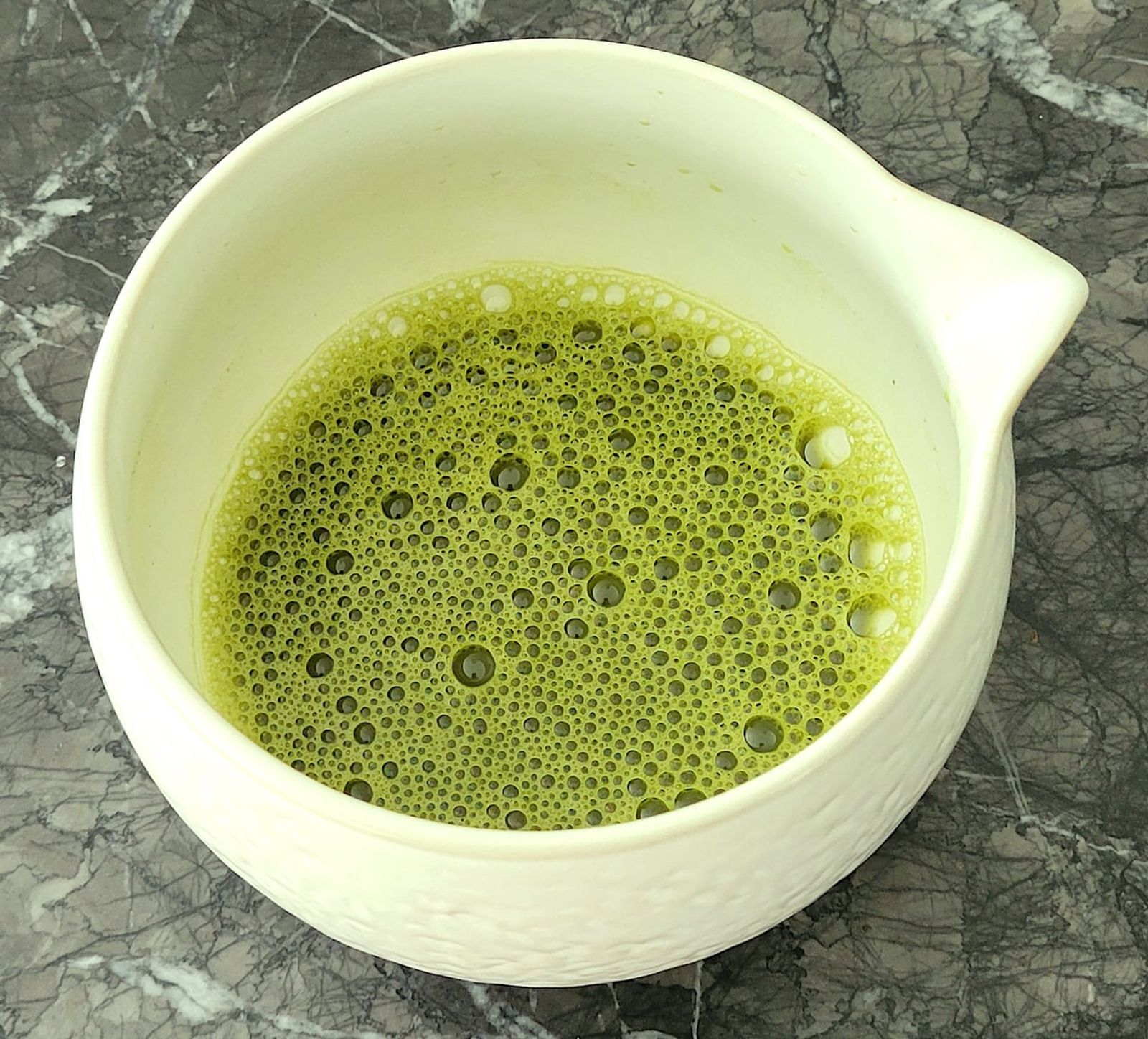
Freshly whisked matcha in a bowl · Photo: Pinnaclematcha / CC BY-SA 4.0 (Wikimedia Commons)
 JapanKyoto
Uji Matcha: How an 800-Year-Old Tea Region Became the Home of Matcha Sweets
Uji, just south of Kyoto, is counted among Japan's three great tea regions. From tea bushes planted by a Kamakura-era monk to tea presented to the shogun, shade-grown matcha and today's matcha parfaits and soft serve, here is the story of Uji tea and how to enjoy it.
What Counts as Uji Tea
Uji is a short train ride south of central Kyoto and is best known for Byodoin, the temple pictured on the 10-yen coin. The area is also home to Uji tea, counted with Shizuoka and Sayama tea as one of Japan's three great teas. The definition is interesting. Uji tea is tea grown in Kyoto, Nara, Shiga or Mie prefectures and given its final processing inside Kyoto Prefecture by a Kyoto-based producer, with priority given to Kyoto-grown leaves. In practice the main growing areas spread well beyond Uji city to Wazuka, Minamiyamashiro and Ujitawara in southern Kyoto Prefecture. In 2015 the region's tea culture was designated a Japan Heritage under the title "A Walk Through 800 Years of Japanese Tea History."
Tea Planted by Monks, Gardens Favored by Shoguns
Uji tea's history goes back to the Kamakura period. The monk Eisai brought tea seeds back from Song China, and the monk Myoe planted them at Toganoo in northwest Kyoto, from where tea is said to have spread to Uji. One legend says Myoe taught the people of Uji to sow tea seeds in the hoofprints left by his horse. In the Muromachi period, tea growing in Uji flourished under the patronage of the shogun Ashikaga Yoshimitsu, and seven celebrated tea gardens became known as the Uji Shichi Meien. The earliest known record of the term "Uji tea" dates to 1374. Later, Oda Nobunaga, Toyotomi Hideyoshi and the tea master Sen no Rikyu all prized Uji tea, cementing its place as Japan's finest.
Shade Growing: The Secret of Matcha's Color and Umami
The real reason Uji became the source of Japan's finest tea is shade growing, a method established in the Sengoku period. For two to three weeks before picking, the tea bushes are covered with reed screens, straw or black netting to block the sun. With less sunlight, the plant makes less catechin, which brings bitterness and astringency, and more theanine, which brings umami and sweetness. It also builds up chlorophyll, giving the leaves a deep green color. Leaves grown this way are steamed and dried without rolling to make tencha, and tencha ground finely in a stone mill is matcha. A single stone mill produces only about 40 grams an hour. Walking around Uji, you can still spot tea fields under black covers.
The Edo Period: The Shogun's Tea Procession and the Birth of Sencha
The prestige of Uji tea in the Edo period is captured by the Ochatsubo Dochu, the tea-jar procession. The shogunate had the first tea of the season packed into jars in Uji and carried to Edo for the shogun's household, a custom that ran from 1633 until 1866 near the end of the shogunate. The procession is said to have been treated with more deference than a feudal lord. Everyday tea changed in Uji too. In 1738, in Yuyadani in what is now Ujitawara, Nagatani Soen established the aosei sencha method of steaming, rolling and drying leaves, spreading sencha with a bright color and fine aroma. In the 1830s a method for gyokuro, a premium green tea made from shade-grown leaves, also emerged. Matcha, sencha and gyokuro, the three pillars of Japanese green tea, are all closely tied to Uji.
Enjoying Matcha Sweets: The Byodoin Approach and What to Look For
Matcha sweets are the must-eat in Uji: rich matcha soft serve, matcha jelly and dumplings, layered matcha parfaits with sweet red beans, and Uji kintoki, shaved ice topped with matcha syrup and red beans. From Kyoto Station, take the JR Nara Line or the Keihan line to Uji. The approach leading to Byodoin is lined with tea houses and tea shops, perfect for tasting as you stroll. One thing worth knowing: much of the powder sold as "matcha" is not true matcha ground from tencha in a stone mill but cheaper powdered tea, and it is often pointed out that a large share of what goes into processed foods is this kind of product. If you want the real depth of flavor, choose places that state the grade or origin of their matcha, and try a freshly whisked bowl alongside your dessert.